
Plugging an electrical heating element into a fabric bed and leaving it running all winter, unattended, under a sleeping animal, is a reasonable thing to be nervous about. That is the real question people are asking when they search for K&H reviews, and it deserves a proper answer rather than a list of product features.
The short version: the safety credentials here are better than most of the category, there are no recalls on record, and the single most common complaint about these products is actually a misunderstanding of how they are designed to work.
Who K&H is
Founded in 1998 and based in Colorado Springs, Colorado, K&H describes itself as the largest dedicated producer of heated pet products in the country. The range covers dogs, cats, birds, poultry, small animals, stock tanks and ponds.
They sell direct plus through Chewy, Walmart, Amazin, PetSmart, Home Depot and farm and pet specialty retailers. Where the products are manufactured is not disclosed on their site, so US manufacturing should not be assumed.
The safety credentials, stated precisely
This is where K&H does better than most competitors, and it is worth getting the terminology exactly right because a lot of writing on this subject gets it wrong.
K&H heated products are MET listed, certified by MET Laboratories to the UL 499 standard. UL 499 is the US safety standard for electric heating appliances, and MET Laboratories is an OSHA-recognised testing laboratory.
What that means in plain terms: it is a legitimate third-party safety certification to the correct standard for this product category. What it does not mean is UL Listed, which is a different mark from a different laboratory. Anyone describing these as UL Listed is being imprecise. Their own copy on some products claims the certification exceeds US and Canadian electrical safety standards, which is marketing language on top of a real certification.
On the Lectro-Kennel line they specify that the entire product is safety certified rather than just the components, which is a meaningful distinction.
Recalls: a clean record, checked properly
A search of the complete CPSC recall database returns no recalls for K&H Pet Products or K&H Manufacturing.
For context on why that matters, heated pet products are a category that does produce recalls. A 2012 recall covered heated pet mats sold by a different company for fire and electrical shock hazards, and a 2010 recall covered power adapters sold with another brand's heated sleepers, also for fire risk. Neither involves K&H.
Being honest about what a clean recall record proves: it means no defect has risen to the level of a formal federal recall. It is not the same as an absence of individual field failures, and owner reports of units failing do exist, covered below.
The 102 degree design, and why most complaints trace back to it
This is the most useful thing to understand about K&H heated beds, and it explains the number one complaint in their reviews.
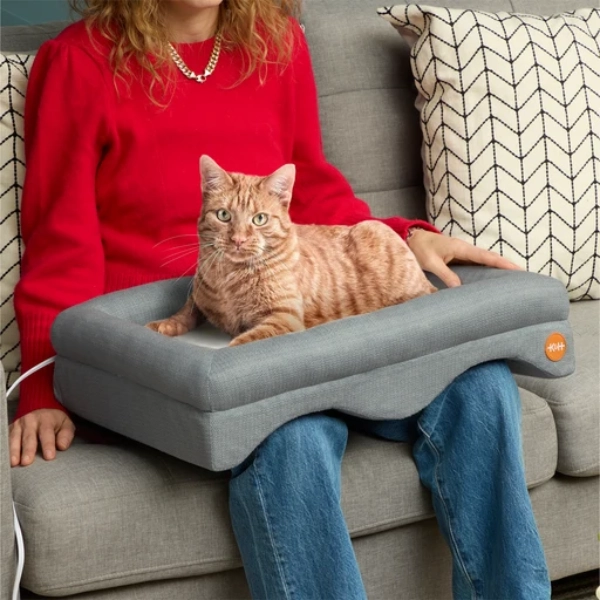
Their FAQ states that all their heated pet beds heat to about 102 degrees Fahrenheit regardless of wattage. That is a set target temperature, not ambient temperature plus a certain number of degrees. It is roughly a cat or dog's normal body temperature, which is the design intent: the bed feels neutral-to-warm to the animal rather than hot.
A higher wattage does not produce a hotter bed. It supports a larger heated area at the same 102 degrees. So the 80 watt Lectro-Kennel is not warmer than the 40 watt one, it is simply bigger.
Which brings us to the complaints. The single most common criticism across Chewy and Walmart reviews is that the beds do not get warm enough. One Walmart reviewer wrote that it does not get warm to the touch and is about one half step above self-warming. A Chewy reviewer said it does not get hot enough to make a difference.
Both are describing the product working exactly as designed. A pad engineered to reach 102 degrees will feel lukewarm to a human hand, because your hand is around 90 degrees and you are expecting something closer to a heating pad. If you want a bed that feels hot when you touch it, this whole category will disappoint you, and that is a deliberate safety choice rather than a defect.
Heat also dissipates when the bed is unoccupied, so touching an empty bed tells you very little.
Thermostats, cords and the extension cord rule
The thermostats are internal, preset and dual, with no adjustment and no on/off switch. The product is on whenever it is plugged in, which their FAQ says permits continuous operation when properly installed. The Perfect Bucket Heater additionally carries a thermal cut-off.
On cords, there is a distinction that matters and is easy to miss:
- Outdoor pads including the Lectro-Kennel and the igloo-style pad use a steel-wrapped cord to resist chewing, 5.5 feet long
- The Amazin' Kitty Pad has its first 18 inches steel capped
- Indoor fabric beds carry no chew-resistant cord claim at all
That gap is corroborated by owners. A Walmart reviewer of the XL Pet Bed Warmer specifically flagged the power cord having no protection against puppy chewing as a real concern. If you have a chewer, buy from the outdoor line even for indoor use, or route the cord where the animal cannot reach it.
One practical limitation to plan around: extension cords are prohibited. K&H's FAQ is unusually candid about why, explaining that MET requires every manufacturer to carry a do-not-use-with-extension-cord statement. Combined with a 5.5 foot cord, that is a genuine constraint for barn, porch and outbuilding installations. Work out where your outlet is before you order.
Their own safety warnings, which are worth repeating
- Never cover a heated pad with blankets, straw, hay or wood shavings. K&H states this as a fire hazard
- Use only K&H covers, which are designed to let heat through
- Do not place a heated pad on top of another dog bed
The straw and hay warning is the one most likely to be ignored, because insulating a cat shelter with straw is exactly what people are told to do everywhere else. If you are using a heated pad in an outdoor shelter, the pad goes on top, uncovered.
Outdoor use: sheltered, not weatherproof
The outdoor range is described as suitable for sheds, garages, barns, porches and cat houses. The important qualifier is that these products are water resistant, not waterproof.
They must be placed in a dry area, must not sit anywhere that heavy rain creates standing water, and must never be immersed. A covered porch, insulated cat house, garage or barn stall is in scope. Open exposure to rain is not.
The construction backs the sheltered-outdoor use case up. The Lectro-Kennel is rigid ABS plastic with pre-drilled corner holes for mounting, and the soft versions have removable washable covers.
One design detail deserves genuine praise: the igloo-style pad is a half circle, which leaves half the house floor unheated so the animal can move between warm and cool. Letting the pet self-select temperature is a better safety design than heating the whole floor.
The range and prices
| Category | Price range | Notable models |
| Indoor heated beds | $34.98 to $104.95 | Thermo-Kitty Bed, Thermo-Kitty Mat, Pet Bed Warmer |
| Outdoor heated pads | $54.95 to $119.98 | Lectro-Kennel, Lectro-Soft, igloo-style pad |
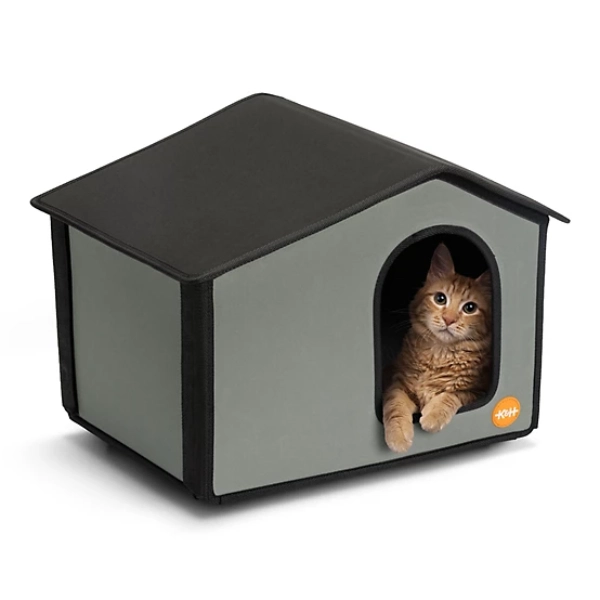
| Heated cat shelters | $59.95 to $119.98 | Thermo Outdoor Kitty House, A-Frame, Mod Shelter |
| Cooling | $15.95 to $97.98 | Coolin' Pet Pad, Cool Bed III |
| Elevated cots | $19.95 to $89.98 | Original Pet Cot, Bolster Cot, Pet Cot House |
| Poultry and farm | $32.95 to $79.98 | Thermo-Chicken Pad, brooder, bucket heaters |
Wattage tracks the category. Indoor beds draw a remarkably low 4 to 7 watts. Outdoor pads run 20, 40, 60 or 80 watts. Farm items go higher, with bucket heaters at 80 and 250 watts and pond deicers at 100 to 300 watts.
The poultry line is worth flagging because almost nobody covers it. A Thermo-Chicken Heated Pad at $74.98 and a Thermo-Peep at $39.98 serve backyard chicken keepers, an audience with real winter problems and very little written guidance available.
The warranty, and a transparency gap
One year limited, stated consistently across the heated range, the cots, the cooling products and the accessories.
Here is the problem: there is no warranty page. The URL returns an error, and the FAQ contains no warranty terms at all. The one-year claim appears only as a line on product pages, with no statement anywhere of what is covered, what is excluded, or how a claim works.
For most product categories that would be a minor gripe. For electrical heating products where the failure mode people worry about is fire, the absence of published warranty terms is a legitimate criticism of an otherwise safety-conscious company.
Returns
- 30 days from purchase
- Free returns with a pre-paid label supplied, described as hassle-free
- Framed as no questions asked, with no stated condition requirements and no original-box requirement
- No restocking fee and no non-returnable categories listed
- You choose refund or replacement
In substance this is the most generous return policy of any brand covered in this series. In writing it is also the thinnest. No stated conditions means the actual terms are whatever the agent decides, which usually works in your favour and occasionally will not.
What owners report
Ratings sit in a consistent band. The Cat and Dog Bed Warmer holds 4.3 out of 5 from 1,220 ratings on Chewy. The 16 inch Thermo-Kitty Bed holds 4.6 from 123 ratings on Walmart. The XL Pet Bed Warmer holds 4.4 from 113.
The complaint themes, in order of how often they appear:
- Not warm enough, which as covered above is the 102 degree design working as intended rather than a fault
- Dead on arrival, with one owner reporting a unit colder than the outdoor temperature after five hours plugged in
- Short lifespan, with one customer buying replacements after units failed or lost warmth within roughly two weeks
- Cord too short, made worse by the no-extension-cord rule
- Cover durability, with a cat digging at and uncovering the pad
One outlier deserves mention precisely because of the category. A single reviewer reported the Giant size heating up with nothing on it and feeling dangerously hot. That is one review against a 1,220-rating base, so it is not a pattern, but in a fire-risk product it is the kind of report worth knowing exists rather than filtering out.
Three things did not show up as patterns and should not be presented as such: chemical smell when new, thermostat malfunction, and systematic failure after a single season. Those get repeated in general writing about heated pet beds without evidence attached to this brand.
Who it is for
Strong choice if you have an older or arthritic animal, an outdoor or barn cat, a garage or shed dog, or backyard chickens, and you want a heated product with a real third-party safety certification and a clean recall record behind it.
Look elsewhere if you want a bed that feels hot to your hand, if you need to run a cord more than five and a half feet without an outlet nearby, or if you have a determined chewer and were planning to buy from the indoor range.
FAQs
Are K&H heated pet beds safe?
They are MET listed, certified by MET Laboratories to UL 499, the US safety standard for electric heating appliances. A search of the full CPSC recall database returns no recalls for K&H. They also carry clear warnings against covering the pads with blankets, straw or hay, which is a fire hazard.
How hot do K&H heated beds get?
About 102 degrees Fahrenheit, which is roughly a pet's body temperature, and that is the same regardless of wattage. Higher wattage means a larger heated area, not a hotter one. It will feel lukewarm to your hand, which is intentional.
Why does my K&H bed not feel warm?
Almost always because it is working correctly. The target is 102 degrees, close to your pet's body temperature rather than to a human heating pad. Heat also dissipates when the bed is unoccupied, so an empty bed tells you very little.
Can K&H heated beds be used outdoors?
The outdoor range is designed for sheds, garages, barns, porches and cat houses. They are water resistant, not waterproof, so they need a dry location with no standing water and must never be immersed.
Are the cords chew-proof?
On the outdoor pads yes, they use a steel-wrapped cord. Indoor fabric beds carry no chew-resistant cord claim, and owners have flagged this. If you have a chewer, buy from the outdoor line or route the cord out of reach.
What is the K&H warranty and return policy?
One year limited warranty, though coverage details and exclusions are not published anywhere on their site. Returns are 30 days with a free pre-paid label, no restocking fee, and you choose a refund or a replacement.
Verdict
K&H is the rare case where the safety answer is genuinely reassuring rather than hedged. Real third-party certification to the correct standard, no recalls on federal record, very low wattage on the indoor products, sensible design choices like the half-heated igloo pad, and clear warnings about the things that actually cause fires.
Two things to go in knowing. These beds are designed to reach body temperature, not to feel hot, so judge them by whether your pet uses them rather than by touching them yourself. And if you have a chewer, the chew-resistant cord is on the outdoor line only. The unpublished warranty terms are the one genuine mark against an otherwise transparent company.
Did you like our blog?
Comments (0)
All comments are reviewed and approved by an admin before appearing publicly.
No comments yet - be the first to share your thoughts.