
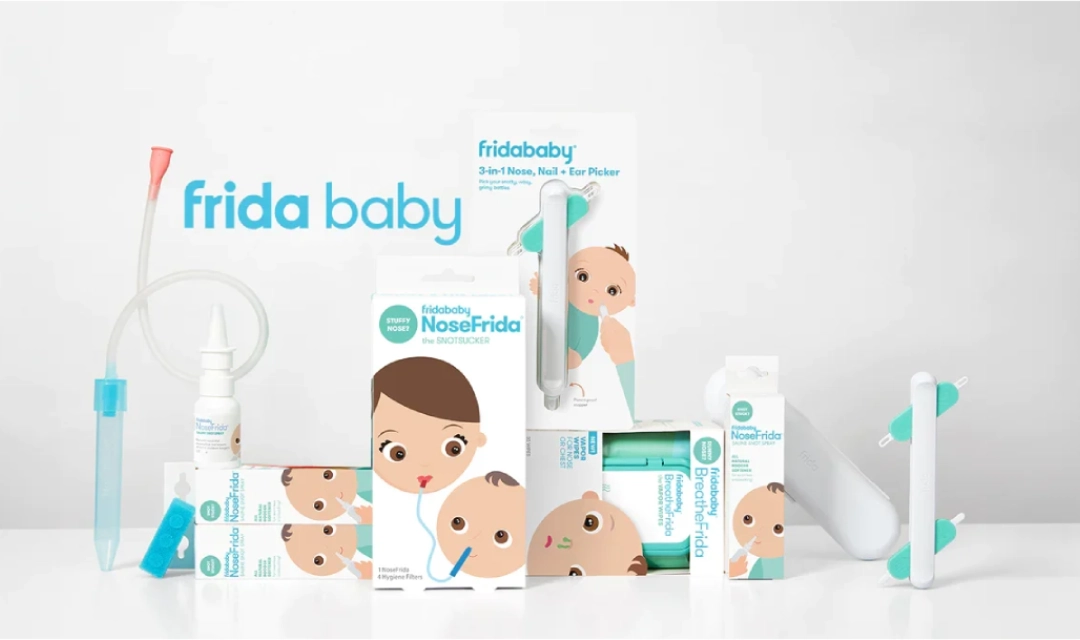
Every parent buying a NoseFrida is really asking one question: is this $14.99 device actually better than the free bulb syringe the hospital sent us home with?
Somebody set out to answer that properly. Vanderbilt University Medical Center registered a study titled Effectiveness of the NoseFrida Compared With Bulb Suction at Relieving Objective Signs of Nasal Obstruction and Reducing Return Visits in Pediatric Patients Presenting to the Emergency Department, registry number NCT03666429. It planned to enrol around 500 infants from one day to 24 months old at Vanderbilt Children's emergency department, and Fridababy was to supply 500 NoseFrida devices and replacement filters.
That study was withdrawn. Actual enrolment: zero. The record was last updated on 1 December 2020.
There is a second detail in the registry worth noting. Despite a title promising objective signs of nasal obstruction, the registered primary outcome measure was parental satisfaction, scored on a seven point Likert scale, measured at baseline.
So the honest position in this Frida Baby review is that there is no published clinical evidence that a NoseFrida clears an infant nose better than a bulb syringe, the one registered attempt to find out never began, and the outcome it was going to measure was how satisfied parents felt rather than how clear the nose was.
That is not an accusation of wrongdoing. Studies get withdrawn for funding, staffing and pandemic reasons all the time, and 2020 explains a lot. It does mean nobody should tell you this product is clinically proven to work better, because the trial that would have shown it does not exist. Nothing here is medical advice, and a congested or unsettled infant who is feeding poorly, breathing fast, or not improving should be seen by a doctor rather than treated with a gadget.
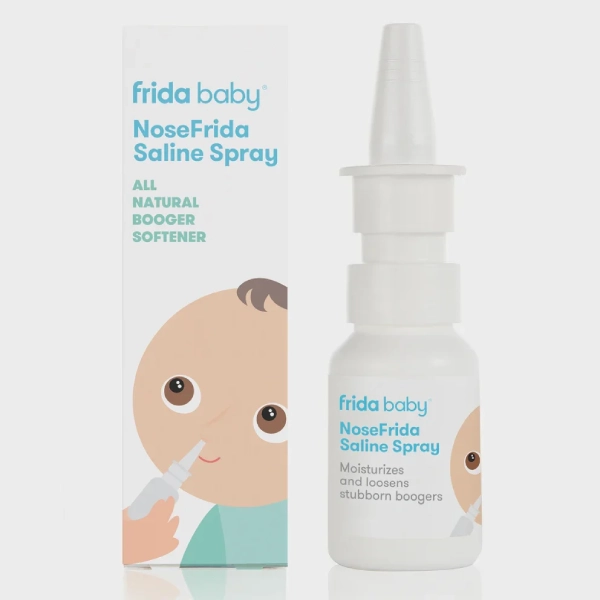
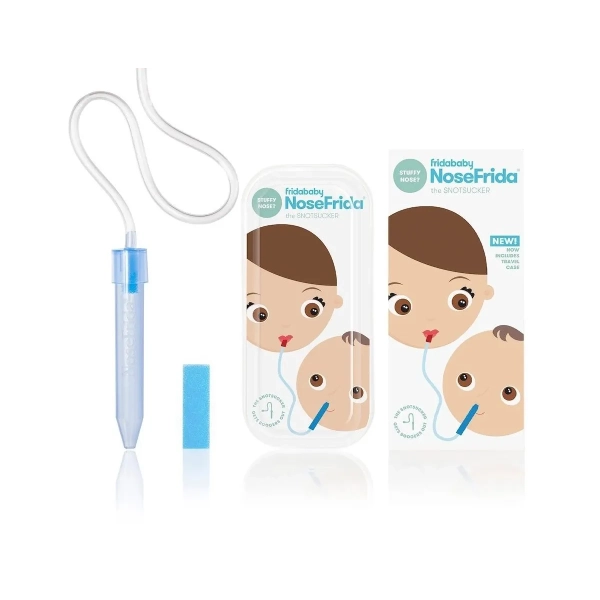
NoseFrida the SnotSucker
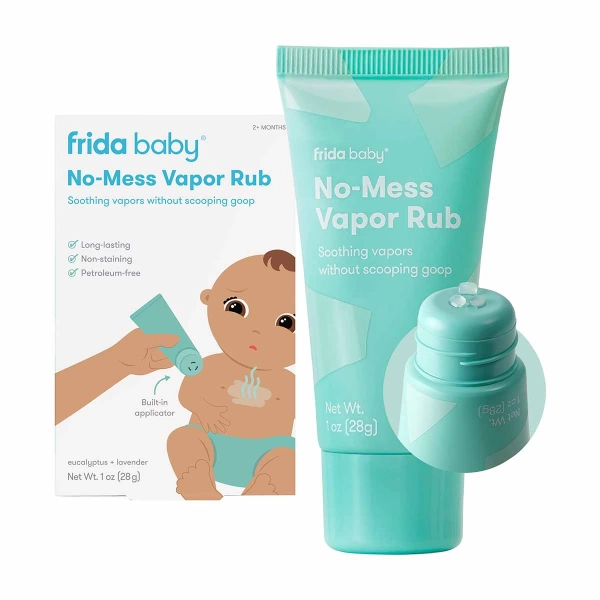
$14.99 including four hygiene filters. Rated 4.5 out of 5 from over 3,300 reviews, with 85 percent of reviewers recommending it.
That rating is a genuinely large and favourable sample, far more meaningful than the handful of reviews most products carry, and it should be weighed properly. Thousands of parents say it works better than a bulb. What they are reporting is real experience, and it is also exactly the parental satisfaction measure the withdrawn trial was going to record, rather than a measurement of how much mucus came out.
There is a plausible mechanical reason it would work better, and it is worth stating because it is the strongest argument for the product. You control the suction directly with your own breath and can feel resistance, whereas a bulb delivers a fixed squeeze. The wide tube seals against the outside of the nostril rather than being inserted into it, which avoids irritating the nasal lining. And a bulb syringe is almost impossible to clean inside, which is why paediatricians often tell parents to replace them regularly.
The hygiene question, answered properly
Everyone asks whether mucus ends up in your mouth. The design places a disposable filter between the tube and the mouthpiece, and the brand states the filters are clinically proven to prevent transfer of mucus or bacteria to the suction device. Note the precise wording: to the device. The blue tube, red mouthpiece and filter cap are top rack dishwasher safe and the product is BPA and phthalate free.
Some customer reviews report mold inside the tube, and at least one reports material getting past the filter. Those are individual accounts rather than verified findings, but mold inside a tube that is rinsed and left to dry in a bathroom is entirely plausible, so dry it properly and inspect it against the light before each use.
The filter cost nobody calculates
The instructions say to change the filter after every use, and four filters come in the box.
Work out what that means in practice. A single infant cold runs roughly a week, and parents commonly suction before feeds and before sleep, so three uses a day is conservative. That is around twenty filters for one cold. The four in the box cover barely more than a day.
So the $14.99 is an entry price, not the cost. Price a pack of replacement filters before you buy and decide whether you will genuinely replace one every single time or whether you will quietly reuse them, because most people do the second thing and that is the point at which the hygiene argument for the product stops applying.
Windi the Gaspasser
Sold in packs of ten, single use rectal tubes for infant gas.
This is the product where the gap between the marketing and paediatric opinion is widest, and the criticism comes from a credible medical source rather than from rival brands.
Science-Based Medicine's assessment, written by a paediatrician, concludes that the NoseFrida and the Windi are certainly not dangerous, but they are likely a waste of money. The reasoning is specific and worth understanding before you spend anything.
- Colic is a diagnosis of exclusion and is not caused by gas. The article states plainly that colic is not caused by reflux or constipation, and it is not caused by gas.
- Gas in the rectum in particular does not hurt, so removing it does not relieve pain that was not there.
- What parents usually interpret as gas pain is often infant dyschezia, a normal developmental stage where babies strain and cry before passing stool or gas because the coordination has not developed yet. The article says it is nearly always misinterpreted as pain related to gas or constipation.
- Frequent use may actually delay development of the ability to pass stool and gas easily in young infants, because relief after insertion reinforces the cycle and the baby does not practise doing it alone.
- The product's own warning states that reuse may pose a risk of infection, and the article questions whether the limit of never more than three times in 24 hours refers to insertions or sessions.
- For genuine constipation or impaction, which is rare in infants, the appropriate treatment is a glycerin suppository or enema rather than this.
The fair summary is that the Windi is unlikely to harm your baby and is also unlikely to be treating anything real, while potentially teaching both of you to rely on it. If your baby is crying inconsolably, the one cause with good evidence behind empiric treatment is cow's milk protein allergy, which is a conversation with your paediatrician rather than a purchase.
NailFrida the SnipperClipper and the grooming range
The genuinely useful corner of the catalogue, and the part where nobody needs clinical evidence because the problem is purely mechanical.
Infant nails are soft, the fingers are small, and standard clippers give you no visibility of where the skin ends and the nail begins. The NailFrida's spyhole in the blade addresses exactly that, and the S-shaped file in some bundles is the safer option for newborns in the first few weeks, when filing is usually preferable to cutting.
If you buy one Frida product on its merits rather than on hope, make it this. The failure mode it prevents, cutting a baby's fingertip, is common, upsetting and entirely mechanical.
The thermometer, MediFrida and the rest
The Quick-Read Rectal Thermometer and the MediFrida Accu-Dose Paci, a pacifier style medicine dispenser, sit in the sensible-but-not-essential tier.
On the thermometer, rectal is genuinely the most accurate method for infants under three months and is what paediatric guidance recommends for that age, so this is a legitimate product rather than a gimmick. On the medicine pacifier, it solves a real problem if your baby fights a syringe, and does nothing if your baby does not.
The kit arithmetic
Frida sells heavily through bundles and the maths is worth doing before you buy one.
The Ultimate Baby Kit is $99.99 for eleven items: NoseFrida, ten Windi, MediFrida, rectal thermometer, 3-in-1 picker, NailFrida clipper, DermaFrida skin soother, hairbrush and comb, finger toothbrush, teether and a case. It is rated 5.0 out of 5 from 103 reviews.
The Bitty Bundle of Joy is $49.99 for six items: NoseFrida with filters, ten Windi, NailFrida clipper, the S-shaped nail file, a FridaMom peri bottle and a zip pouch.
The NoseFrida alone is $14.99.
Here is the thing to notice. Both bundles include the ten pack of Windi, which is the product paediatric opinion says is likely doing nothing, and the Ultimate Kit adds a teether, a hairbrush and a finger toothbrush, which are commodity items available for a few dollars anywhere. You are paying bundle pricing partly for products you may not want.
If you buy the NoseFrida at $14.99 and a NailFrida separately, you have the two products in this range with the strongest practical case, for well under half the Ultimate Kit price. Bundles are good value when you want everything in them. These ones contain things you might not.
Who the company is
FridaBaby, LLC, trading as Frida, was founded in 2007 by Krisa Lavine, who began by distributing a Swedish nasal aspirator and renamed it the NoseFrida. In 2014 Chelsea Hirschhorn, then a new parent, acquired the company and expanded it substantially. It is based in Miami, Florida, and remains privately held.
The range has grown well beyond baby care into postpartum recovery, launched in 2019, including the MomWasher peri bottle, and into fertility products. A search of the CPSC recall database returns no Frida product recalls, which is a genuine positive and worth stating.
The marketing controversy, stated factually
Frida built its brand on frank, often deliberately uncomfortable advertising about parenthood, and some of that has been admirable. Its 2018 MomWasher billboard used the word vagina and was rejected in most markets, where advertisers suggested neutral words like bottom or body instead, and it ran only in New York City. In 2020 the company said ABC rejected its postpartum recovery advert for the Academy Awards as graphic and containing partial nudity, which Frida disputed. Both of those were arguments about whether real postpartum experience could be shown at all, and the company was on the defensible side of them.
In 2026 the brand faced a boycott over a different category of marketing: sexual innuendo in campaigns involving infants. Documented examples include rectal thermometer packaging carrying the tagline How about a quickie, social media posts pairing an image of a rectal thermometer being used on an infant with a joke about a threesome, a post using the phrase what happens when you pull out too early, and an Instagram request for photographs of soiled nappies specifying that blurring was not necessary.
A company representative said the innuendo was intended to make difficult experiences feel lighter. Frida said it would retire what it called legacy assets, and removed its team page from its website. A rival, Safety 1st, responded with marketing emphasising reliability.
Whether that changes your purchasing decision is reasonably a matter of judgement rather than something a review should decide for you. What is worth separating is the two different things Frida has been criticised for. Showing postpartum reality honestly is the part of this brand's identity that earned it genuine goodwill. Sexual innuendo attached to products used on infants is a different thing, and the company's own response, retiring assets and removing its team page, suggests it reached the same conclusion.
So is Frida Baby worth buying?
In parts, and the parts divide along a clear line: buy the products that solve a mechanical problem, and be sceptical of the ones that claim to solve a medical one.
Did you like our blog?
Comments (0)
All comments are reviewed and approved by an admin before appearing publicly.
No comments yet - be the first to share your thoughts.