


How does your skin feel today:
calm and supple, or tight and itchy? If the latter sounds familiar, you might have dry skin. Don't worry: parched or rough skin isn't something you have to battle for the rest of your life. With a little TLC and the right products, you can overcome it—or at least treat it effectively.You likely have a few questions—such as which products to use, what to avoid, and how to incorporate retinol into your routine without damaging your complexion. Below, we present a comprehensive guide to creating a skincare routine for dry skin, developed with advice from trusted dermatologists. They share their expertise and top product recommendations to help you stock your beauty kit and soothe your skin.
What exactly is dry skin?
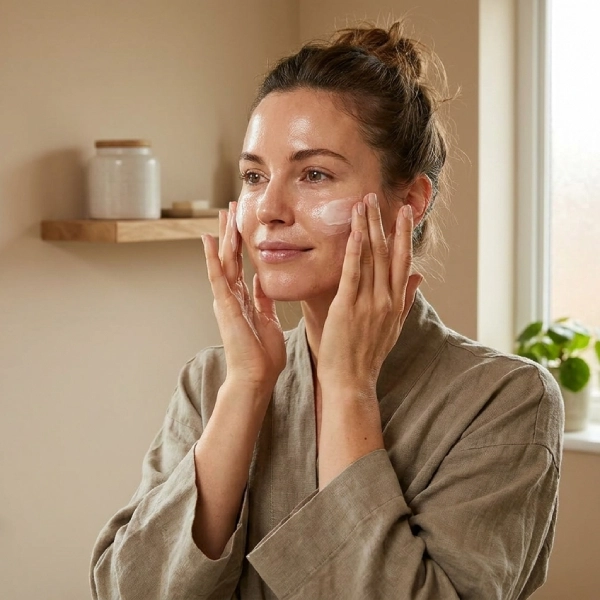
According to Dr. Sejal Shah, a board-certified dermatologist in New York City, xerosis—the formal medical term for what you are experiencing—occurs when the skin lacks the necessary factors (such as lipids) to maintain a healthy skin barrier. Without these essential components, the barrier loses its effectiveness at retaining moisture and blocking irritants, Dr. Shah explains; this creates the ideal conditions for "thirsty" skin. To start, you might notice a rough, scaly, or flaky texture, a lack of radiance, or even cracks if the dryness is particularly severe, Dr. Shah notes. Generally, the skin feels uncomfortable—whether irritated or tight—so you know something is amiss.
Dry skin and dehydrated skin are not the same thing, even though the terms sound similar and their symptoms may overlap, Dr. Shah states. The former is defined by a lack of oils; in other words, the skin barrier needs the fats that provide hydration, elasticity, and vitality. Dehydrated skin, she explains, is characterized by a lack of water. This is considered "generally a temporary skin condition that can affect any skin type, even oily skin," Dr. Shah adds. "For example, someone can have oily skin that is also dehydrated: it may look oily while simultaneously feeling tight or uncomfortable." Skin dehydration is often caused by dry air, the use of harsh skincare products, or weather conditions.
The basics of dry skin

Dry skin often presents as a skin type rather than a fleeting episode (like a flare-up); however, it can also stem from environmental factors (dry air, freezing temperatures), lifestyle habits (frequent swimming in chlorinated pools or heavy use of indoor heating), hormonal changes, and aging. Dr. Caren Campbell, a board-certified dermatologist in San Francisco, notes that dryness tends to become more common with age "because the skin produces less oil and sweat, and loses some of its ability to retain moisture." Additionally, women and smokers are more prone to experiencing dryness. Generally, this skin issue is relatively easy to treat on your own—unlike conditions such as rosacea or acne—but Dr. Campbell recommends consulting a dermatologist if you notice severe or persistent dryness. Skin that is very red, cracked, or intensely itchy could be a warning sign crying out for help... and plenty of hydration! Dry skin can also be associated with skin conditions or medical issues such as eczema, psoriasis, thyroid disease, diabetes, and other health problems, Dr. Campbell adds. In short: if you notice anything unusual about your skin or feel something isn't right, call your dermatologist or schedule an appointment.
The Foundation of a Dry Skin Routine
Your daily routine doesn't have to be overly complicated to be effective, says Dr. Dara Spearman, a board-certified dermatologist in Fort Wayne, Indiana. A simple approach can be just as effective—or even more so—than a 10-step regimen. The key is getting the essentials right: cleanser, moisturizer, and sunscreen. When it comes to ingredients, look for products formulated with components that repair the skin barrier, such as ceramides, hyaluronic acid, glycerin, and squalane; all of these help retain moisture, Dr. Spearman advises.
"For dry skin, less is often more," notes Dr. Shah. "Focus on gentle cleansing, ingredients that strengthen the skin barrier, and consistency, rather than constantly adding more products." Dr. Campbell agrees: "A simple routine works well for most people," she states.
And how can you tell if your skin is well-hydrated? According to Dr. Spearman, it will look smooth and slightly plump, with a healthy glow—the sign of a hydrated, healthy complexion.
Cleanser

"Gentle" is the keyword for the first step of a skincare routine for dry skin. "Harsh soaps and high-foaming cleansers can strip the skin of its natural oils and worsen dryness; therefore, choose a gentle, soap-free cleanser," advises Dr. Campbell. In the morning, use your cleanser or simply rinse your skin with water; then, apply a hydrating serum or essence (if desired), a moisturizer, and sunscreen. It’s that simple! You don’t need to spend a fortune on a cleanser; gentle options are easy to find at drugstores, such as La Roche-Posay’s *Toleriane Hydrating Gentle Cleanser*, which Dr. Shah describes as "an excellent daily choice for dry, sensitive skin, as it cleanses without stripping away the skin's natural moisture." Those with very dry skin might try a cleansing oil, such as Avène’s *XeraCalm Lipid-Replenishing Cleansing Oil*, which replenishes lipids while removing impurities accumulated throughout the day.
Did you like our blog?
Comments (0)
All comments are reviewed and approved by an admin before appearing publicly.
No comments yet - be the first to share your thoughts.