
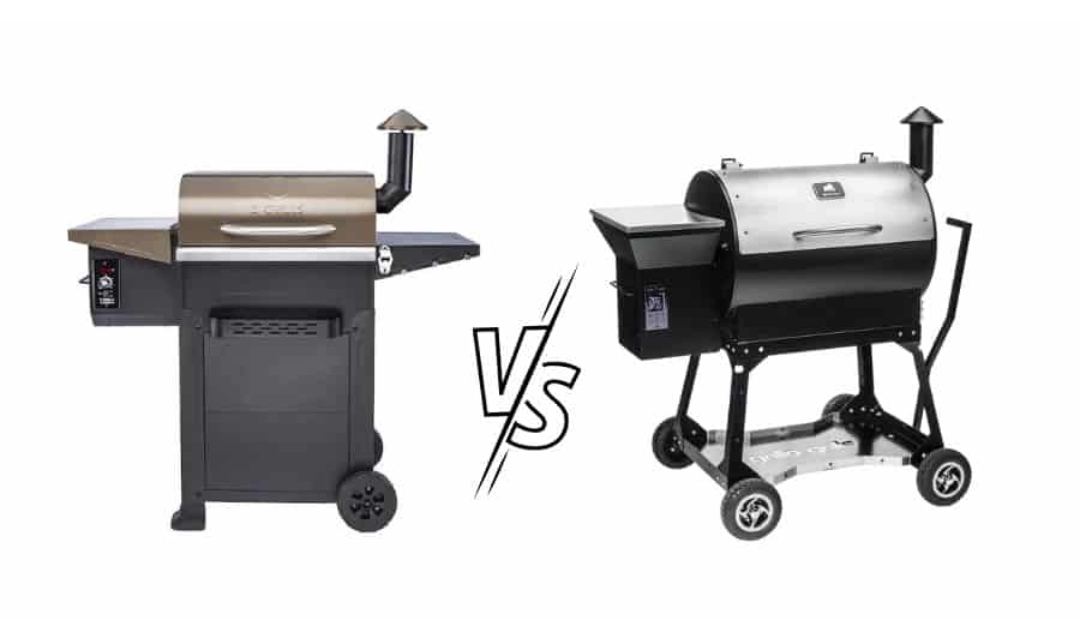
A buddy asked me recently if dropping twice the cash on a Grilla Grills setup was actually worth it, or if those sub-$500 Z Grills packages on Amazon did the exact same job. It's a fair question. On paper, both turn flavored wood compressed into sawdust into slow, steady indirect heat. Both have an auger, a digital thermostat dial, and a grease bucket hanging off the side.
Get closer to the metal, though, and the philosophy diverges pretty fast.
The Weight of the Lid Tells the Whole Story
If you walk up to a Grilla Silverbac and pop the lid open, you feel some resistance. They use double-walled steel wrapped right around the lower barrel. It sounds like an extra feature you don't need until October rolls around.
Try running a thin, single-wall pellet cooker on a breezy evening when the air sits around 42 degrees. The metal turns into a giant heatsink. Wind strips the heat right off the barrel, the internal temperature probe drops, and the controller starts dumping pellets into the firepot like a runaway train. You’ll blow through an entire 20-pound bag of hickory just trying to get a chuck roast through the stall.
Z Grills builds mostly single-wall units. That isn't inherently a dealbreaker if you live down south or simply wheel the smoker into the garage once September football season wraps up. Their sheet metal is typical for budget cookers—sturdy enough to hold a few racks of ribs, but light. Lift the lid on a basic 700 series and you can practically toss it open with two fingers. If you plan to cook outside through a snowy December, factor in another sixty bucks for an aftermarket fiberglass thermal blanket, because you're going to need it on a Z Grills.
The Smoke Flavor Trade-Off
Here is the dirty secret of modern pellet controllers: tighter temperature precision actually ruins smoke output.
When a grill burns wood pellets completely clean to maintain a rock-solid 225 degrees without budging, you barely get any visible smoke. You get heat. That's fantastic if you're baking a Dutch oven peach cobbler on the grates, but disappointing when you pull off an eight-hour pork shoulder and it looks like it came out of an indoor kitchen oven.
Grilla deals with this using what they call their Alpha Smoke board. You get two buttons:
- PID Mode: Leave it on PID, and it behaves like an oven. The fire burns clean, the auger feeds micro-doses of pellets, and temperatures barely wiggle five degrees.
- Pro Mode: Flip it over to Pro mode, and the board gets deliberately lazy. It lets the temperature drop ten or fifteen degrees below target before feeding fresh pellets. Those pellets smolder on the hot coals rather than combusting instantly, sending a heavy, blue plume through the cook chamber before the draft fan kicks back up.
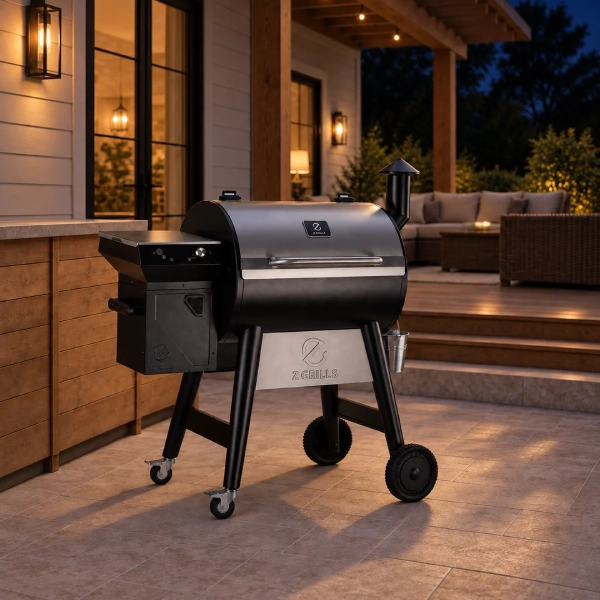
Z Grills runs a decent digital PID board on their current generation. It holds heat steady, no real complaints there. But it burns clean almost the entire time. You get a mild wood taste, yet if you want that heavy, bark-darkening smoke you see on competition barbecue channels, you'll be buying a supplementary stainless steel smoke tube and lighting it with a butane torch beforehand.
Racks, Grate Space, and the Price Tag
This is where Z Grills wins people over, and honestly, they deserve credit for it.
Grilla isn't cheap. The Silverbac gives you roughly 690 square inches if you slide in the top rack extension. That handles two packer briskets or four pork butts easily, which is plenty for normal family weekends. But for roughly the same cash or even less, Z Grills will sell you massive units with 700 to 1,000 square inches of tiered racks.
If you are the person on the block who hosts forty people for Fourth of July or cooks three whole turkeys alongside six trays of mac and cheese, Z Grills gives you raw square footage that Grilla simply won't match at that price bracket. You're trading heavy stainless steel construction for sheer food-holding capacity.
Everyday Maintenance Headaches
Cleaning pellet grills is never fun. Ash builds up, mixes with rogue pork grease, and turns into concrete if moisture gets inside.
- Grilla's hopper & barrel design: Grilla shaped their lower barrel with a steep angle so falling ash slides right beneath the burn cup. On newer builds, there’s a trap door on the back of the hopper. Want to dump competition blend and swap to cherry wood? Pull the slide, let the pellets drop into a bucket, and you're done.
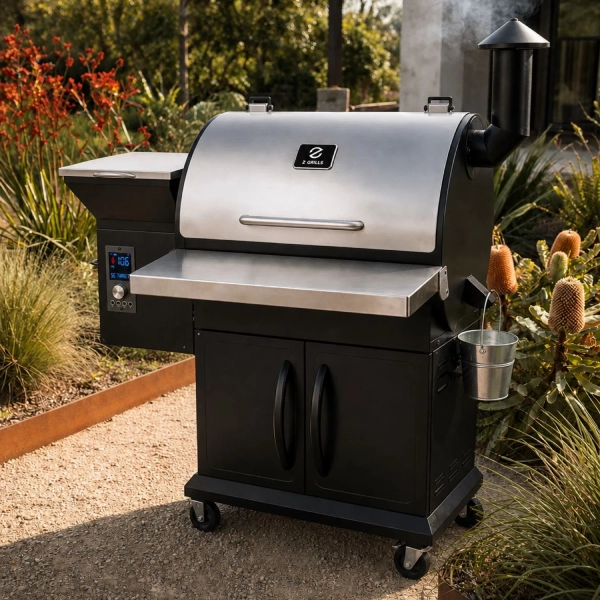
- Z Grills cleanout process: Most entry-level Z Grills require you to physically strip the internal parts every couple of cooks. You pull the cast iron grates, lift the greasy steel heat deflector, remove the drip plate, and hover over the barrel with a shop vac nozzle. It works fine, but it adds ten minutes of greasy cleanup every Sunday evening.
Which One Deserves Your Patio Space?
- Choose Grilla Grills if: You cook in the cold, hate flimsy sheet metal, and want actual smoke bark on your meat without having to buy add-on accessories. It's a buy-it-for-life style purchase built out of heavy hardware.
- Choose Z Grills if: You want to experiment with pellet smoking without risking an entire paycheck, or if you regularly feed an army during the summer months and just need an affordable, massive cooking grid that gets the job done.
Did you like our blog?
Comments (0)
All comments are reviewed and approved by an admin before appearing publicly.
No comments yet - be the first to share your thoughts.