
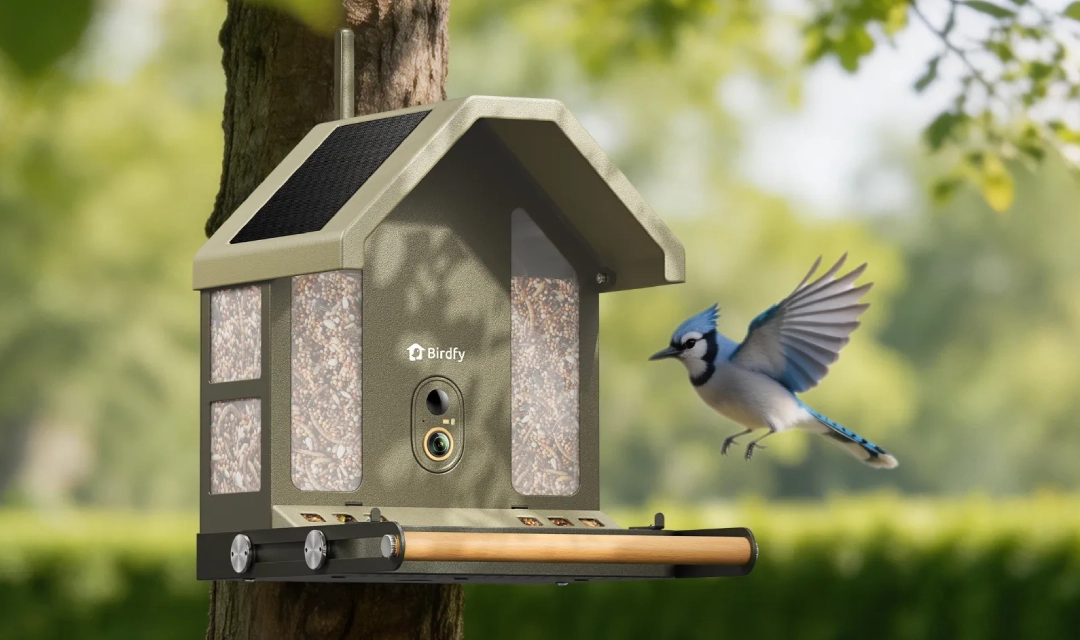
There are two Birdfy feeders that look almost identical on a shop page, and choosing the cheaper one is usually the wrong decision. Here is the arithmetic, because no retail listing presents it this way.
The Birdfy Feeder AI lists at $249.99 and includes a lifetime subscription to Netvue's AI Bird Recognition. The Birdfy Feeder Lite lists at $199.99 and does not include it. You can add recognition to the Lite later for $4.99 a month, which is $59.88 a year.
So the Lite saves you $50 at checkout and then charges you $59.88 every year to do the thing you bought a camera feeder for. The break even point is ten months. After that the cheap one is the expensive one, and it keeps getting more expensive for as long as you own it.
Over three years the Lite with recognition costs about $379 against $249 for the AI model. That is the single most useful fact in this review, and it is the one decision most buyers get wrong.
Verdict in one minute
- Buy the Feeder AI, not the Lite, unless you genuinely do not want species recognition at all.
- The lifetime AI subscription bundled with the Feeder AI is the best value in the product line.
- Add the solar kit. Without it the battery lasted about a week in heavy use. With it, in a sunny spot, it stayed at 100 percent.
- Video is sharp Full HD but compressed. Treat it as a good security camera, not a wildlife photography tool.
- Recognition claims 6,000 plus species and is good but not reliable. A side on squirrel has been identified as a sparrow.
Watch the street price before you decide
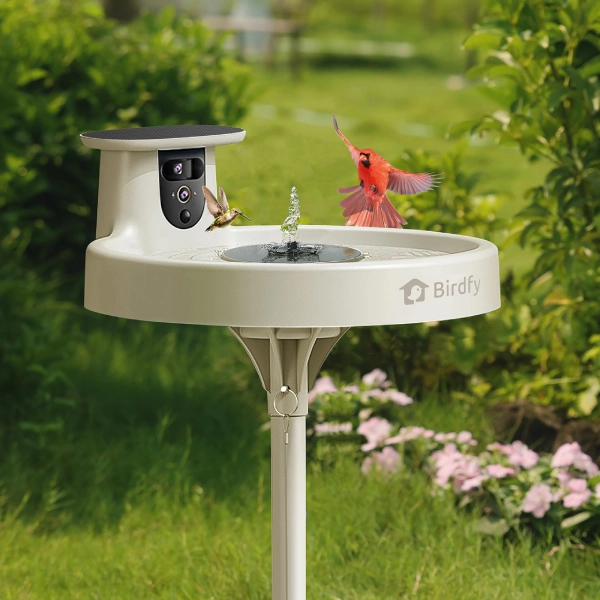
One wrinkle that can flip the recommendation. The Feeder AI has been seen at $169.99 at Walmart against its $249.99 list, which puts it below the Lite's list price.
So check both current prices on the day you buy rather than relying on the list prices. If the Feeder AI is discounted below the Lite, the decision is trivial. If the Lite is heavily discounted and the AI model is not, redo the ten month calculation with the actual prices in front of you. The principle holds regardless: a one off premium beats a monthly fee on a device you intend to keep for years.
Also note availability varies by country. The Feeder AI has not been sold in Australia, where the Lite is the option at AU$329.99.
Birdfy Feeder AI
$249.99 / £249.99 list, frequently discounted. Includes lifetime AI Bird Recognition.
The model to buy. A camera feeder with Full HD video, motion alerts, 30 days of online clip storage, microSD recording in the camera, and species identification built in without an ongoing charge.
Setup is genuinely easy. The app pairs by QR code, and the camera connects on 2.4GHz WiFi at around ten metres from the house without trouble. Expect birds to take a day or so to find the feeder, which is normal and not a fault.
Honest limitations from independent testing:
- The white plastic and blue colourway looks out of place in a natural or rustic garden. This is cosmetic but it is the complaint testers raise most consistently.
- Alexa compatibility is advertised and did not work during testing. Do not buy it for the voice integration.
- The squirrel alarm worked initially and then stopped working, because squirrels habituate. Treat the alarm as a temporary deterrent, not a solution.
- The footage is compressed. It is sharp enough to identify a bird and not sharp enough to print.
Birdfy Feeder Lite
$199.99 / £199.99 / AU$329.99, with no AI recognition included.
The model to buy only if you want a camera on a feeder and genuinely do not care which species is on it. That is a legitimate position. Plenty of people want to watch the birds rather than catalogue them, and the Lite delivers that for less money with no subscription at all.
The mistake is buying the Lite intending to add recognition later. That is the path that ends at $4.99 a month forever. Decide now, because the decision is much cheaper to make at checkout than in month eleven.
If you are in a country where the Feeder AI is not sold, the Lite plus the monthly plan is simply the cost of entry, and you should factor the $59.88 a year into whether you want the device at all.
The solar kit
Sold separately, and the accessory that matters most.
Battery life is entirely a function of how busy your feeder is, because the camera wakes on motion. In testing with over 100 motion alerts, the internal battery lasted about a week. A busy feeder in spring will generate far more than 100 alerts, which means taking the camera down and charging it by USB-C regularly, and a feeder with no camera on it is a feeder you are not watching.
With the solar panel mounted in a sunny position the battery held at 100 percent. The kit includes the panel, a three metre USB-C cable and mounting options, and the cable length is the thing to check: three metres has to reach from the feeder to a spot that actually gets sun, which in a tree shaded garden is the real constraint.
If your only mounting option is deep shade, the solar kit will not save you and you should plan on a charging routine instead, or buy a spare battery if the model supports it.
How good the bird recognition actually is
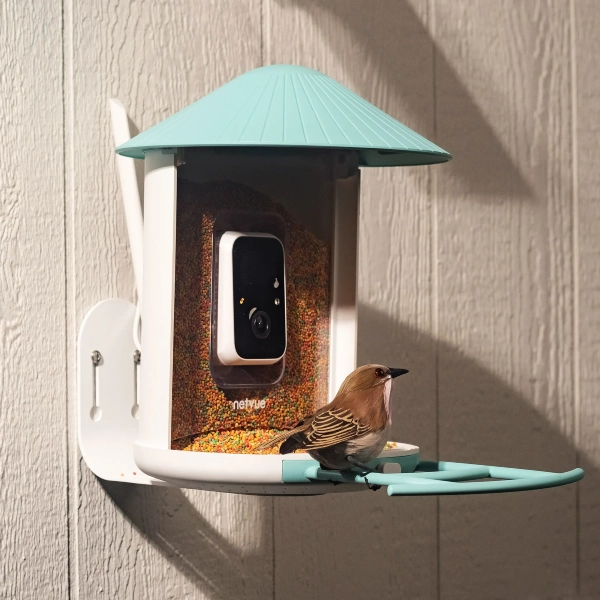
Netvue claims more than 6,000 species. Independent testing could not verify the full database, which is the honest position, and found the recognition correct on clearly different birds while not consistently reliable.
The failure mode is worth understanding. The AI works from a motion triggered frame, which means it is identifying a bird from whatever angle and lighting it happened to catch. A clear side on shot of a distinctive species works well. A partial view, a bird facing away, poor light, or an animal that is not a bird at all produces errors, and a squirrel photographed side on has been classified as a sparrow.
Set your expectation accordingly: this is a very good prompt for identification, not a field guide verdict. It will tell you something interesting arrived and get the common visitors right most of the time. For anything unusual, look at the clip yourself.
The reviewer's expectation that accuracy improves over time is reasonable for a model that is updated, but it is a forecast rather than a feature you are buying today.
Perch Pro and accessories
Sold separately. Accessories in this category are the easiest place to overspend, and the order of priority is clear: solar kit first, because it determines whether the camera works at all, then everything else.
Before buying any add on, solve the two problems that actually affect footage quality, and neither of them costs money. Mount the feeder so the camera faces away from the strongest light, because backlit birds are silhouettes regardless of sensor quality. And position it against a plain background rather than a busy hedge, because motion detection triggers on moving leaves and a feeder in front of a windy shrub will fill your battery and your notifications with nothing.
Before you order
1. Compare the actual current prices of the Feeder AI and the Lite, then apply the ten month rule to whichever numbers you see.
2. Confirm you have 2.4GHz WiFi reaching the feeder's location. These cameras do not use 5GHz, and a router broadcasting a single merged band sometimes needs splitting.
3. Work out your sunniest mounting spot and measure whether a three metre cable reaches it from there.
4. Check whether clip storage beyond 30 days matters to you, and buy a microSD card if it does, since local recording avoids the question entirely.
5. Do not buy it for Alexa. That did not work in testing.
Worth buying if
- You want species identification and will buy the Feeder AI with the lifetime subscription included.
- You have a sunny mounting spot for the solar panel, or will accept a charging routine.
- You want alerts and clips of garden visitors rather than publishable wildlife footage.
- You have reliable 2.4GHz WiFi at the mounting location.
Skip it if
- You only want to watch birds and do not need a camera. A good conventional feeder costs a fraction of this.
- You need accurate identification you can rely on without checking the clip yourself.
- Your garden is deep shade with no WiFi at the far end.
- The appearance matters to you and white plastic in a natural garden will bother you.
Final word
Birdfy makes a good camera feeder that does roughly what it promises, with a cosmetic design people either ignore or dislike and a recognition system that is impressive without being dependable.
The decision that actually costs money is the one the product pages obscure. Buy the Feeder AI with the lifetime recognition included, add the solar kit, and you own the thing outright. Buy the Lite to save fifty dollars and then subscribe, and you will have paid more by next summer and will keep paying every summer after that.
Did you like our blog?
Comments (0)
All comments are reviewed and approved by an admin before appearing publicly.
No comments yet - be the first to share your thoughts.