
Are the best nontoxic sunscreens just marketing speak? In 2026, SPF formulas labeled as “clean” or “nontoxic” are in demand—and according to dermatologists, branding in this category isn’t mere greenwashing. “While the term ‘nontoxic’ is not strictly regulated, it’s often used to describe sunscreens that avoid certain chemical filters like oxybenzone, homosalate, and octinoxate,” says Marisa Garshick, MD, a board-certified dermatologist in Manhattan and New Jersey. “Some consumers prefer this, due to concerns about irritation, allergies, or environmental impact.”
As top brands meet demand and roll out clean formulas with modern technology, nontoxic sunscreens are taking on an increasingly elegant feel, in the vein of Korean sunscreen formulas—so you can rest assured, heavy, white-cast-ridden mineral SPFs are mostly a thing of the past. Another way in which brands find a point of differentiation in the oversaturated market, as Dr. Garshick points out, is by diversifying with skincare-grade ingredients that boast benefits beyond sun protection alone. She also notes that antioxidants and hydrating ingredients, such as hyaluronic acid and glycerin, are becoming the norm in nontoxic sunscreens.
Which formulas are getting the sun-protection job done—and then some? Ahead, find the nontoxic sunscreens that dermatologists most recommend.
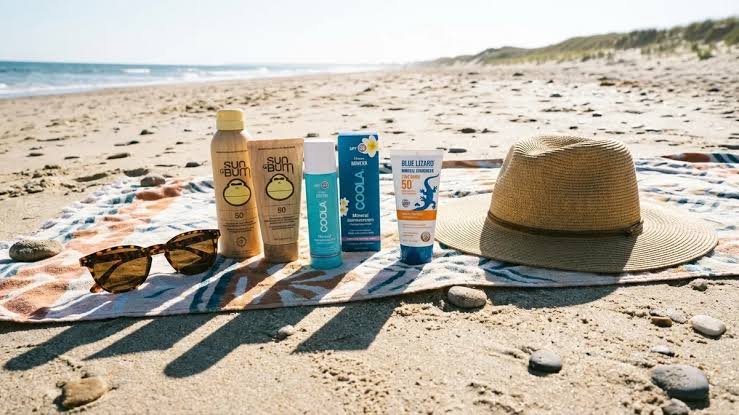
Best Overall: Blue Lizard Mineral Sunscreen
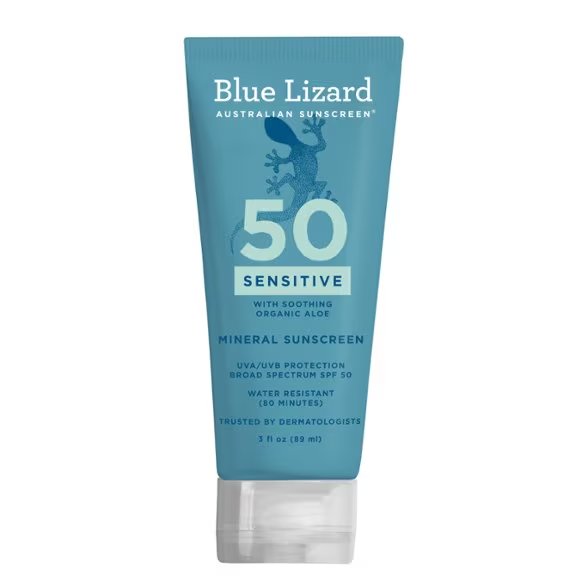
- Why We Love It: Of all the pros we tapped to weigh in on this piece—and there were many—almost everyone recommended Blue Lizard Mineral Sunscreen. There must be something in the formula of this dermatologist-, biochemist-, and facial-plastic-surgeon-approved pick. Let's break it down. Nava Greenfield, MD, a board-certified dermatologist at Schweiger Dermatology Group in New York City, ticks off its attributes: “This is soothing, as it contains aloe vera, and it’s nontoxic for the skin and environment,” she says. “It’s a mineral sunscreen free of harsh chemicals with broad-spectrum coverage.” Aparovich also praises the ingredients. “Featuring a safe mineral filter—zinc oxide—to shield the skin, it provides reliable broad-spectrum protection while rubbing smoothly into your skin,” she says. “A great pick for dry, normal, sensitive, and dehydrated skin, it’s packed with plant-based oils like shea butter and sunflower oil to nourish the skin and protect it from moisture loss.” She adds that it also has aloe barbadensis leaf extract to hydrate and soothe and caprylic/capric triglyceride and squalane to moisturize the skin and strengthen its barrier. Another recommendation comes from Arnold Breitbart, MD, head plastic surgeon at Long Island Facelift. “I’ve used Blue Lizard for years—way before the whole nontoxic sunscreen craze,” he says. "It's always been one of my go-tos. It offers great sun protection, has no harsh chemicals, and is good on sensitive skin." It's even reef safe sunscreen, making it environmentally friendly, too.
- Chemical or Physical: Physical (titanuim dioxide 8%, zinc oxide 10%)
- Key Ingredients: Organic aloe, shea butter, sunflower oil, caprylic/capric triglyceride, squalane
- SPF Level: 50
- Texture: Lotion
- Non-Comedogenic: No
- Size: 5 fl. oz.
Best Serum: La Roche-Posay Anthelios UVAir Daily Supercharged Serum Sunscreen SPF 50
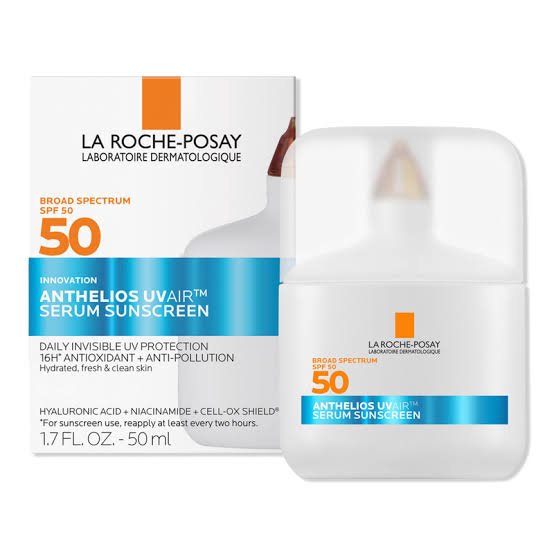
- Why We Love It: French pharmacy favorite La Roche-Posay has expanded its best-loved Anthelios sunscreen collection; although, this UVAir version doesn’t require shaking before application. Its offers a slightly-richer serum-like texture that absorbs fully into the skin with zero white cast and a natural finish. Plus, the formula is packed with additional skin-care benefits aside from sun protection alone—a blend of niacinamide, vitamin E, and cassia alata leaf extract provides up to 16 hours of antioxidant and pollution protection, thanks to the brand’s signature Cell-Ox Shield technology, which combines UVA and UVB filters with antioxidant sun protection from tropical-leaf extracts. That said, this formula isn’t water-resistant like other Anthelios SPFs.
- Editor’s Experience: If La Roche-Posay is going to do anything, it’s make an incredible sunscreen. Year after year, I'm impressed by a new formula. This year, it’s the new Anthelios UV Air. I consider myself a SPF serum connoisseur, and I’d argue this sits more in the “cream” arena. Despite this nuance, it’s still incredibly lightweight—making it one of those formulas you’ll genuinely forget you’re wearing. And because it’s powered by gentle ingredients, it’s an SPF I’d feel comfortable recommending to anyone.
- Chemical or Physical: Chemical (Avobenzone 3%, homosalate 7%, octisalate 5%, octocrylene 7%)
- Key Ingredients: Glycerin, niacinamide, sodium hyaluronate, tocopherol, cassia alata leaf extract
- SPF Level: 50
- Texture: Milky serum
- Non-Comedogenic: Yes
- Size: 0.17 fl oz
Best for Sensitive Skin: Lesse Every Tone SPF 30 Mineral Facial Sunscreen
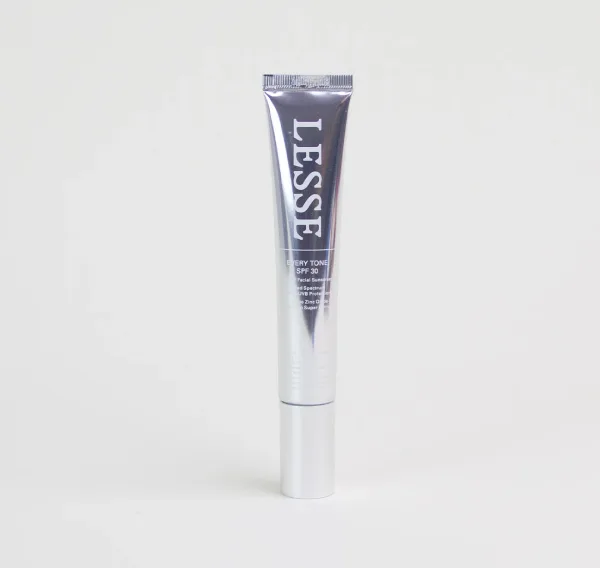
- Why We Love It: Designed to blend across skin tones, Lesse’s Every Tone SPF 30 takes a skincare-first approach to sun protection. Infused with botanical antioxidants—including Australian superfruits like riberry and pepperberry—the minimalist formula supports a calm, balanced complexion. As Rayva Khanna, MD, a dermatology resident at Georgetown University Medical Center, explains: “This is a mineral-based sunscreen formulated with zinc oxide, which provides broad-spectrum UV protection against both UVA and UVB while being gentle on the skin and supportive of the skin barrier.” She adds that its antioxidant ingredients have “a soothing effect” on sensitive and reactive skin. The sunscreen is also enriched with vitamin E and nourishing oils.
- Editor’s Experience: Elegant mineral sunscreens are hard to come by, but it’s a category Lesse has mastered. Every Tone sunscreen offers a seamless blend; the serum massages in with an undetectable finish to reveal a natural finish with a subtle glow. True to the brand’s clean philosophy, it’s formulated with thoughtful ingredients. It’s my go-to on days in the sun and on vacation, when UV protection is of the utmost importance.
- Chemical or Physical: Physical (zinc oxide ~17%)
- Key Ingredients: Zinc oxide, aloe, buriti fruit oil, riberry and pepperberry extracts, vitamin E
- SPF Level: 30
- Texture: Cream
- Non-Comedogenic: Mostly (just one potential pore-clogging ingredient)
- Size: 1.7 oz
Best Tinted Sunscreen: Carte Blanche Multi-Hyphenate Brightening Skin Tint Mineral SPF 35
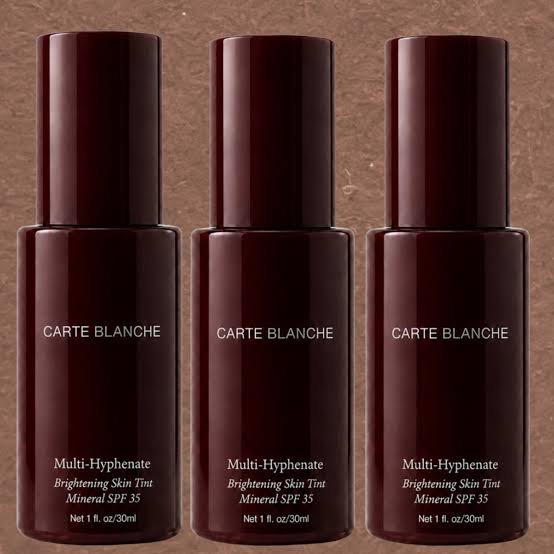
- Why We Love It: Niche beauty brand Carte Blanche only just launched this past September, and their inaugural product is a skincare-makeup hybrid. True to its name, both a skin tint and mineral sunscreen, the Multi-Hyphenate imparts sheer complexion coverage and a barely there feel that can make one forget you're wearing makeup. While its powered by zinc oxide, the star ingredient, though, is plant-derived exosomes, alongside brightening bakuchiol and vitamin C to treat skin from the inside out.
- Editor’s Experience: I’m obsessed with how this skin tint feels. A long-time sucker of a tinted gel cream, it’s nice to see that texture still reigns supreme. On coverage, you're left with a beautiful sheer, yet natural finish. Because I'm in between shades (07 is too light, and 08 is too warm), I have to do a bit of beauty editor-magic to make it match my notoriously tricky undertones, but when I get the mix right, it's fabulous.
- Chemical or Physical:
- Key Ingredients: Exosomes, licorice extract, vitamin C, bakuchiol, squalane, panthenol, tomato extract
- SPF Level: 35
- Texture: Fluid
- Non-Comedogenic: No
- Size: 1 fl oz
Best Sunscreen Drops: Kora Organics Silky Sun Drops
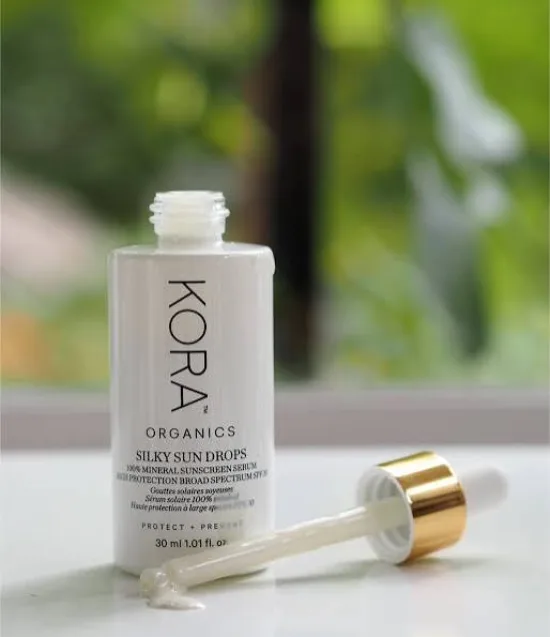
- Why We Love It: Kora Organics's Silky Sun Drops do double duty as sun protection and glow-booster. “Kora Organics doubles as a sunscreen and skincare,” Dr. Khanna says. “The zinc oxide in the formula provides protection from UV radiation, while the combination of oils like chia seed oil and sunflower seed oil helps hydrate the skin and provide barrier support.” She notes that the formula also has antioxidant protection with raspberry seed oil, which provides additional protection against environmental stress. With a serum-like texture, the formula layers seamlessly under makeup, and delivers a dewy finish. Plus, the formula is EWG verified and reef-friendly.
- Chemical or Physical: Physical (zinc oxide 17%)
- Key Ingredients: Zinc oxide, chia seed oil, sunflower seed oil, raspberry seed oil, ectoin
- SPF Level: 30
- Texture: Serum
- Non-Comedogenic: No
- Size: 1 fl oz
Best for a Glow: Kosas DreamBeam Comfy Smooth Sunscreen Broad Spectrum SPF 40
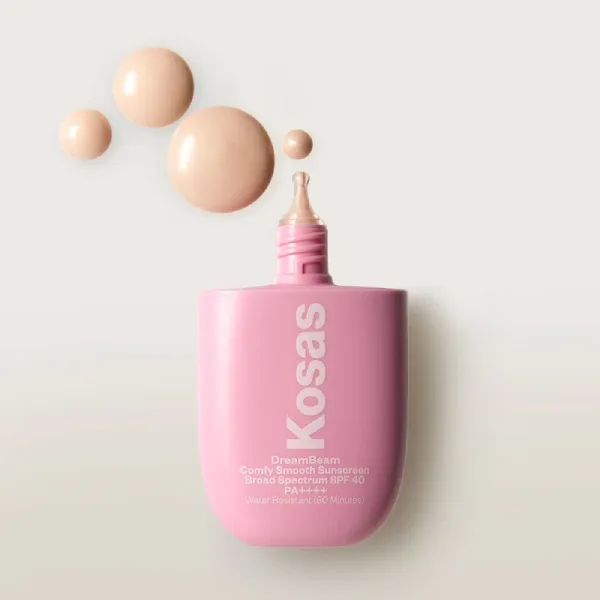
- Why We Love It: Ideal as a makeup base, Kosas’s hypoallergenic, dermatologist-tested formula can also be worn on its own to revive the skin with a hint of dewy tint. “Mineral-filter based, this formula is still easy to apply and reapply quickly and evenly, thanks to a peachy-pink tint that helps neutralize the typical bluish-white cast of zinc oxide,” Dr. Aparovich says. (In addition to the pinkish original hue, the formula comes in the warm, golden sunlit shade.) “While protecting your skin from sun damage, the smart formula also blends skin-care ingredients like ceramides, peptides, galactoarabinan, bioflavonoids, allantoin, and glycoproteins,” Dr. Aparovich continues. “These moisturize and comfort the skin and support its protective barrier throughout UV exposure.” She adds that the sunscreen works for dry and normal skin types and is also suitable for sensitive skin. Pro tip: If using it as a makeup base, let the product dry for three to five minutes before layering it with other products.
- Chemical or Physical: Physical (non-nano zinc oxide 21.7%)
- Key Ingredients: Ceramides, peptides, allantoin, hyaluronic acid
- SPF Level: 40
- Texture: Fluid
- Non-Comedogenic: No
- Size: 1.3 oz.
Best Certified Organic: Forah Everyday Mineral Sunscreen SPF 30
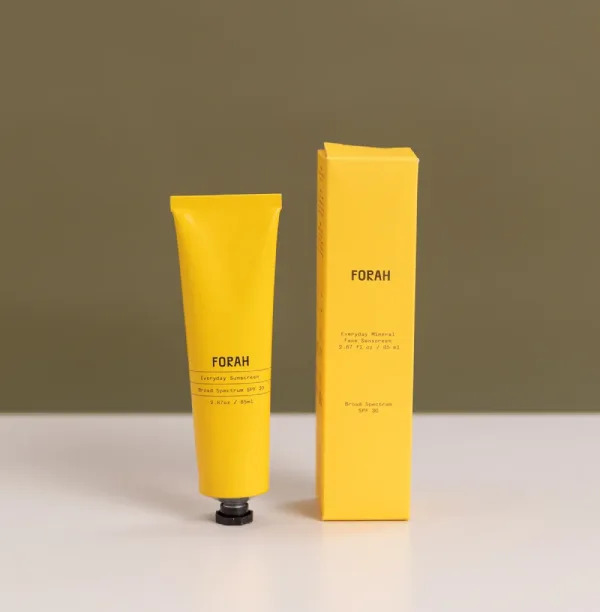
- Why We Love It: Like the Erewhon smoothie of sunscreens, Forah's SPF 30 formula blends a cocktail of antioxidant-packed ingredients—think organic sea buckthorn oil, organic cold-pressed golden jojoba oil, and organic sweet almond oil—that almost sound good enough to drink. (Please don’t, though.) Dr. Greenfield can hardly get enough of the luxurious, chicly packaged sun protection, which is also loaded with collagen-boosting botanical extracts. “It’s certified organic, which I love,” she says. "It has both zinc and titanium dioxide along with antioxidants, natural-based oils, and seaweed extract, which hydrate and protect the skin. It's also free from nanoparticles, harsh chemicals, and dyes." Plus, with a silky, creamy texture that melts into the skin, the complexion-nourishing sunscreen wears like a dream.
- Chemical or Physical: Physical (non-nano zinc oxide 10%, non-nano titanium dioxide 7%)
- Key Ingredients: Organic sea buckthorn oil, organic cold-pressed golden jojoba oil, organic sweet almond oil, seaweed extract, biodynamic avocado oil
- SPF Level: 30
- Texture: Silky cream
- Size: 2.87 oz.
Everything You Need to Know
What is a non-toxic sunscreen?
“There is no formal definition that qualifies something as nontoxic, but when it comes to sunscreens, it generally refers to those that don’t contain ingredients like oxybenzone or other chemical filters,” Dr. Garshick explains.
Aparovich, whose role as a biochemist at OnSkin involves safety analysis of cosmetic formulas, dives into deeper. "Nontoxic refers to a sunscreen containing no components that can be potentially detrimental to human health from the overall formulation perspective. It means that neither UV filters nor any auxiliary ingredients—such as stabilizers, emulsifiers, film-forming agents, preservatives, or fragrances—can induce known or suspected hazards, including skin irritation and sensitization, allergic reactions, endocrine disruptions, genotoxicity, and more," she explains.
While it’s commonly thought that, in sunscreens, nontoxic refers to mineral sunscreens only, Aparovich dispels the myth. “From a human-safety standpoint, sunscreen formulas may include both mineral (physical) and/or organic (chemical) filters, with no adverse effects associated with them,” she stipulates.
Are nontoxic sunscreens as good as traditional sunscreens?
“Mineral or nontoxic sunscreens are just as effective as traditional sunscreens when used correctly,” says Dr. Day. “For my patients with eczema or psoriasis, I actually prefer them. They’re less likely to cause stinging, burning, or flares and provide excellent broad-spectrum protection.” Just like any sunscreen, she says, nontoxic ones need to be applied generously and reapplied often, especially after sweating or swimming.
What to Look for in a Nontoxic Sunscreen
Overall, Aparovich advocates looking for a sunscreen formula suited to an individual’s skin type. “People with oily, combination, or acne-prone skin should opt for products free from comedogenic ingredients to avoid clogging pores and triggering inflammation, blackheads, or breakouts,” she says. These ingredients include cacao, palm, coconut, and wheat-germ oils and chemicals like acetylated lanolin alcohol, isopropyl myristate, isopropyl linoleate, isopropyl isostearate, isopropyl palmitate, myristyl lactate, myristyl myristate, laureth-4, oleyl alcohol, and ethylhexyl palmitate.
“These are the ingredients with the highest comedogenicity rate,” she says. People with dry or sensitive skin should avoid harsh alcohols, such as alcohol, alcohol denat, ethanol, or SD alcohol, Aparovich adds. “These ingredients can compromise the skin’s barrier and cause irritation.” Additionally, she notes that an ideal nontoxic sunscreen should provide broad-spectrum protection to shield the skin from UVA and UVB rays and help reduce the risk of complex DNA damage in skin cells.
“Another key point is sunscreen’s sun protection factor, or SPF,” she says. “It indicates how effectively sunscreen can protect your skin from UVB rays, the ultraviolet light associated with sunburn.” Aparovich recommends choosing sunscreens with at least SPF 30 but ideally SPF 50, especially when the UV index is three or higher.
Is there a 100% natural sunscreen?
“Technically, there are sunscreens that claim to be 100% natural, but that term isn’t regulated,” Dr. Day says. “What matters more is that the product is clinically tested, well tolerated by sensitive skin, and free of known irritants.”
What ingredients should you avoid in sunscreen?
“Three of the most hazardous chemical filters to avoid are oxybenzone (benzophenone-3), homosalate, and octinoxate,” says Aparovich. “Studies have shown oxybenzone to be a common allergen, as well as an irritant to the eyes and skin, and a potential endocrine disruptor.” She adds that homosalate and octinoxate are linked to possible adverse effects on the endocrine system and that all three ingredients have been shown to have a negative impact on marine life and coral reefs. Additionally, Aparovich recommends avoiding formaldehyde-releasing preservatives like imidazolidinyl urea, Quaternium-15, and diazolidinyl urea, along with fragrances classified as allergenic, such as cinnamal, citral, farnesol, coumarin, eugenol, geraniol, and others. “These chemicals can trigger allergic reactions and skin irritation,” she notes. Dr. Garshick recommends seeking paraben-free products, as the ingredient can irritate some skin types.
How We Tested
When we test and review a product, we take a holistic approach to deliver well-rounded product recommendations. First, we lean on Vogue’s vast network of experts—from board-certified dermatologists to celebrity estheticians—to gain professional acumen on the industry’s standout products, ones these specialists would actually use on their clients. We pair their expertise with our editorial best practices to curate the thoughtful edits you read on our site.
As it relates to nontoxic sunscreens, we selected the best based on the following characteristics: ingredients, SPF type, texture, packaging, finish, and the skin-care concerns they address. To do this, we paired our own personal tests of each formula with expert guidance and reviewer insights to determine which we would recommend to you.
Did you like our blog?
Comments (0)
All comments are reviewed and approved by an admin before appearing publicly.
No comments yet - be the first to share your thoughts.