

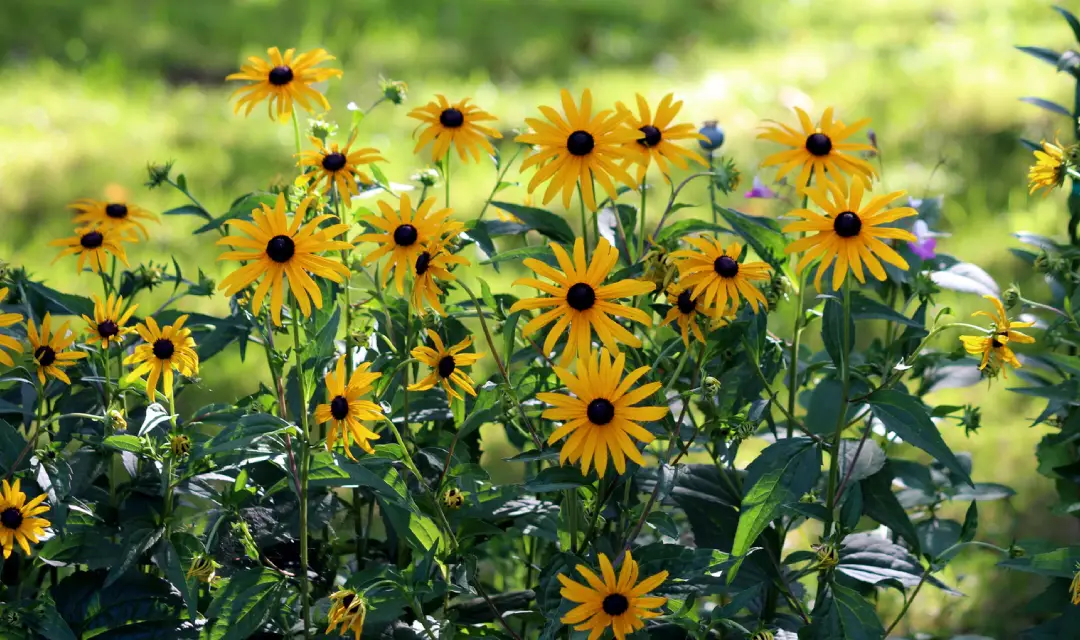
By August, a certain sense of fatigue begins to settle over the garden. The fresh green of May and June has long since faded. Yet, *Rudbeckia hirta* (commonly known as black-eyed Susans) are reaching the peak of their summer glory. Standing tall and displaying blooms in brilliant shades of yellow, orange, and ochre, they take center stage in flowerbeds throughout August and September.
Native to vast regions of North America—including the plains and prairies of the Midwest—these plants are remarkably hardy and easy to care for. They thrive in hot, dry climates; even a modest clump can produce an impressive mass of flowers. I am particularly fond of varieties like 'Indian Summer', with its huge golden blooms, and 'Autumn Forest', whose petals display bronze and reddish hues. Best of all, their distinctive dark centers are packed with tiny florets, offering a valuable late-summer feast for pollinators.
Growing these plants is relatively simple, but a few tasks performed in August can extend their blooming season well into autumn. There are many unique varieties beyond the standard yellow-petaled types—such as 'Prairie Glow', with its warm orange and red tones (available from Nature Hills)—that can add extra interest to containers and flowerbeds as summer draws to a close. Here are four tasks you can perform with your rudbeckias during August.
1. Watering
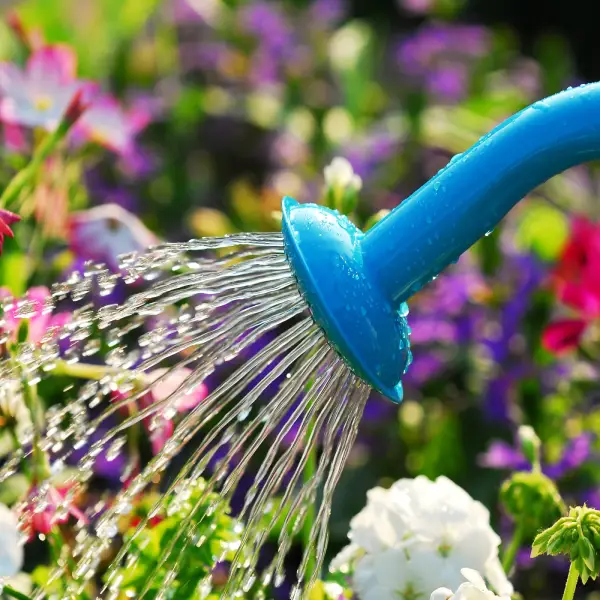
Rudbeckias (known as Black-eyed Susans) are hardy prairie plants, but that does not mean they should be left completely without water during a hot, dry August. Newly planted rudbeckias (those planted this year) will especially need some help while they become established.
Instead of watering lightly every evening, water deeply every few days during periods of prolonged drought, directing the water to the soil around the base of the plant.Plants that are already established in the ground require far less attention; I would only intervene when the soil is truly dry (and cracked). If you are unsure, you can also use a moisture meter, like this one from Walmart.
Potted plants are a different story, as they can dry out surprisingly fast—sometimes in a matter of hours—under the August sun; therefore, it is best to check them frequently.
2. Deadheading
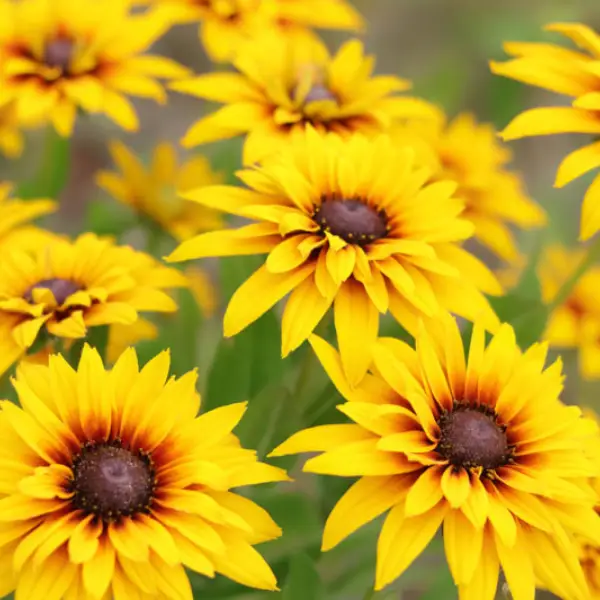
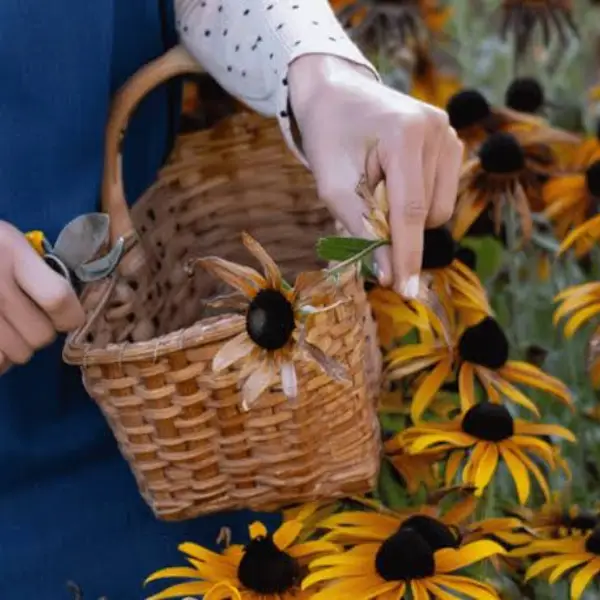
Deadheading *Rudbeckia hirta* (known as "black-eyed Susan") in August isn't really essential. Removing the occasional brown or spent flower might make the plant look tidier, but it won't trigger a new, abundant flush of blooms.
To trim any stems that need it, try these Spear & Jackson pruning shears, available at Target.
Personally, I like *Rudbeckia* plants as they begin to fade. Their yellow and orange petals gradually lose their intensity and drop off, leaving the distinctive dark central cones standing throughout the autumn. Those seed heads are also very useful: once the flowers fade, the developing seeds provide food for birds, while the upright stems add structure to flowerbeds during autumn and winter. For this reason, I usually put away my pruning shears toward the end of August. I prefer to do the main cleanup around February or early March, cutting back the old stems just before new spring growth appears.
3. Staking
I find that *Rudbeckia hirta* (known as "black-eyed Susans") generally stand up quite well on their own; however, taller varieties may begin to lean or flop over, especially following the heavy rains and winds common in September.
Ideally, you should stake taller perennials in early spring, using hazel supports that allow the plant to grow up through them until the supports are almost completely hidden. However, if your rudbeckias are already starting to flop, don't worry: simply insert some bamboo canes or hazel stakes and loosely tie the stems to them with garden twine; metal plant supports work well, too.
These metal supports can be purchased on Amazon.
If you have an open space, you might opt for a compact variety like "Glitters Like Gold"; live plants are available from Nature Hills. This shorter variety grows no taller than 90 cm (three feet) and should withstand autumn winds without any major issues.
4. Don't fertilize them
Generally, *Rudbeckia hirta* (known as "Black-eyed Susans") do not require a lot of nutrients; if they are growing in healthy soil, they certainly shouldn't need extra fertilizer. As summer draws to a close, there is even less reason to reach for the fertilizer products stored in your garden shed.
Applying a nitrogen-rich fertilizer now could trigger excessive foliage growth at the expense of blooms—just when the plants should be focusing their energy on putting on their final display of summer color.
Instead, let your established plants—whether in flowerbeds or pots—follow their natural course, simply watering them during prolonged dry spells. If the soil needs improvement, you can add some well-rotted compost or organic matter around the plants in the autumn. In August, however, it is best to leave the fertilizer in storage.
If you are looking for more seasonal inspiration, check out our guide to caring for coneflowers (*Echinacea*) in August; you’ll find plenty of tips for keeping these colorful perennials in top shape.
If you love inspiring garden ideas, outdoor living tips, and the latest news, why not subscribe to our newsletter? You’ll receive our newest articles straight to your inbox.
Did you like our blog?
Comments (0)
All comments are reviewed and approved by an admin before appearing publicly.
No comments yet - be the first to share your thoughts.