
As a beauty editor, sunscreen is a near-daily topic of conversation, practically as commonplace as the weather. But when you have oily skin, finding the right formula isn't about picking up the next new tube, but finding one that won't slide off my face; or even worse, one that yields a breakout. Sometimes it feels like I can either protect my skin from UV rays or create a whole new set of skin problems.
Sunscreen remains one of the trickiest skin-care categories to get right when you have oily skin. You want something that protects your skin without feeling greasy, clogging pores, or pilling under makeup; a balance that board-certified dermatologist Marnie Nussbaum, MD knows all too well. “I always tell my patients that oily skin still needs hydration and daily sun protection, but I often get pushback because sunscreens can feel heavy or leave behind a greasy finish for those with oily skin.”
Fortunately, there’s no shortage of options these days, from mineral and chemical filters to tinted and shockingly clear formulas, with finishes ranging from matte to luminous. There’s also an entire world of SPF out there, and I send an eye emoji every time I hear a friend is headed to Paris, Seoul, Tokyo, or Sydney. They know exactly what I'm after.
After plenty of trial and error, I’ve learned to pay close attention to whether a formula is noncomedogenic, meaning it’s designed not to clog pores. I even run ingredient lists through online acne checkers for good measure. Board-certified dermatologist Shereen Teymour, MD, recommends looking for not just non-comedogenic formulas, but ingredients like niacinamide, glycerin, or hyaluronic acid, which can help balance oil production and support the skin barrier without contributing to a greasy feel. “One of the biggest misconceptions is that oily skin does not need hydration,” she explains. “In reality, dehydrated skin can sometimes compensate by producing even more oil.”
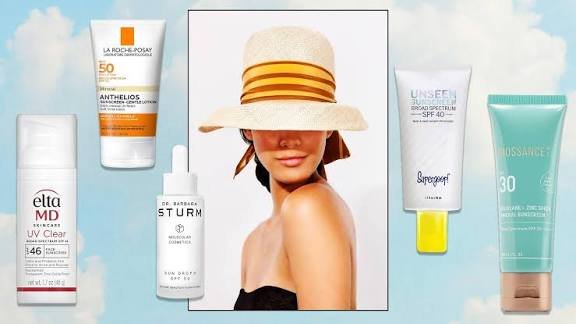
Ultimately, the best sunscreens for oily skin offer lightweight textures and comfortable finishes that make you actually want to apply them every day. Below, the formulas I’d recommend, plus how to apply them so you’re glowing, not glistening—and always protected from the sun.
Best Lightweight: Isdin Fusion Water Magic
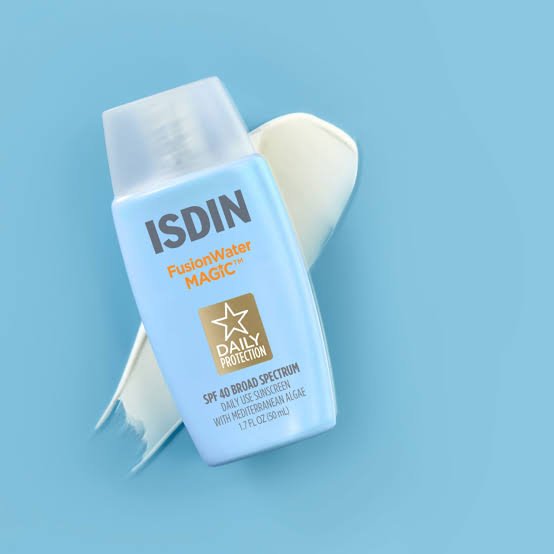
- Why We Love It: Lightweight and fast-absorbing, this sunscreen really feels like magic. It delivers broad-spectrum SPF 40 protection without adding unwanted shine. According to board-certified dermatologist Dendy Engelman, MD, the noncomedogenic formula is designed not to clog pores—using silica to help absorb excess oil and create a smoother finish, alongside hyaluronic acid to hydrate without heaviness. “I also appreciate the addition of vitamin E and Mediterranean algae extract, which provide antioxidant benefits to help defend against environmental stressors,” Dr. Engelman says. “It’s a great option for oily or combination skin types who want effective sun protection that feels comfortable enough to wear every day, which is important, because the best sunscreen for you is the one you’ll actually use.”
- Editor’s Experience: I was initially nervous this sunscreen would leave a white cast because it comes out very white, but it actually blends into the skin really nicely, leaving behind a sheen without a hint of white cast. There’s also nothing I hate more than a sticky, tacky, heavy sunscreen, and this one feels refreshingly lightweight. Unfortunately, it’s not the same formulation as the European version (legal reasons), which I love, but it’s still really good and hasn’t caused my oily skin to break out. —Iman Balagam, contributor
- Key Ingredients: Algae extract, hyaluronic acid, vitamin E
- Chemical or Mineral: Chemical (Octocrylene, Homosalate, Octisalate, Avobenzone)
- SPF Level: 40
- Broad-Spectrum: Yes
- Oil-Free: Yes
- Finish: Radiant
Best Gel Formula: Sekkise Herbal UV Defense Gel Face Sunscreen
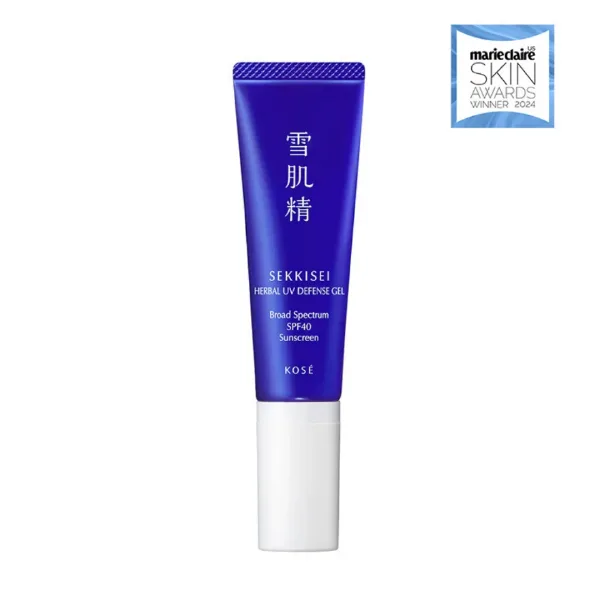
- Why We Love It: If you’re a J-beauty loyalist, Sekkisei is a popular Japanese brand whose name translates to “snow,” reflecting its philosophy of luminous, snow-like skin. Of its collection, this gel-cream formula blends beautifully, and Dr. Nussbaum praises its chemical UV filters, noting that it’s a good option for oily skin thanks to silica, which helps absorb excess oil and mattify the complexion. “It is also a lightweight hydrating serum as opposed to a heavy cream-based product, which is less pore-clogging and keeps the skin dewy.”
- Editor’s Experience: While I haven’t made it to Japan just yet, I like to microdose the experience through Japanese sunscreens, because the formulas are hard to beat. This gel formula blends into the skin effortlessly, so there's no risk of a white cast, and it's never caused me to break out. Paired with my usual skin-care routine, it leaves my skin looking plump and dewy. —I.B.
- Key Ingredients: Angelica extract, licorice root extract, aloe leaf extract
- Chemical or Mineral: Chemical (Homosalate, Octisalate, Avobenzone, Octocrylene)
- SPF Level: 40
- Broad-Spectrum: Yes
- Oil-Free: No
- Finish: Radiant
Best Sunscreen Serum: SKIN1004 Centella Hyalu-Cica Water-Fit Sun Serum
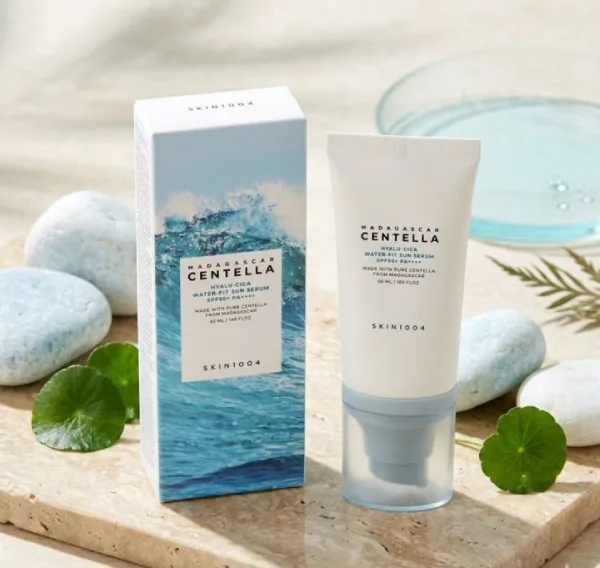
- Why We Love It: If texture is your primary concern, this serum offers a lightweight, fluid consistency that is especially characteristic of Korean sunscreen formulations, melting into the skin rather than sitting on top of it. “The addition of centella asiatica gives the formula a soothing quality, while humectants like hyaluronic acid derivatives help maintain hydration without feeling heavy,” says Teymour. “For oily skin, finding a sunscreen that feels comfortable enough to wear consistently is often half the battle, and this formula tends to check that box for many people.”
- Editor’s Experience: I’ve been hooked on this sunscreen since my first use. With a lightweight, serum texture, it delivers excellent moisture without making the skin feel heavy.
- Key Ingredients: Centella asiatica extract, niacinamide
- Chemical or Mineral: Chemical (Uvinul A Plus, Uvinul T 150, Tinosorb M, Uvsorb HEB)
- SPF Level: 50
- Broad-Spectrum: Yes
- Oil-Free: Yes
- Finish: Dewy
Best Under Makeup: Ultra Violette Supreme Screen SPF 50 Facial Sunscreen
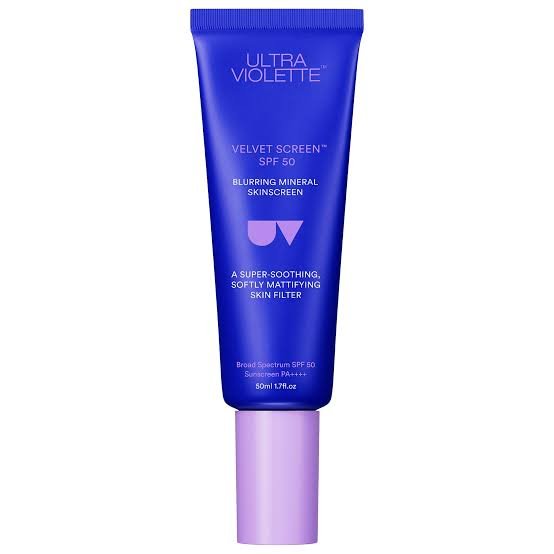
- Why We Love It: Ultra Violette Supreme Screen is, according to Teymour, an excellent option for oily skin, with a formula that feels lightweight and cosmetically elegant without sacrificing hydration. Many people with oily skin tend to avoid sunscreen because they associate it with heaviness or excess shine, but this formula absorbs beautifully and wears especially well under makeup. It leans more toward a skin-care–meets–primer texture than a traditional sunscreen, which often makes it easier to incorporate into a daily routine. “I also appreciate that it delivers broad-spectrum protection in a formula that feels comfortable enough for daily use,” she adds.
- Editor’s Experience: Made in Australia, I love the entire Ultra Violette lineup for how seamlessly it absorbs into the skin, never leaving behind a white cast and offering a range of formats to play with, including an easy-to-use reapplication mist that I like to use alongside this one. It doesn’t feel like the sunscreen of my youth, the child I dreaded my mom rubbing into my skin, but something that now sits comfortably within my skin-care routine, feeling hydrating on the skin while creating a smooth base for makeup. —I.B.
- Key Ingredients: Squalane, kakadu plum
- Chemical or Mineral: Chemical (Avobenzone 3%, Homosalate 7%, Octisalate 5%, Octocrylene 8%)
- SPF Level: 50
- Broad-Spectrum: Yes
- Oil-Free: Yes
- Finish: Satin, primerlike
Best for Acne-Prone Skin: Sofie Pavitt Face Screentime Non-Comedogenic Hydrating Sunscreen
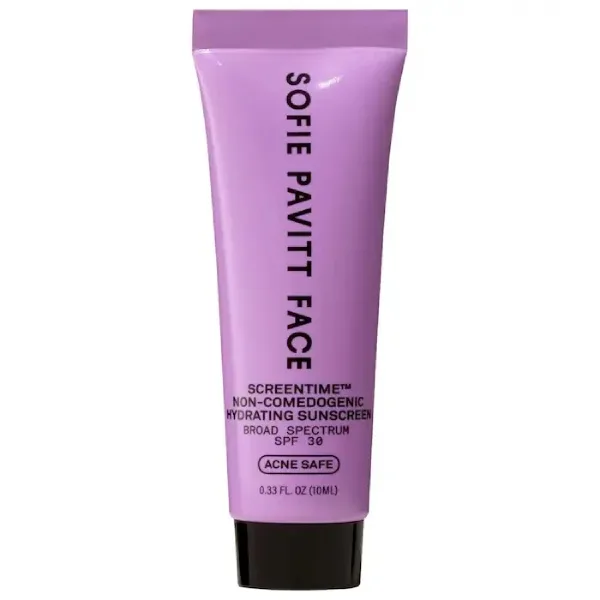
- Why We Love It: What sets Sofie Pavitt Face Screentime Sunscreen apart is that it was specifically developed with acne-prone skin in mind. “For oily skin, noncomedogenic is an important feature I look for, since heavier, pore-clogging formulas can contribute to breakouts,” says Teymour. The formula features niacinamide, which helps support a more balanced-looking complexion and can reduce the appearance of excess oil over time, alongside ectoin, a barrier-supporting ingredient that helps defend against environmental stressors. Despite its hydrating feel, she notes that it remains lightweight and non-greasy and leaves no white cast, making it especially appealing for those who dislike the feeling of sunscreen on the skin.
- Editor’s Experience: It’s no secret that I’m a big believer in Sofie Pavitt’s philosophy—her products included—and it’s because I don’t have to fear any of them breaking out my breakout-prone skin. SPF in particular is not an area I venture into experimentation territory, since comedogenic ingredients mixed with summer sweat often cause unwanted acne. However, this SPF is so silky smooth, like a lightweight lotion. Plus it's hydrating enough that I skip my morning moisturizer when I use it. Zero pilling, zero pore-clogging ingredients, zero things I don’t love about it.
- Key Ingredients: Ectoin, niacinamide, vitamin E
- Chemical or Mineral: Chemical (Avobenzone 3%, Homosalate 7%, and Octisalate 5%)
- SPF Level: 30
- Broad-Spectrum: Yes
- Oil-Free: Yes
- Finish: Natural
Best Non-greasy: La Roche-Posay Anthelios Light Fluid Facial Sunscreen
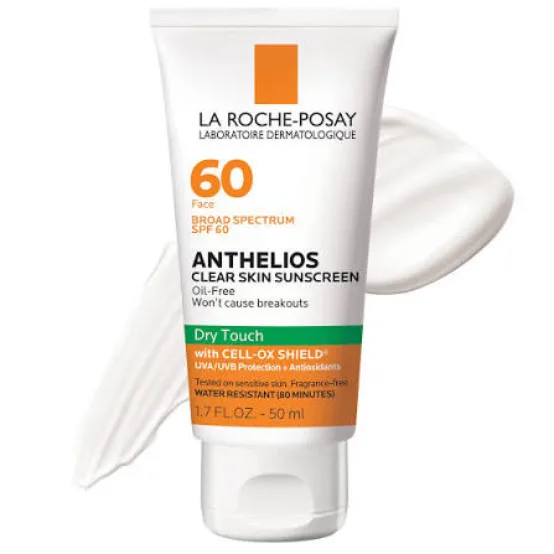
- Why We Love It: Haifa says this lightweight sunscreen features a nongreasy texture that absorbs quickly without leaving any residue. With SPF 60, it provides a high level of protection against both UVA and UVB rays. It's incredibly easy to apply with no elbow grease required. The milky texture glides effortlessly over the skin, leaving a smooth finish and a natural, healthy glow. It’s also fragrance-free, noncomedogenic, and water-resistant for up to 80 minutes, so you’re in the clear on your beach vacation for a bit longer than other options.
- Editor’s Experience: Fluid is the correct marketing term here, as this sunscreen has a necessarily runny consistency, making it best applied by pouring it directly into the palms of your hands. Because it is so lightweight, it blends easily into the skin and does not pill or feel heavy once applied. My only note is that it can require a bit of extra effort to work in fully and eliminate the white cast it leaves behind when I'm more tanned, although it does eventually fade into the skin. —I.B.
- Key Ingredients: Vitamin E, silica
- Chemical or Mineral: Chemical (Avobenzone 3%, Homosalate 10%, Octisalate 5%, Octocrylene 7%)
- SPF Level: SPF 60
- Broad-Spectrum: Yes
- Oil-Free: Yes
- Finish: Natural
Everything You Need to Know:
What to Look for in a Sunscreen for Oily Skin
For those with oily skin, board-certified dermatologist Dara Spearman, MD, says the number one thing to look for is a noncomedogenic formula. Dr. Brendan Camp, MD, a double-board-certified dermatologist and dermatopathologist, adds that oil-free, lightweight sunscreens with a mattifying or gel-based texture tend to work best. “A gel-based formula may work better than a heavy cream,” says Spearman. “Some brands even offer liquid sunscreens that dry down to a matte finish, which is ideal for oily skin.”
Should oily skin types use mineral or chemical sunscreens?
It really just depends on your preference. “Oily skin types can use mineral or chemical sunscreens but should look for a lightweight, noncomedogenic formula,” says Camp. However, Spearman suggests opting for mineral formulas, noting that “chemical-based sunscreens can leave skin feeling greasy.”
Can I skip moisturizer and use sunscreen for oily skin?
While it's always best to experiment and see what works for your skin, Spearman says it's absolutely fine to skip moisturizer if you're using a sunscreen that suits your needs. "Doubling up with moisturizer and sunscreen is not necessary for those with oily skin. In fact, I often recommend that my acne-prone patients skip moisturizer in the morning and instead use their medications followed by sunscreen," she explains. Camp adds that if you do opt to skip moisturizer, make sure your sunscreen offers added skin benefits beyond UV protection. “This might include hydration, skin-barrier support, and antioxidant protection,” he says.
Why does my sunscreen make my face so oily?
“Many sunscreens are composed of emollients or oils to help moisturize the skin and improve spreadability,” Spearman explains. “This can make facial skin, which naturally has more oil glands, appear even oilier.” She also notes that some barrier sunscreens can trap sebum or natural oils on the skin’s surface, which contributes to a greasy look. Camp adds that products made with emollient or occlusive ingredients are more likely to trap oil, while lightweight liquid or gel-based sunscreens tend to leave a more matte finish.
How to Wear Sunscreen Without Looking Greasy
If greasiness is one of your main concerns, look for a matte-based physical sunscreen in either a liquid or gel formula or one with a naturally mattifying finish. Camp recommends ingredients like niacinamide, silica, and zinc—all of which may help reduce shine. Another option, according to Spearman, is to skip moisturizer altogether and consider using a powder-based sunscreen for reapplication throughout the day.
How We Tested
When we test and review a product, we take a holistic approach to deliver well-rounded product recommendations. First, we lean on Vogue’s vast network of experts—from board-certified dermatologists to celebrity aestheticians—to gain professional acumen on the industry’s standout products, ones these specialists would actually use on their clients. We pair their expertise with our editorial best practices to curate the thoughtful edits you read on our site.
As it relates to sunscreens for oily skin, we selected the best based on the following characteristics: ingredients, texture, finish, SPF level, UV filters, broad-spectrum coverage, and the skin-care concerns they address. To do this, we paired our own personal tests of each formula with expert guidance and reviewer insights to determine which we would recommend to you. .
Did you like our blog?
Comments (0)
All comments are reviewed and approved by an admin before appearing publicly.
No comments yet - be the first to share your thoughts.