

Sunscreen in winter might seem a little over-the-top, even for those among us who take their skin care very seriously. But it’s not just that sunscreen itself is important—which it is very much, no matter the season. After all, sunlight is still sunlight, whatever the time of year. “If you’re outdoors and can see your hand in front of your face, there is enough UV exposure to cause skin damage,” says Mona Gohara, MD, a board-certified dermatologist in New Haven, Connecticut. And on top of that, she adds, snow can act like a giant reflector, bouncing up to 80% of UVA and UVB rays back onto your skin.
But it’s more that your sunscreen formula itself might merit an upgrade when the cooler weather sets in. After all, “winter is prime time to lose skin hydration: The air becomes more arid and dry, and thus pulls more moisture out of our skin,” says Rachel Nazarian, MD, a board-certified dermatologist in New York City. She recommends people reach for a sunscreen that actively hydrates skin, minimizes transepidermal water loss from skin, and fortifies the skin barrier. To that end, it’s essential to find one that includes “hydrating ingredients—such as hyaluronic acid, ceramides, and squalane—but it’s just as important to improve the skin barrier with lipids and fatty acids to minimize how much water is lost into the surrounding environment,” she says.
Even if you’re spending more time indoors, you don’t get a free pass. In fact, skipping the sunscreen can still cause issues, since “visible light and blue light from laptops, phones, and LED bulbs continue to hit the skin,” says Dr. Gohara. “This is particularly important for women of color and those with melasma, because visible light significantly drives pigment production.” And certain sunscreen formulas—namely, tinted ones—deliver added protection against this type of light damage.
All told, your sunscreen habits shouldn’t change with the seasons. What you might need to rethink, though, is the sunscreen itself—in particular, swapping a lightweight or mattifying formula for something more nourishing. For a sunscreen that can keep skin soft, supple, and—most important—safe during the winter months, experts recommend these picks.
Best Overall: EltaMD UV Daily Hydration+ SPF 50
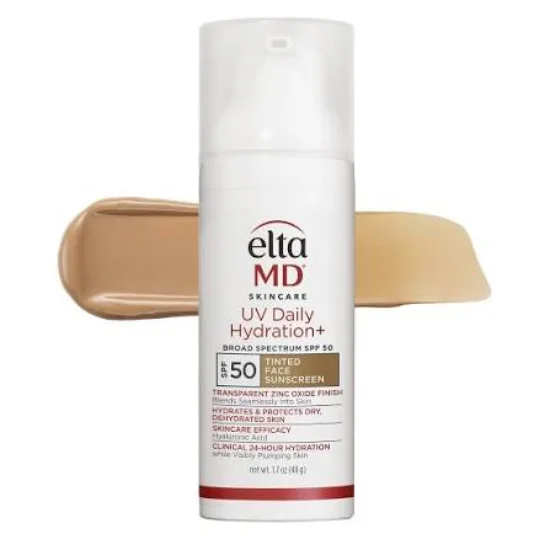
- Why We Love It: This EltaMD sunscreen was made with extremely dry skin in mind, which is why it’s Dr. Nazarian's pick for winter. Not only does it hydrate skin, but it can actually boost your skin’s own production of the hyaluronic acid. How it pulls this off: The formula “uses specific forms of hyaluronic acid that are super-super-small and can penetrate into the deeper layers of the skin,” she explains. “Once they’re down there, they can actually act as signaling molecules and up-regulate your body’s own ability to produce hyaluronic acid.” In addition to its hydrating properties, EltaMD’s sunscreen is a great option for sensitive skin, too, “since it’s free of parabens, fragrances, and dyes,” says Gloria Lin, MD, a board-certified dermatologist in New York. Plus, the brand’s formulas neither feel nor smell like sunscreen, she says, making it a go-to among her patients.
- Key Ingredients: Hyaluronic acid, carnosine, vitamin E
- Chemical or Mineral: Hybrid (11% zinc oxide, 5% octisalate)
- Type: Lightweight lotion
- Size: 1.7 fl. oz.
Best Tinted: Carte Blanche Multi-Hyphenate Brightening Skin Tint Mineral SPF 35
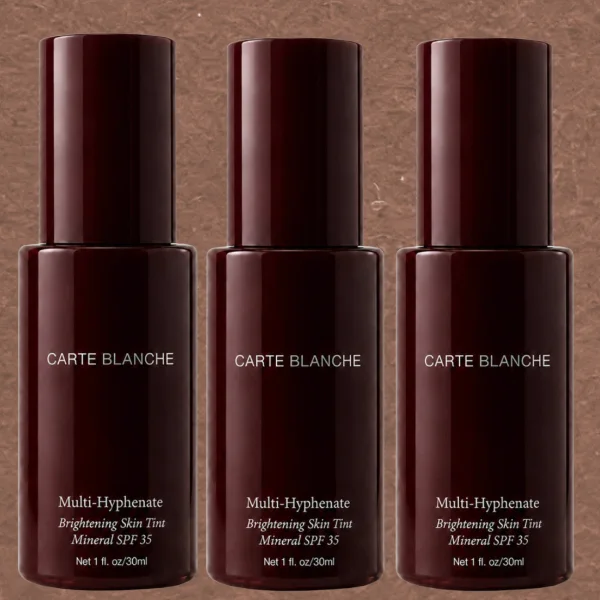
- Why We Love It: Carte Blanche’s multitasker checks many boxes (hence the very apt “Multi-Hyphenate” in the name), serving as a treatment, tint, and sunscreen in a single application. Created by a longtime beauty developer and beauty brand Saie's former creative director, the formula is powered by a blend of plant-derived exosomes, vitamin C, and antioxidant-rich tomato extract, which work together to help brighten skin and fade discoloration. The zinc oxide delivers mineral sun protection, while the sheer tint offers just enough coverage to take care of mild blemishes, redness, and other skin concerns.
- Editor's Experience: "I typically skip hybrid formulas, opting instead for a dedicated sunscreen for peace of mind, but for days when I know I'll be indoors or want quick coverage, I reach for this skin tint. It's enough to conceal any redness or dark spots, doesn't have any residue, and is easy to blend into my skin in a matter of seconds. I consider the lineup of actives to be a nice bonus, too. It's also become a staple in my travel bag, too, since I can basically do my entire morning routine in one step.
- Key Ingredients: Tetrahexyldecyl ascorbate, bakuchiol, squalane, panthenol
- Chemical or Mineral: Mineral (zinc oxide)
- Type: Tinted lotion
- Size: 1 fl. oz.
Best for Dry Skin: CeraVe Hydrating Mineral Sunscreen
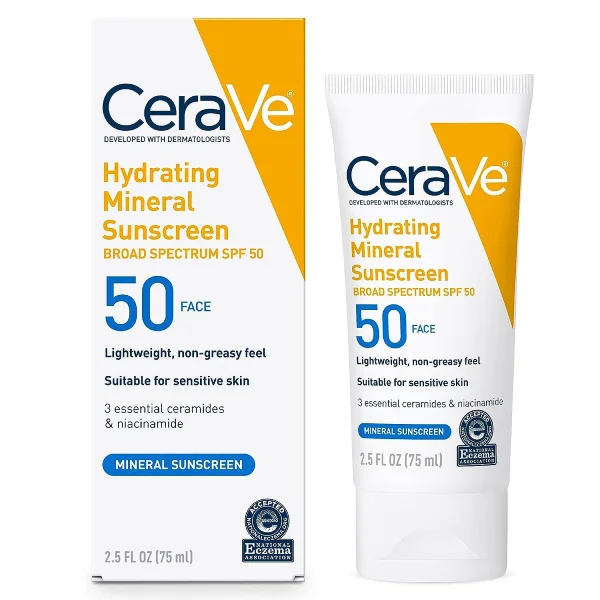
- Why We Love It: CeraVe’s mineral sunscreen is especially helpful in the winter, since “it has three different ceramides—which are the building blocks of skin hydration and strength—and hyaluronic acid, which draws water into our skin like a sponge,” says Dr. Nazarian. And because it’s made entirely with mineral filters, which tend to be less likely to irritate sensitive skin types than their chemical counterparts, it’s a good option if you tend to develop eczema during the winter months. Plus, she says, “the addition of niacinamide makes it exceptionally calming and anti-inflammatory.” That makes an impressive lineup for a sunscreen you can find in any drugstore aisle.
- Key Ingredients: Ceramides, niacinamide, hyaluronic acid
- Chemical or Mineral: Mineral (9% titanium dioxide, 7% zinc oxide)
- Type: Light lotion
- Size: 2.5 fl. oz.
Best for Oily Skin: Belif The True Cream Aqua Bomb SPF 45
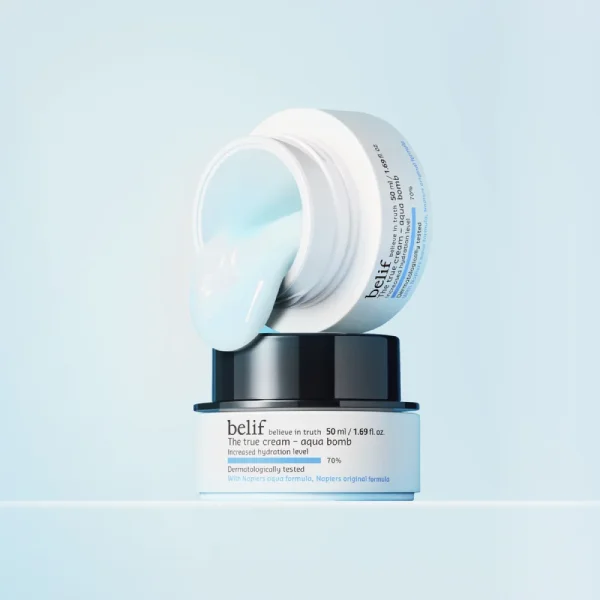
- Why We Love It: As much a moisturizer as it is a sunscreen, Belif's formula borrows its base from the brand's bestselling The True Cream Aqua Bomb moisturizer—a beloved moisturizer for oily skin in its own right, thanks to its ability to balance barrier support with a weightless feel. This pairs Belif’s signature Napier’s Original Formula (a centuries-old herbal complex that supports hydration) and chemical filters to offer protection and hydration without the typical heft.
- Key Ingredients: Niacinamide, glycerin, oat kernel extract
- Chemical or Mineral: Chemical (2.7% avobenzone 2.7%, 9% homosalate, 4.5% octisalate, 9% octocrylene)
- Type: Lightweight gel-cream
- Size: 1.7 fl. oz.
Best for Touch-Ups: BareMinerals Mineral Veil Brush Set + Protect SPF 25 PA++
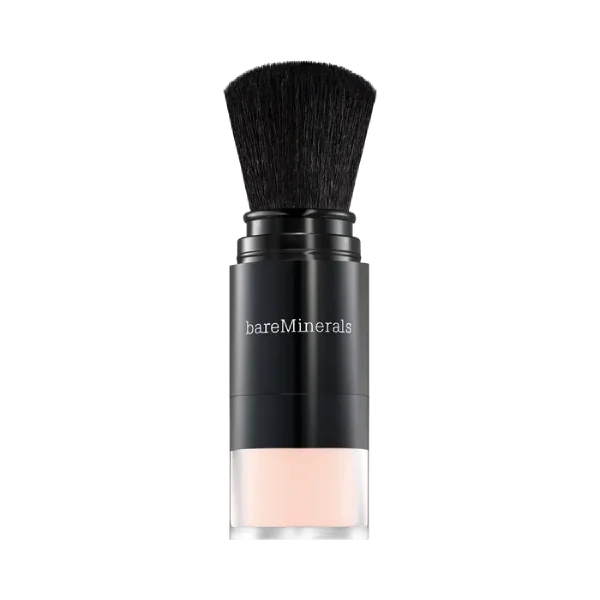
- Why We Love It: Reapplication is just as important in the winter as it is during the summer, especially if you’re spending the day skiing or near a sunny window. And for that, Dr. Gohara likes powder formulations, since they “absorb midday oils, won’t disrupt makeup, and definitely wont leave you smelling like a piña colada at your desk,” she says. (She also recommends dusting them over your ears, the backs of your hands, and the part of your hair.) This one has a retractable brush that makes it ideal for travel or tucking into a bag, and it also helps set makeup—cutting out all the barriers to ensure you’ll always reapply.
- Key Ingredients: Mica, silica, kaolin
- Chemical or Mineral: Mineral (14% titanium dioxide, 11% zinc oxide)
- Type: Powder
- Size: 0.18 oz.
Best Drugstore: La Roche-Posay Anthelios UV Hydra Hydrating Face Sunscreen SPF 50
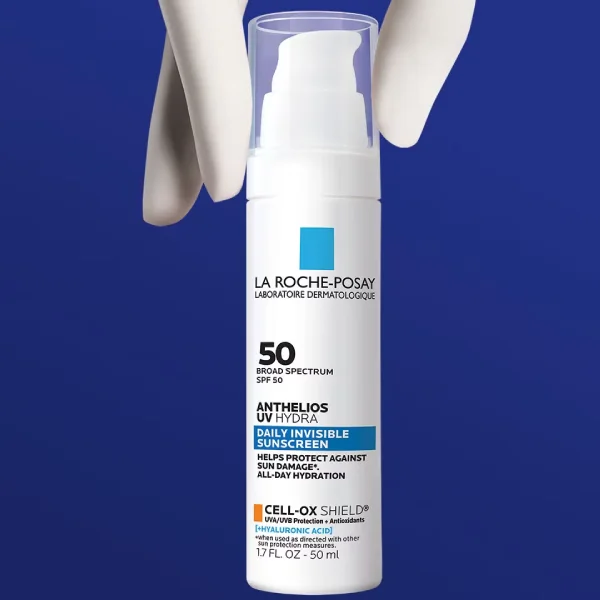
- Why We Love It: Dr. Lin loves La Roche-Posay for its facial sunscreens, which deliver high-end formulations at a relatively approachable price point. While this particular SPF 50 sunscreen uses chemical filters—allowing it to blend seamlessly—it’s still “lightweight and good for sensitive skin, since it does not contain fragrances and dyes,” she says. And it gets a nourishing lift from a combination of humectants (which draw in water) and emollients (to help seal that into skin).
- Key Ingredients: Vitamin E, panthenol, hyaluronic acid, glycerin
- Chemical or Mineral: Chemical (3% avobenzone, 7% homosolate, 5% octisalate, 7% octocrylene)
- Type: Silky lotion
- Size: 1.7 fl. oz.
Best Korean: Laneige Hydro UV Defense Ex Sunscreen SPF 50+
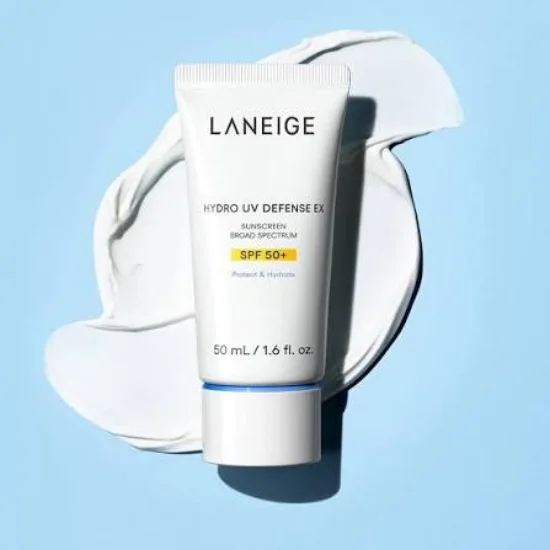
- Why We Love It: While Laneige may be best known for its beloved (and bestselling) lip mask, it’s not especially surprising that the K-beauty brand makes an excellent sunscreen for similarly dry, chapped skin. The hypoallergenic formula looks and feels like a rich cream (although it doesn’t leave any white cast), and actively nourishes skin with a blend of centella asiatica, mineral water, and glycerin. No wonder it’s one of the best Korean sunscreens.
- Key Ingredients: Centella asiatica, mineral water, glycerin
- Chemical or Mineral: Chemical (2.5% avobenzone, 7% homosalate, 4.5% octisalate, 9% octocrylene)
- Type: Velvety cream
- Size: 1.6 fl. oz.
Everything You Need to Know
What type of sunscreen is best for cold weather?
The only shift in your sunscreen in the winter should be in its texture. “Cold air and indoor heating can dry the skin out, so richer, more hydrating formulas tend to feel better,” says Dr. Gohara. Dr. Lin, for her part, recommends reaching for a cream or lotion with SPF as your base layer. Then, you can use a different formula for any touch-ups or reapplications throughout the day. “Powder formats make this painless, makeup-safe, and zero-mess,” says Dr. Gohara, who notes that this can be especially impactful for those dealing with hyperpigmentation.
Speaking of hyperpigmentation, it’s one of the reasons that Dr. Gohara directs patients to mineral SPF in the winter. “Mineral sunscreens often shine in the winter because they are gentle on dry skin and protect against UV and visible light,” she says. “The visible-light component is key for people with melasma or post-inflammatory hyperpigmentation.” (Tinted mineral formulas with iron oxides are ideal.)
So, don’t overlook your other skin-care products. “For those with more dry skin, it may be better to use a separate moisturizer and sunscreen in order to provide even more additional hydration instead of using a combination product,” says Dr. Lin.
What to Look For in a Winter Sunscreen
While you can certainly stick with your summertime sunscreen if you like it, there are a few elements worth considering as cold weather sets in. Consider looking for these elements:
- Tint: This is especially important if you struggle with hyperpigmentation. These formulas protect against indoor light sources. “Phone screens, laptops, overhead LEDs—all can trigger melasma and dark spots, especially in skin of color,” says Dr. Gohara. That’s why tinted mineral sunscreens with iron oxides are winter MVPs.
- Strategic Ingredients: While hydrating ingredients, like ceramides, glycerin, and squalane, are always a good idea, Dr. Gohara suggests seeking out iron oxides. Unlike titanium dioxide, these protect against visible light and blue light. As usual, always look for an SPF 30 or higher for year-round coverage.
- Texture: Creamy textures not only feel good on winter skin, but they may be less likely to exacerbate flaky or rough patches on already-dry skin.
- Format: Reapplication is worth the effort. Dr. Gohara recommends looking for formats that make it especially easy—for instance, “lotions for morning, powders for later,” she says. That way, you don't compromise the hydration early on, nor your all-day defense.
How We Tested
When we test and review a product, we take a holistic approach to deliver well-rounded product recommendations. First, we lean on Vogue’s vast network of experts—from board-certified dermatologists to celebrity estheticians—to gain professional acumen on the industry’s standout products, ones these specialists would actually use on their clients. We pair their expertise with our editorial best practices to curate the thoughtful edits you read on our site.
As it relates to winter sunscreens, we selected the best based on the following characteristics: ingredients, texture, finish, SPF level, chemical vs. mineral, and the skin-care concerns they address. To do this, we paired our own personal tests of each formula with expert guidance and reviewer insights to determine which we would recommend to you.
Did you like our blog?
Comments (0)
All comments are reviewed and approved by an admin before appearing publicly.
No comments yet - be the first to share your thoughts.