
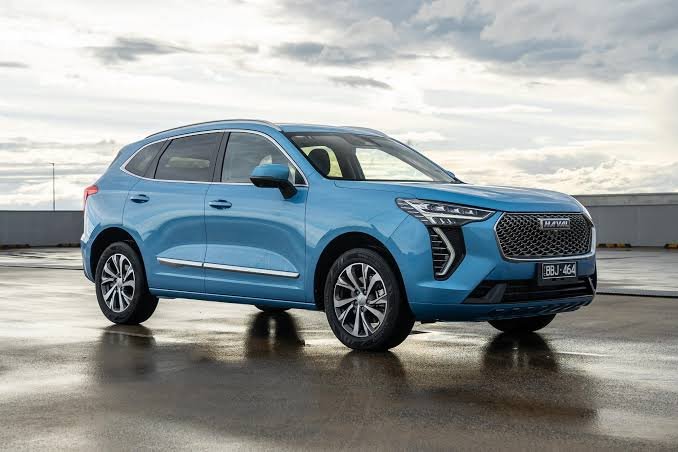
Russian Vehicle Market in 2026 reports year-on-year growth of 7.2% through September. Tenet emerged as top 3 brand, looking to overtake Haval as it dropped 27.4%. Toyota showed the largest gains in a highly uneven brand performance landscape.
Medium term market trend
Russia’s automotive market experienced a sharp contraction after 2021, followed by a partial recovery that has yet to restore the previous market peak. Sales fell from 1,571,674 units in 2021 to 637,878 units in 2022, a decline of 59.4%. The market subsequently began recovering, but the scale of the initial downturn fundamentally changed its trajectory. The 2022 contraction established a substantially lower volume base, making subsequent growth rates particularly sensitive to the pace of recovery.
The recovery strengthened in 2023, when sales increased to 878,710 units, up 37.8%, before accelerating further in 2024. The market reached 1,365,706 units in 2024, representing growth of 55.4% and bringing annual sales closer to the 2021 level. This rapid expansion marked a significant recovery from the 2022 low, although the market remained below its previous peak. The strong rebound also created a higher comparison base for subsequent performance.
In 2025, sales declined to 1,326,016 units, down 2.9% year on year. This reversal followed two consecutive years of substantial growth and suggests that the recovery had lost momentum. Although the market remained more than twice the size recorded in 2022, annual sales were still 15.6% below the 2021 level. The transition from rapid recovery to contraction points to a more challenging market environment, in which maintaining volumes has become more difficult following the strong rebound of 2023–2024.
2026 outlook
Russia’s automotive market recorded 960,055 sales through September 2026, representing year-on-year growth of 7.2%. This marks an improvement from the 2.9% decline recorded in full-year 2025, pointing to a return to positive growth. Year-to-date sales have reached 72.4% of the full-year 2025 volume, indicating that the market continues to generate substantial sales despite the previous year’s contraction. The positive growth rate suggests stabilization, although the market has yet to demonstrate a return to the rapid expansion seen in 2023 and 2024.
The competitive environment remains uneven, with modest growth among some leading brands contrasting with substantial declines at others. Lada recorded positive growth, while Changan, Jetour and GAC delivered stronger increases. By comparison, Haval, Chery and several established manufacturers experienced significant contractions. This divergence suggests that market performance increasingly depends on individual brand competitiveness rather than overall market expansion alone. For the remainder of 2026, the key consideration is whether positive market growth can be sustained while manufacturers navigate an environment characterized by divergent sales trends and shifting competitive positions.
Brand performance
- Lada +3.1%
- Haval -27.4%
- Tenet New
- Gaz -26.9%
- Geely +1.3%
- Belgium +8.7%
- Chery -40.8%
- Changan +54.8%
- Chevrolet -27.6%
- UAZ -25.9%
- Jetour +58.7%
- Toyota +7470.6%
- Mazda New
- Omoda -26.7%
- Sollers -27.7%
- Jaecoo New
- EXEED -26.7%
- GAC +100.9%
- Kia -21.8%
- Evolute -24.2%
Lada remains the leading brand in the ranking, recording growth of 3.1%. Geely also remained marginally positive at 1.3%, while Belgee increased by 8.7%. These comparatively modest results contrast with the sharp declines recorded by several competitors, suggesting that maintaining sales has become an important differentiator in a market that contracted in 2025.
Among the strongest growth performers, GAC increased by 100.9%, Jetour rose 58.7%, and Changan expanded 54.8%. Toyota’s reported growth of 7,470.6% is exceptionally high, although the percentage alone does not establish its contribution to total market volume. Tenet, Mazda and Jaecoo are marked New, meaning no comparable prior-period volume is available in the data. Their performance therefore cannot be assessed through a conventional year-on-year growth rate.
The weakest results were concentrated among several established competitors. Chery declined 40.8%, while Haval fell 27.4%, Chevrolet decreased 27.6%, and Sollers contracted 27.7%. Omoda and EXEED each declined 26.7%, while UAZ fell 25.9% and Kia decreased 21.8%. The breadth of these declines points to considerable pressure across multiple brands, even as other competitors expand.
The contrast between the growth of Changan, Jetour and GAC and the declines at Haval, Chery, Omoda and EXEED reveals a significant divergence among brands competing in the market. The results also show that a recovering overall market does not translate into uniform gains. For manufacturers, the priority is to defend existing sales while capturing demand from competitors losing momentum. Brands sustaining positive growth are better positioned to strengthen their relative standing as the market stabilizes.
EV Market Trend and Outlook
BEV/PHEV vehicles recorded growth of 1,246.1%, reaching a reported 3.7% share of total industry sales. This rapid expansion contrasts with the modest 7.2% growth in the overall automotive market during the first nine months of 2026, positioning electrified vehicles as a faster-growing segment. However, their relatively small share means that the wider market remains the principal driver of total automotive sales.
The BEV/PHEV brand ranking is led by Changan, Jaecoo and Jeland, all marked New. This means no comparable prior-period volume is available in the data, preventing a reliable assessment of their year-on-year growth. Their positions at the top of the ranking nevertheless establish them as key names in the segment’s current competitive landscape. Evolute, by contrast, declined 24.2%, while Audi increased by 11.3%, demonstrating that performance differs substantially across participating brands.
With a reported 3.7% share of total industry sales, BEV/PHEV vehicles remain a relatively small part of Russia’s automotive market despite their strong growth rate. Their expansion provides an additional competitive opportunity, but the contrast between rapid segment growth and Evolute’s decline underlines the importance of brand-level execution. Sustaining the segment’s momentum and translating it into a larger contribution to overall sales will be central to its future significance.
EV Brand Performance
- Changan New
- Jaecoo New
- Jeland New
- Evolute -24.2%
- Audi +11.3%
- Suzuki New
- Nissan New
- BMW New
- Chery New
- Mitsubishi New
Changan, Jaecoo and Jeland occupy the top three positions, with all three marked New because no comparable prior-period volumes are available in the data. Their positions establish their prominence in the current ranking, although their relative growth cannot be determined from the reported figures.
Evolute recorded a 24.2% decline, contrasting with Audi’s 11.3% increase. These divergent results demonstrate that electrification-related brand performance is not uniformly positive, despite the segment’s overall reported growth of 1,246.1%.
Analysis and Outlook
Russia’s automotive market has moved from the severe contraction of 2022 into a substantial recovery, followed by a renewed decline in 2025. Sales fell from 1,571,674 units in 2021 to 637,878 units in 2022, recovered to 1,365,706 units in 2024, and then decreased to 1,326,016 units in 2025. The 7.2% growth recorded through September 2026 points to a return to positive momentum, although the market remains below its 2021 peak.
Competition is increasingly uneven. Lada has maintained modest growth, while Changan, Jetour and GAC have delivered stronger gains. In contrast, substantial declines at Chery, Haval, Omoda, EXEED and several other brands illustrate the challenges of maintaining volumes in a market where competitors are moving in different directions. The commercial priority is to preserve sales and capitalize on opportunities created by weaker-performing rivals.
Electrification represents an additional growth opportunity, with BEV/PHEV vehicles recording 1,246.1% growth and accounting for 3.7% of total industry sales. However, the high proportion of brands marked New limits direct comparisons of year-on-year performance, while Evolute’s decline shows that the segment’s expansion is not benefiting every participant equally.
The central strategic challenge is to convert market stabilization into sustainable growth while adapting to a changing competitive structure. The overall market’s return to positive year-on-year performance provides a more favorable environment than the contraction of 2025, but the recovery remains incomplete relative to 2021. Manufacturers that sustain sales growth, strengthen their competitive positions and establish a durable presence in BEV/PHEV vehicles will be better placed to benefit from the market’s next phase.
Did you like our blog?
Comments (0)
All comments are reviewed and approved by an admin before appearing publicly.
No comments yet - be the first to share your thoughts.