
If you have ever ordered a Rubie's costume and loved it, then ordered another one and wondered whether it came from the same company, you were not imagining things. It probably did not come from the same part of the company.
Rubie's sells under several quality tiers that carry the same brand name, sit in the same search results, and differ enormously in what you actually receive. A Grand Heritage Joker and a bagged value Joker are both Rubie's. One is a lined, tailored, multi piece outfit. The other is a printed polyester tunic. The product titles do not make this obvious and the thumbnail photographs are often shot to look similar.
Work out which tier you are buying and most of the complaints about this brand stop applying to you. That is what this Rubie's costume review is built around, along with two other things worth knowing: how the sizing really works, and what the word flame resistant on a costume label legally means.
Who owns Rubie's now
Worth a short detour, because the brand people remember is not quite the company trading today.
Rubie's Costume Company was a family business out of Long Island for decades and became the largest costume manufacturer in the United States, holding licences for Marvel, DC, Star Wars, Disney and most of the rest. In 2020 it filed for Chapter 11 in the US Bankruptcy Court for the Eastern District of New York, citing collapsing sales during the pandemic.
On 21 September 2020, Judge Alan S. Trust approved the sale of substantially all its assets to Rubies II LLC, a newly formed entity owned by Joel Weinshanker, who founded and chairs NECA and is majority owner of Elvis Presley Enterprises. Funds behind the purchase are managed by Atalaya Capital Management LP together with members of the Beige family, the founding family, so the lineage did carry over in part.
The restructuring has continued since. In September 2024 the company announced it was closing its Candlewood Road facility in Bay Shore, New York, with 96 employees laid off and the site due to close on 31 December that year, described as a cost saving measure.
Why this matters to a shopper: a company working through cost reduction is a company where the gap between its premium tier and its budget tier tends to widen. Which brings us back to the tiers.
The Rubie's tier system, decoded
There is no single published chart explaining these, which is exactly why buyers get caught. Here is what the names signal in practice.
Grand Heritage
The top line, and genuinely good. Tailored construction, lined jackets, proper closures, fabrics chosen to look right rather than to hit a price, and usually multiple pieces. These are the costumes that photograph well in daylight and survive being worn more than once. Expect to pay several times the price of a bagged costume, and expect it to look like you did.
If you are buying for a convention, a photoshoot, a theatre production or anything where someone will be looking at you closely, this is the only tier worth considering.
Supreme Edition
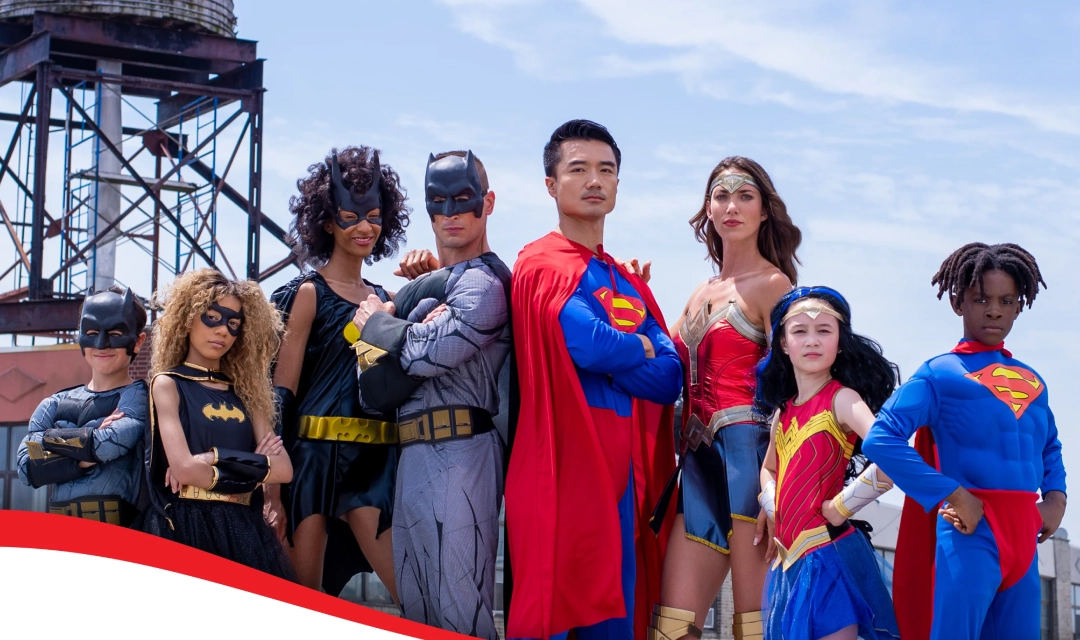
Sits alongside or just under Grand Heritage depending on the character, and is used heavily on superhero costumes where the selling point is a moulded or padded muscle chest and sculpted details rather than tailoring. Good for screen accuracy on armoured characters. Less relevant on a character who just wears clothes.
Deluxe
The sensible middle, and where most adults should probably land. Better fabric than the value line, more pieces included, closures that work, and detail that is sewn or applied rather than printed flat onto the cloth. It will not fool anyone at arm's length but it will not look like a bin bag in photographs either.
Standard, Classic and value costumes
Thin polyester, printed detail, raw or overlocked edges, Velcro or tie closures, and often a single piece plus a mask. These exist to be worn once at a party and that is a legitimate product. The mistake is buying one and expecting the Grand Heritage photograph you saw on Pinterest.
Retailers who grade costumes independently describe the same ladder in their own language: entry level pieces with printed details and unhemmed edges at the bottom, and at the top, authentic designs with the best fabrics, metal hardware where appropriate, proper zips or hook and eye closures and comprehensive sizing. Rubie's spans that whole range under one brand name, which is unusual and is the source of most of the confusion.
Practical tip: when a listing does not state the tier, look at the closure and the edges in the product photographs. Visible Velcro and raw hems mean value line regardless of what the title says.
Licensed character costumes: Marvel, DC and Star Wars
The licences are the reason the brand matters. If you want an officially licensed Iron Man, Darth Vader, Joker or Wonder Woman costume, Rubie's is frequently the only legitimate manufacturer making it, which means the comparison is rarely Rubie's against a competitor. It is Rubie's premium tier against Rubie's budget tier.
On licensed armoured characters specifically, Supreme Edition and Grand Heritage are worth the step up by a wider margin than on other characters, because the whole look depends on the moulded chest piece and helmet holding their shape. A soft printed version of Iron Man reads as pyjamas. The same character in a sculpted version reads as a costume.
One thing to check on any licensed piece: whether the mask or helmet is included or sold separately. Rubie's frequently splits these, and a costume that looked cheaper can end up costing more once the headpiece is added.
Classic Halloween: vampires, witches, skeletons
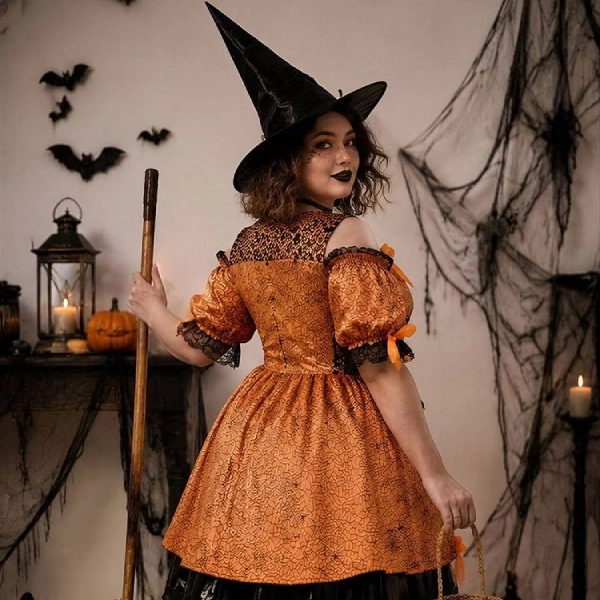
The generic non licensed range, where Rubie's competes on price rather than exclusivity, and where the value tier is at its weakest because there is nothing stopping you buying the same silhouette elsewhere.
Here the brand earns its place through the Grand Heritage versions instead, which include genuinely well made Victorian vampire coats and similar pieces that hold up as costume wardrobe rather than party disposables. The Day of the Dead and skeleton ranges are reliably decent in the middle tiers too, because the look depends on printed detail that polyester handles well.
Children's costumes
The largest part of the business by volume and the part that needs the most care, for reasons covered in the safety section below.
On quality, children's costumes concentrate at the value end because the economics demand it: a costume worn for one evening by a child who will have outgrown it next year does not support premium construction. That is reasonable. Buy accordingly, and spend the money on a warm layer underneath rather than on the costume itself, which is what most Halloween nights actually require.
Pet costumes
A substantial Rubie's line, with licensed Batgirl, Cinderella and Glinda versions among others, widely stocked through pet retailers. Sizing here is by the animal's measurements rather than by breed, and the usual advice applies doubly: measure your dog's neck, chest girth and back length and buy to the measurements.
The more useful point is about the animal rather than the product. Put the costume on well before the event, for a few minutes at a time, and watch for a tucked tail, flattened ears, freezing or attempts to back out of it. A dog that is miserable in a costume will stay miserable in it, and no amount of acclimatisation fixes a costume that restricts movement or covers the eyes.
Sizing: the single thing that ruins most orders
More Rubie's complaints trace back to sizing than to quality, and the root cause is a mismatch in how people read the label.
Costume sizing is not apparel sizing. A Rubie's adult Medium is defined by the garment's chest and waist measurements, not by the dress size or shirt size you normally wear, and those definitions vary between product lines within the same brand. A women's Medium listed as 10-12 on one costume is not a promise about the next one.
A second trap is the word Standard. On many Rubie's adult items, Standard is effectively one size, cut to fit an average frame with no adjustment. It is not a size between Small and Medium. If you are tall, short, broad or slight, Standard is the listing to avoid.
How to order correctly:
1. Measure your chest at the fullest point, your waist at the narrowest, your hips at the fullest, and your inside leg. Write them down. Do this once and you can use the numbers for years.
2. Buy against the garment measurements printed in the listing's size chart, never against the letter. Ignore what size you wear in normal clothes entirely.
3. If you fall between sizes, go up. A costume is worn over your own clothing, often over a warm layer, and almost every costume can be taken in with a few stitches while none can be let out.
4. Check the garment length separately from the width. Costume patterns are frequently cut short, and a cloak or robe that ends mid calf when it should reach the floor looks wrong in a way the chest measurement will not warn you about.
5. On children's costumes, buy to the child's current measurements rather than their age. Age based sizing is the least reliable system in clothing and costumes are worse than most.
What flame resistant on a costume label actually means
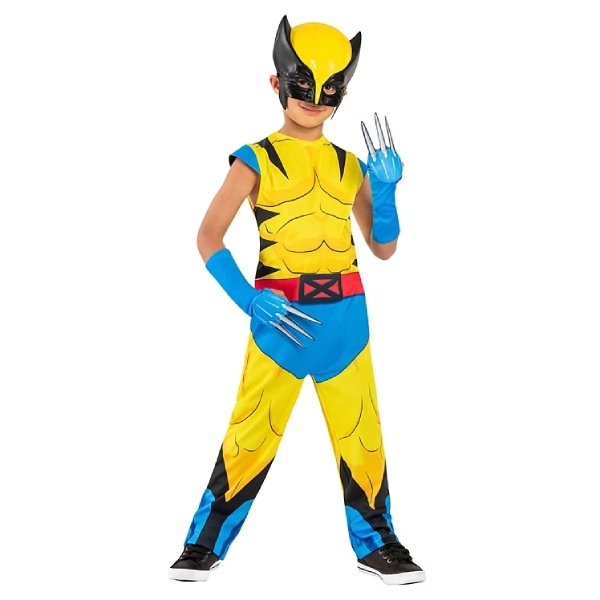
This is the part of any Rubie's review that matters most and appears in almost none of them, and it applies to every costume brand rather than this one specifically.
Children's sleepwear in the United States is regulated under 16 CFR Parts 1615 and 1616. Those rules are strict: fabrics and garments must be flame resistant, must self extinguish when removed from a small open flame, and must pass a test where the average char length across five specimens cannot exceed 7 inches and no single specimen may burn its full 10 inch length.
Halloween costumes are not children's sleepwear and are not held to that standard. They fall under the general wearing apparel rule, 16 CFR Part 1610, which works differently. It sorts fabrics into three flammability classes and bars only Class 3, described by the CPSC as dangerously flammable and prohibited in wearing apparel. Class 1 is acceptable.
Put plainly: a compliant costume is one that is not dangerously flammable. It is not a garment that resists ignition or self extinguishes the way children's pyjamas must. Those are different promises and most parents assume the stronger one.
Rubie's has been on the wrong side of even the general standard before. On 28 October 1998, under CPSC recall number 99-013, the company recalled around 6,000 children's black vinyl vampire capes and around 6,000 bamboo handled witch brooms for failing federal mandatory flammability standards, with the CPSC stating they could ignite readily. No injuries were reported.
That recall is now 28 years old and should not be read as a current indictment of the brand. The standard it failed, however, is still the standard that applies. So:
- Keep costumes away from open flames entirely. Use battery tea lights in jack o lanterns rather than candles, which is the single highest value change you can make on Halloween night.
- Be especially careful with loose trailing fabric: capes, long sleeves, wigs, beards and hanging trim all catch a flame far more easily than fitted cloth.
- Wigs and synthetic hair are the most flammable items in most costumes and are not covered by apparel flammability rules in the same way. Treat them as the highest risk component.
- If you want real flame resistance for a child, look for a garment explicitly certified to the sleepwear standard, and understand that very few costumes are.
Where to buy and what returns look like
Rubie's sells through Amazon, Walmart, Target, specialist costume retailers and pet retailers rather than mainly through its own site, and your return rights come from whichever of those you used, not from Rubie's.
That matters more than usual in this category because of timing. Costumes are bought in the two weeks before Halloween and worn once, which means a return window that technically covers you can expire before you discover the fit is wrong, and because stock sells out, an exchange often is not possible even inside the window.
Two practical habits:
- Order at least three weeks out, not three days. It is the only way to have time to exchange, and the premium tiers sell out first.
- Try the whole costume on, over the clothes you will actually wear underneath, the day it arrives. Not the night before.
So is Rubie's any good?
The honest answer is that the question is badly formed, and that is the point of this review. Rubie's is not one quality level. It is a licence holder operating across the entire price spectrum under a single name, from one wear bagged costumes to properly tailored Grand Heritage pieces, and reviews that average those together produce a verdict that describes nothing you can buy.
Judged tier by tier, the picture is clear. Grand Heritage and Supreme Edition are good costumes and competitive with anything else available in licensed characters, which frequently means they are the only legitimate option. Deluxe is solid value for an adult who wants to look put together at a party. The value line is exactly what it costs and disappoints only people who expected otherwise.
Buy the tier that matches the occasion, order against the measurements rather than the letter on the label, give yourself three weeks, and keep the whole thing away from a naked flame. Do that and Rubie's will almost certainly meet your expectations, because you will have set the right ones.
Did you like our blog?
Comments (0)
All comments are reviewed and approved by an admin before appearing publicly.
No comments yet - be the first to share your thoughts.