
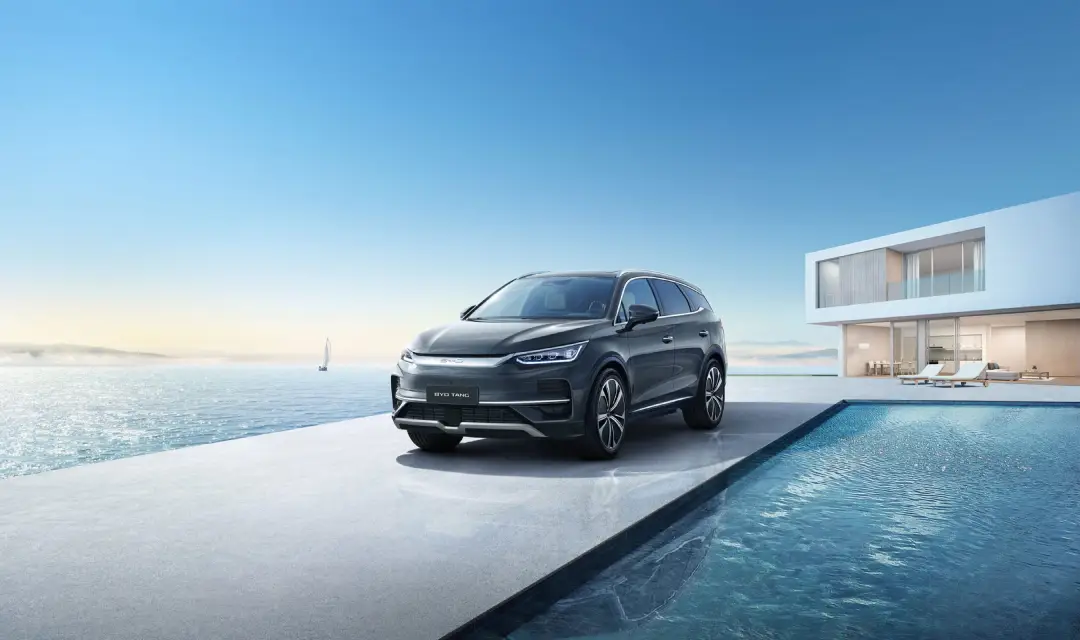
Lao Vehicle Market in 2026 is experiencing a contraction, down 4.7% while experiencing sharp divergences among leading brands. Most notably, BYD defied the slowdown and skyrocketed into 1st while Hyundai and Chery reported major losses.
Medium term market trend
Laos’ auto market opened the period at 16,857 units in 2021 and expanded sharply in the first year. Sales rose 29.8% to 21,887 units in 2022, adding 5,030 vehicles. That single year supplied 73.4% of all the volume gained between 2021 and 2025. The gain did not hold. Sales fell 4.5% to 20,901 units in 2023, a loss of 986 vehicles that took back about a fifth of the 2022 increase. The market therefore reached a high plateau early, then pulled back, and the 2023 level was still 24.0% above the 2021 base.
2024 brought a recovery. Sales rose 11.8% to 23,372 units, adding 2,471 vehicles and moving 6.8% above the 2022 level. 2025 set a new annual peak of 23,712 units, but growth slowed to 1.5%, a gain of only 340 vehicles. The annual increment fell by 86.2%, and growth slowed by 10.3 percentage points. The market recovered its footing after the 2023 dip but did not regain its earlier pace. By 2025 it had essentially flattened at a higher level.
Over the full period, the 2025 market was 40.7% above its 2021 size, a compound annual growth rate of 8.9%, and 8.3% above the 2022 level. The pattern is a rapid early step-up followed by consolidation, with the early surge doing most of the work. Annual swings of this kind show a market sensitivity to demand conditions, and the sharp slowdown in 2025 left it with little forward momentum at the end of the period.
2026 outlook
Through September 2026, the market recorded 16,918 units, down 4.7% year-on-year. That equals 71.4% of the 23,712 units sold in all of 2025, leaving 6,794 vehicles to close the gap. The 2026 monthly average of 1,880 units is 4.9% below the 2025 average of 1,976. Matching the 2025 total would require about 2,265 units per month in the final quarter, a pace 20.5% above the year-to-date run rate. Momentum is reversing. Growth of 11.8% in 2024 and 1.5% in 2025 has turned into a 4.7% decline, the first contraction since 2023. Unless sales accelerate sharply in the closing months, 2026 will end below the 2025 record and break the two-year run of gains.
The 2026 trend is a market under pressure, with sharp divergence beneath the headline decline. Of the 18 brands with a measurable growth rate, only three are growing, fifteen are falling, and two more are recorded as new. Many of the declines are steep, with eleven brands down by more than 40%, while the gap between the strongest and weakest brands is 455.8 percentage points. In a contracting market, volume is shifting quickly between brands rather than disappearing evenly. Demand conditions are soft, and a sustained recovery would need the final quarter to run well above its current pace. Otherwise the market heads for a moderate annual decline.
Brand performance
- BYD +113.9%
- Toyota -6.0%
- Hyundai -41.3%
- Jaecoo New
- MG -28.3%
- Chery -71.9%
- Xpeng +368.3%
- Geely +38.8%
- Kia -39.6%
- Isuzu -46.1%
- Honda -42.9%
- Ford -83.7%
- Link & Co New
- Mazda -53.2%
- Suzuki -47.6%
- Haval -47.3%
- Mitsubishi -75.4%
- Changan -72.7%
- DFSK -36.1%
- Nissan -87.5%
The strongest momentum belongs to three brands. Xpeng (+368.3%) has the fastest growth in the ranking, BYD (+113.9%) is the market’s leading brand and more than doubled its volume, and Geely (+38.8%) also grew strongly. All three are expanding against a market that fell 4.7%, so they are taking share at the expense of almost every other brand. BYD’s first place combined with growth of this size makes it the clearest winner of 2026.
Jaecoo and Link & Co are recorded as New. Jaecoo sits fourth in the ranking, so it is already a significant volume brand, but there is no comparable prior-period volume in the data, so no growth rate is assigned. Link & Co at thirteenth shows the same pattern at smaller scale. With these two entries, five of the thirteen highest-ranked positions are held by growing or newly established brands.
Toyota (-6.0%) is the most resilient of the declining brands and the only top-ten brand with a decline close to the market rate, at just 1.3 percentage points below it. It holds second place and is conceding little share. Everything below it is falling much faster. Hyundai (-41.3%) and Kia (-39.6%) are both down by around 40%, and MG (-28.3%) and DFSK (-36.1%) are also well below the market. These brands are losing share at a rapid pace.
The steepest declines are concentrated in a group of mainstream and traditional names. Nissan (-87.5%), Ford (-83.7%), Mitsubishi (-75.4%), Changan (-72.7%) and Chery (-71.9%) have all lost between roughly three-quarters and almost nine-tenths of their volume. Mazda (-53.2%), Suzuki (-47.6%), Haval (-47.3%), Honda (-42.9%) and Isuzu (-46.1%) have fallen by more than 40%. Japanese brands are almost uniformly weak, with Toyota the only one close to the market. Among Chinese brands the pattern is split, with Xpeng, BYD, Geely and the two new entries gaining while Chery, Changan, Haval, MG and DFSK decline. The competitive picture is of a market being reordered around a small group of winners, with most established names losing ground rapidly.
BEV/PHEV Market Trend and Outlook
BEV/PHEV vehicles grew 220.9% year-on-year and account for 61.5% of the total industry, so electrified vehicles now make up the majority of sales. The segment more than tripled its volume while the overall market fell 4.7%, a gap of 225.6 percentage points between the segment and the market. With the total market contracting and the segment expanding at this pace, the rest of the market is falling much faster than the 4.7% headline suggests.
At 61.5%, electrification is the dominant force in the market’s structure. The segment is driving the market's competitive outcomes as well as its composition. The brands leading the overall growth ranking, BYD, Xpeng and Geely, are the same names associated with electrified growth, while the large declines are concentrated among brands that lose volume as demand moves towards the segment. A growth rate above 200% is unlikely to persist, since the segment’s share leaves less room to expand, but it will keep absorbing a larger part of total demand for as long as it grows ahead of the market.
The implications for the wider industry are substantial. Brands without a competitive BEV/PHEV offer are competing for less than 40% of demand, and that remaining portion is shrinking. Brands with strongly electrified portfolios are capturing both the segment’s growth and the share lost by others. Portfolio position now matters more than brand size in determining who gains.
BEV/PHEV brand performance
- BYD +113.9%
- Toyota +4515.6%
Both ranked brands are growing, and by wide margins. Toyota (+4515.6%) posted by far the strongest growth in the ranking, meaning its BEV/PHEV volume is more than 46 times its prior-period level. That points to a very small starting base rather than an established line, and it should be read as the start of a build-up in the segment. BYD (+113.9%) leads the segment and more than doubled its volume, which is a much more significant gain at scale.
The contrast with the overall brand table is revealing. Toyota is down 6.0% overall but its BEV/PHEV volume is growing sharply, so electrified models are the only growth source in its portfolio, and they are offsetting part of the decline elsewhere. BYD’s BEV/PHEV growth of 113.9% is identical to its overall growth, which ties its entire market performance to the segment. The segment is concentrated in a small number of brands, and the two leaders are expanding rapidly.
Analysis and Outlook
The market's path falls into three phases. The first was a sharp early expansion from 16,857 units in 2021 to 21,887 in 2022, which supplied nearly three-quarters of the period’s total gain. The second was a plateau between 2023 and 2025, with a dip to 20,901 units followed by a recovery to a record 23,712 units, but with growth fading to 1.5% in 2025. The third, now under way, is a contraction: through September 2026 sales are down 4.7% at 16,918 units. The market’s volume has not moved decisively higher since 2022, and 2026 is moving it back below its peak.
The pressure on volume is accompanied by sharp redistribution among brands. Only three of eighteen measurable brands are growing, and the three, Xpeng, BYD and Geely, are doing so at rates far above the market. Fifteen are declining, many by more than 40%. The fast-moving winners and the new entrants Jaecoo and Link & Co are taking share from a long list of mainstream names, among which Toyota, down only 6.0%, is the notable exception. Scale and long-standing presence offer little protection in this environment.
Electrification is the dominant structural force. BEV/PHEV vehicles account for 61.5% of the industry and grew 220.9% in a market that contracted. The segment is where growth is found, and the brands that lead it are the same ones gaining overall. BYD and Toyota are the two ranked brands, and both are expanding, so the segment’s expansion is not confined to one name.
The strategic conclusions follow directly. Incumbents with conventional-heavy portfolios face rapid share erosion in a shrinking market and need credible BEV/PHEV offerings to stay in the growth pool. Challengers face the task of turning a rapid rise into stable positions as their bases grow. For the market as a whole, the final quarter of 2026 will test whether demand can recover to roughly 20.5% above the current pace, which is what matching the 2025 result requires. Without that recovery, 2026 will close as a year of decline in which electrified vehicles and a few brands gained at everyone else’s expense.
Did you like our blog?
Comments (0)
All comments are reviewed and approved by an admin before appearing publicly.
No comments yet - be the first to share your thoughts.