
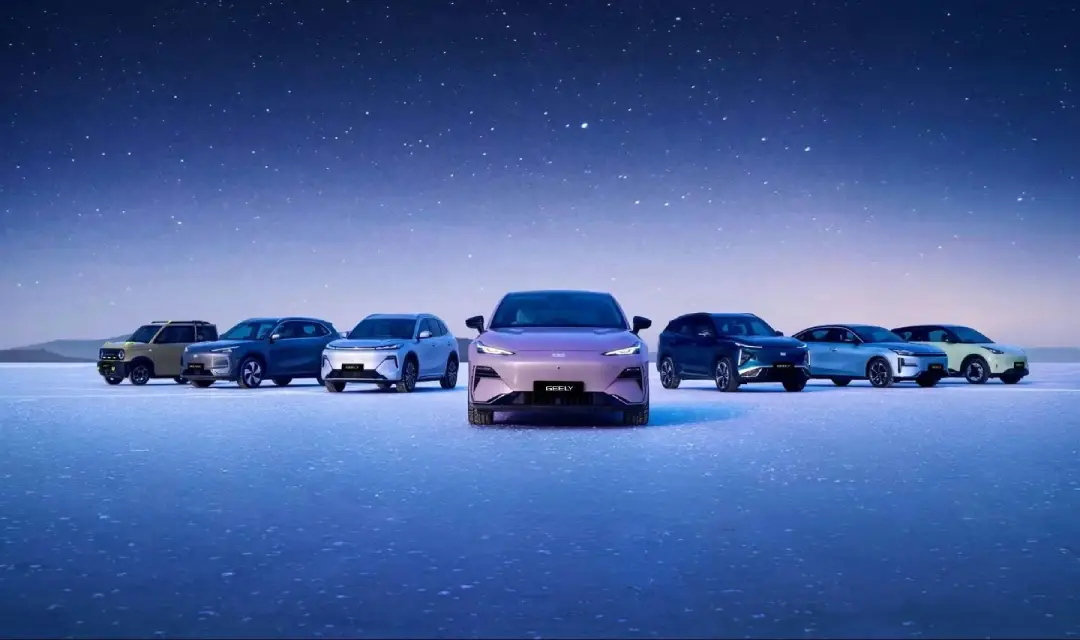
Ivory Coast Vehicle Market in 2026 expands by 10.3% YTD September to 23,012 units. Kia and Mitsubishi stood out as the exceptions among widespread gains in the top 10. Nissan (+44.6%) and Geely (63%) reported the largest growth.
Medium term market trend
Ivory Coast’s auto market grew in every year from 2021 to 2025, and the strongest phase came early. Sales rose 17.9% from 10,363 units in 2021 to 12,215 in 2022, then jumped 61.5% to 19,728 in 2023. That 2023 gain of 7,513 vehicles was more than four times the 1,852 added in 2022, and it lifted volume 90.4% above the 2021 level in two years. 2023 was the decisive turning point, as it supplied 43.1% of all the volume gained across the full period. The market moved from a modest base to a much larger one in a single year.
The momentum eased afterwards, but the market kept expanding. Sales rose 22.1% to 24,092 units in 2024, adding 4,364 vehicles, and 15.4% to a new annual peak of 27,814 units in 2025, adding a further 3,722. Growth slowed by 6.7 percentage points between the two years, and the annual increment fell 14.7%. The 2025 increment alone was still about twice the entire gain recorded in 2022. The market has moved from a rapid scale-up into a steadier, high-volume growth pattern. Volume in 2025 was 41.0% above 2023.
Over the full period, the 2025 market was 2.7 times its 2021 size, an increase of 168.4% and a compound annual growth rate of 28.0%. The expansion was also uninterrupted, with no year of decline. Of the 17,451 units added since 2021, 46.3% arrived in 2024 and 2025, and 43.1% in 2023 alone. For manufacturers and distributors, the market is now far larger than it was four years ago, and annual increments are shrinking, so further growth will increasingly depend on winning share.
2026 outlook
Through September 2026, the market recorded 23,012 units, up 10.3% year-on-year. That equals 82.7% of the 27,814 units sold across all of 2025, leaving 4,802 vehicles to match last year’s total. The 2026 monthly average of 2,557 units is ahead of the 2,318 average of 2025. Matching the 2025 volume requires only about 1,601 units per month in the final quarter, 37.4% below the year-to-date run rate. Momentum is slowing, but not reversing. Growth has stepped down from 22.1% in 2024 and 15.4% in 2025 to 10.3%, while volume keeps rising from a larger base. A new annual sales record is within comfortable reach.
The 2026 trend is steady expansion with a clear divide between brands. Fifteen of the twenty ranked brands are growing and five are declining, and twelve are growing faster than the market, while eight are growing more slowly or contracting. The spread between the best and worst performers is 224.9 percentage points. Demand conditions remain positive, and a large part of the growth is being captured by challengers expanding at multiples of the market rate. The competitive environment is therefore becoming more fragmented. The final quarter requires only a modest pace to match 2025, so the open question is which brands convert rising demand into lasting share and which let it slip to competitors.
Brand performance
- Suzuki +2.1%
- Toyota +8.6%
- Haval +25.1%
- MG +19.6%
- Nissan +44.6%
- Mitsubishi -1.8%
- Kia -14.4%
- Geely +63.0%
- Changan +11.6%
- Isuzu +2.9%
- Jac -9.0%
- Jetour +200.5%
- Mazda +12.7%
- Hyundai +47.0%
- Chery +63.6%
- Ford -24.4%
- Wuling +79.2%
- Peugeot -1.2%
- DFSK +10.8%
- Southeast +106.7%
The strongest momentum comes from a group of fast-expanding challengers. Jetour (+200.5%) is the standout, growing at roughly twenty times the market’s 10.3% pace, followed by Soueast (+106.7%) at roughly ten times. Wuling (+79.2%), Chery (+63.6%) and Geely (+63.0%) also grew several times faster than the market, and Hyundai (+47.0%) and Nissan (+44.6%) are well ahead of it. Most of these brands sit in the lower half of the ranking, so they are building volume from smaller bases and taking share from the established names above them.
The top of the ranking is steadier but growing more slowly than the market. Suzuki (+2.1%) and Toyota (+8.6%) hold the first two positions, but both are growing below the market rate, by 8.2 and 1.7 percentage points respectively, so they are conceding share while adding volume. Haval (+25.1%) and MG (+19.6%) in third and fourth are growing well ahead of the market, which strengthens their position. Isuzu (+2.9%) is also barely growing. The market’s top ten is therefore being squeezed from both sides, with slow-growing incumbents above and fast-growing challengers below.
Chinese brands dominate the gains. Haval, MG, Geely, Changan, Jetour, Chery, Wuling, DFSK and Soueast are all growing faster than the market, and Jac (-9.0%) is the only Chinese brand in decline. Japanese and Korean brands are split. Nissan and Mazda (+12.7%) are growing ahead of the market, Mitsubishi (-1.8%) is contracting, and Hyundai and Kia (-14.4%) show sharply divergent results within the same group.
The weakest results are concentrated in a small set of brands. Ford (-24.4%) records the steepest decline, followed by Kia (-14.4%) and Jac (-9.0%). Mitsubishi (-1.8%) and Peugeot (-1.2%) are slightly down. In a market growing 10.3%, even these small declines mean a rapid loss of relative position. The competitive picture is of a market being reordered by Chinese challengers and a few strong performers, with the largest incumbents growing too slowly to hold their share.
BEV/PHEV Market Trend and Outlook
BEV/PHEV vehicles grew 106.3% year-on-year and account for 1.7% of the total industry. The segment more than doubled its volume, growing roughly ten times faster than the overall market’s 10.3%, a gap of 96.0 percentage points. Its share is small, so a growth rate of this size starts from a low base.
At 1.7%, electrification has not yet reached material scale, and 98.3% of industry volume still sits outside BEV/PHEV. The segment is therefore not yet shaping competitive outcomes in the market. A growth rate above 100% shows early momentum, but it takes sustained expansion at this pace for a long period before the segment becomes a major part of the market. Its structural importance today lies in what it signals about future demand rather than in its current contribution to volume.
The industry implications are about positioning. The segment’s small size gives brands the opportunity to establish a presence before volumes build, and brands that move early are better placed to capture the growth as it scales. Brands without electrified offerings are not yet disadvantaged in the market overall, but the pace of expansion means the window to build a competitive portfolio will narrow if growth continues.
BEV/PHEV brand performance
- Wuling +81.5%
- Geely New
Wuling (+81.5%) leads the segment, and its growth is slightly above its overall brand growth of 79.2%. That means its electrified models are expanding a little faster than the rest of its range. It is growing below the segment’s 106.3% rate, however, so it is losing a little share within BEV/PHEV even as it holds first place.
Geely ranks second and is shown as New, meaning there is no comparable prior-period volume in the data, so no growth rate is assigned. The brand grew 63.0% in the overall ranking, which shows its wider business is expanding strongly, but its BEV/PHEV volume has only just appeared. With only two ranked brands, the segment is concentrated in a very small group, and the order is likely to change as more brands introduce electrified models and volumes build.
Analysis and Outlook
The market's path falls into three phases. The first was a sharp expansion from 10,363 units in 2021 to 19,728 in 2023, with 2023 as the decisive turning point at 61.5% growth. The second was a consolidation in 2024 and 2025, with growth of 22.1% and 15.4% and volume reaching 27,814 units. The third, now under way, is a maturing phase: sales are up 10.3% through September at 23,012 units, still growing but at the slowest rate of the period. At the current run rate the market is on course for a new annual record, and the era of very large annual gains is giving way to slower growth.
Slower growth is shifting competition towards market share. Twelve brands are growing faster than the market and eight are not, and the fastest gains are concentrated among Jetour, Soueast, Wuling, Chery and Geely. The two largest brands, Suzuki and Toyota, are expanding below the market rate, while Ford, Kia and Jac are contracting. Chinese brands are capturing most of the incremental volume, and scale alone no longer guarantees share.
Electrification is early-stage but moving fast. BEV/PHEV vehicles account for 1.7% of the industry and grew 106.3%, with Wuling and Geely leading the ranking. The segment is too small to have shaped the 2026 result, but its growth is more than ten times the market’s, so it is likely to matter more in future years.
The strategic priorities follow from this. Incumbents with growth below the market face gradual share erosion and need to respond through product, pricing or distribution. Challengers must turn rapid growth into durable positions as their bases enlarge. For the electrified segment, early positioning is the main opportunity. With only about 1,601 units per month needed to match 2025, the final quarter of 2026 should deliver a record year, and its margin will show how much momentum the market carries into 2027.
Did you like our blog?
Comments (0)
All comments are reviewed and approved by an admin before appearing publicly.
No comments yet - be the first to share your thoughts.