
Indonesia’s Vehicles Ranking in 2026 sees major reshuffling, with Jaecoo, BYD and Daihatsu surging into the top 10 with new models. The Daihatsu Gran Max PU (+28.7%) secured top spot, dethroning the Toyota Kijang which fell into 2nd. The BYD Atto 1 also secured top position, ranking into 6th.
Indonesia’s vehicle market is expanding in September 2026, with growth concentrated in selected commercial vehicles, individual high-performing nameplates and newer entrants. However, the leading models display sharply different trajectories, with substantial gains among some established manufacturers offset by steep declines elsewhere, revealing an increasingly uneven competitive landscape.
YTD sales reached 598,643 units in the period ending September 2026, representing 15.0% year-on-year growth.
Best-Selling Models – YTD September 2026
- Daihatsu Gran Max PU +28.7%
- Toyota Kijang -19.4%
- Suzuki Carry Pick Up +59.9%
- Toyota Avanza +2.3%
- Jacobo J5 New
- BYD Atto 1 New
- Toyota Calya +19.2%
- Toyota Rush -3.8%
- Daihatsu Sigra -24.9%
- Daihatsu Gran Max MB +239.8%
- Honda Brio -27.5%
- Toyota Veloz +108.1%
- Mitsubishi Xpander -10.6%
- Toyota Hilux +28.7%
- BYD M6 +38.6%
- Daihatsu Terios -0.7%
- Geely EX2 Max/Pro New
- Toyota Agya +0.7%
- Isuzu Traga +26.6%
- Mitsubishi Destinator +180.1%
Commercial vehicles deliver some of the most pronounced gains
Commercial-oriented models feature prominently among the strongest performers, with Suzuki Carry Pick Up recording 59.9% growth and Daihatsu Gran Max PU advancing 28.7%. Isuzu Traga also increased by 26.6%, while Toyota Hilux rose by 28.7%, indicating that several vehicles serving practical and utility-focused roles are recording positive results.
The standout within this group is Daihatsu Gran Max MB, whose 239.8% increase is the largest reported year-on-year gain among models with meaningful comparisons in the ranking. Its performance contrasts with the more moderate expansion of the Gran Max PU, showing that the two nameplates are contributing different growth profiles within Daihatsu’s lineup. The figures establish a strong performance across several commercial models, although they do not indicate the underlying causes.
Toyota's lineup reveals a widening gap between winners and laggards
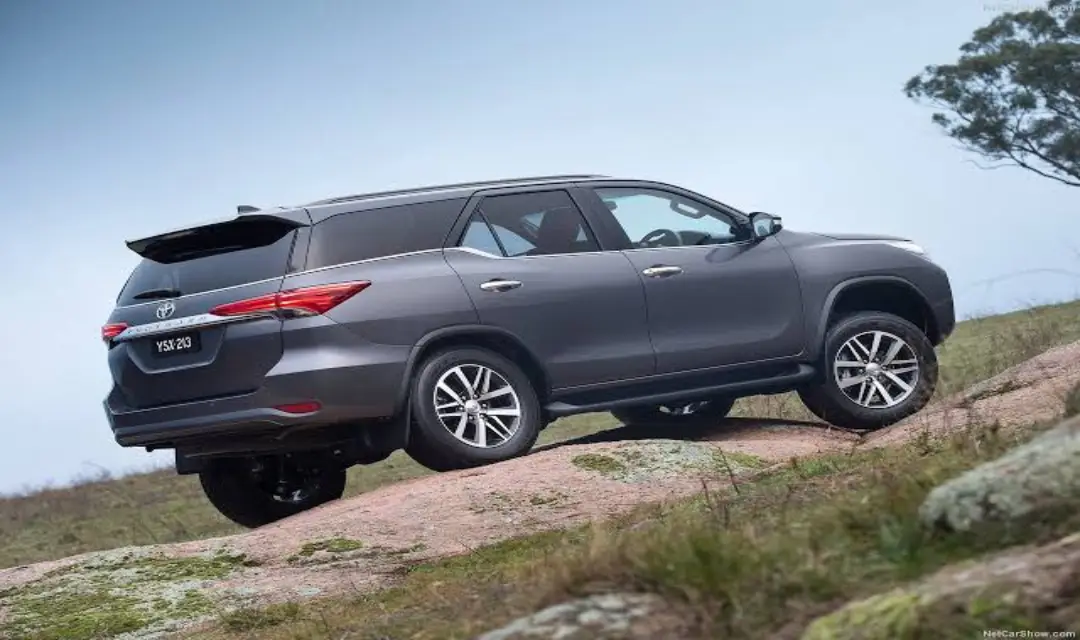
Toyota’s ranked models show a pronounced divergence rather than a consistent brand-wide direction. Toyota Veloz surged 108.1%, while Calya rose 19.2%, Hilux advanced 28.7% and Avanza edged up 2.3%. These gains contrast with declines in the Kijang (-19.4%), Fortuner (-27.0%), Raize (-10.5%) and Rush (-3.8%).
The gap is particularly striking between Veloz and Kijang. Both feature within the top two positions of the supplied ranking, yet their year-on-year trajectories point in opposite directions. Fortuner’s decline also shows that Toyota’s positive results are not shared across every nameplate.
The figures suggest that Toyota’s competitive position across the listed models is being shaped by substantial differences in individual model performance. The brand’s stronger performers are recording meaningful gains, but several established nameplates remain under pressure.
Daihatsu’s contrasting results expose portfolio-specific pressure
Daihatsu combines one of the ranking’s strongest growth stories with several significant declines. Gran Max MB climbed 239.8%, and Gran Max PU increased 28.7%. In contrast, Sigra fell 24.9%, Ayla declined 20.5%, and Terios slipped 0.7%.
The contrast between the two Gran Max variants and the passenger-oriented models is especially notable. Gran Max MB’s exceptional increase sits alongside double-digit contractions in Sigra and Ayla, indicating that Daihatsu’s listed models are moving in markedly different directions. Terios, meanwhile, is close to flat, making it a relative exception to the sharper declines elsewhere in the lineup.
These differences caution against interpreting Daihatsu’s performance through a single brand-wide narrative. The ranking instead reveals a split between strongly advancing Gran Max variants and weaker results from several other nameplates.
New entrants and exceptional growth reshape the competitive picture
Jaecoo J5, BYD Atto 1 and Geely EX2 Max/Pro occupy positions in the supplied top 20 without meaningful year-on-year comparisons. Their presence establishes that all three are registering sales within the ranked market, but the dataset does not support conclusions about their growth rates or momentum.
BYD offers a further point of comparison through the M6, which increased by 38.6%. Unlike Atto 1, the M6 has a reported year-on-year figure, allowing its performance to be assessed directly against the market’s 15.0% growth rate. This places the M6 comfortably above the overall market pace, while the Atto 1’s position must be considered separately from any growth-based assessment.
The strongest reported increases extend well beyond these newer entrants. Mitsubishi Destinator rose 180.1%, Toyota Veloz advanced 108.1%, and Suzuki Carry Pick Up gained 59.9%. At the other end, Honda Brio declined 27.5%, Toyota Fortuner fell 27.0%, and Daihatsu Sigra dropped 24.9%. The scale of these movements shows how sharply individual models can diverge within a market that is expanding overall.
Passenger-car declines offset gains across selected nameplates
Several familiar passenger-car models recorded declines that contrast with the overall market’s positive direction. Honda Brio fell 27.5%, Daihatsu Sigra declined 24.9%, Toyota Kijang dropped 19.4%, and Mitsubishi Xpander contracted 10.6%. These are material setbacks in a ranking that also contains multiple models posting double-digit gains.
Not every passenger-oriented nameplate weakened. Toyota Calya rose 19.2%, Hyundai Stargazer increased 24.2%, and Toyota Veloz more than doubled its year-on-year result. Toyota Agya was nearly unchanged at +0.7%, while Suzuki Fronx recorded a modest 4.4% gain.
This spread of results highlights the limits of treating a vehicle category or brand as a single performance group. The data supports a clear contrast between declining models and stronger individual nameplates, but it does not establish a common cause for those differences. The most defensible conclusion is that the market’s expansion is accompanied by significant redistribution of performance among the models appearing in the ranking.
Strategic takeaway
Indonesia’s expanding vehicle market is characterized by increasingly divergent model-level outcomes rather than uniform gains across established manufacturers. Daihatsu Gran Max MB, Mitsubishi Destinator and Toyota Veloz stood out for exceptional growth, while Honda Brio, Daihatsu Sigra and Toyota Fortuner illustrate the depth of declines among other ranked models. Toyota and Daihatsu each display substantial internal contrasts, while BYD’s M6 provides evidence of strong growth alongside the presence of new entrants whose trajectories remain unmeasured. The central competitive implication is that brand strength alone does not explain performance: the specific nameplates delivering gains or absorbing losses are the clearest differentiators in the current market.
Did you like our blog?
Comments (0)
All comments are reviewed and approved by an admin before appearing publicly.
No comments yet - be the first to share your thoughts.