
The rules have changed when it comes to choosing the best sunscreens for sensitive skin. In the past, mineral or nontoxic was the way to go for those prone to breakouts or irritation. These days, the playing field has expanded considerably, with gentle chemical formulas and K-beauty options designed to pamper and protect the skin.
“Overall, sunscreens for sensitive skin are improving both in terms of efficacy and cosmetic elegance,” says Marisa Garshick, MD, a board-certified dermatologist in Manhattan and New Jersey. “Newer mineral formulations have been developed that are lightweight, absorb easily, and are not as likely to leave behind a white cast.” Plus, the newly FDA-approved SPF filter bemotrizinol (BEMT) has expanded the options for those with sensitive skin who prefer a chemical formula.
“BEMT may not be as likely to cause a reaction as some other chemical filters,” Dr. Garshick notes. “It is a large molecule that does not have as much systemic or skin absorption, which may lower the potential risk of skin irritation.” Additionally, the synthetic organic UV filter is photostable, so it may not require the addition of other stabilizing chemicals that can trigger a reaction in some sensitive skin types.
Overall, Dr. Garshick says, the new class of sunscreens are formulated with daily use in mind, rather than an occasional day at the beach. Incorporating hydrating ingredients like hyaluronic acid and glycerin, plus calming ingredients like niacinamide, the modern formulas minimize the potential for dryness and irritation in sensitive skin—and they’re more enjoyable to use. Ahead, find the soothing formulas that dermatologists and Vogue editors trust to keep UV damage (and breakouts and redness) at bay.
Best Overall: EltaMD UV Clear Sunscreen
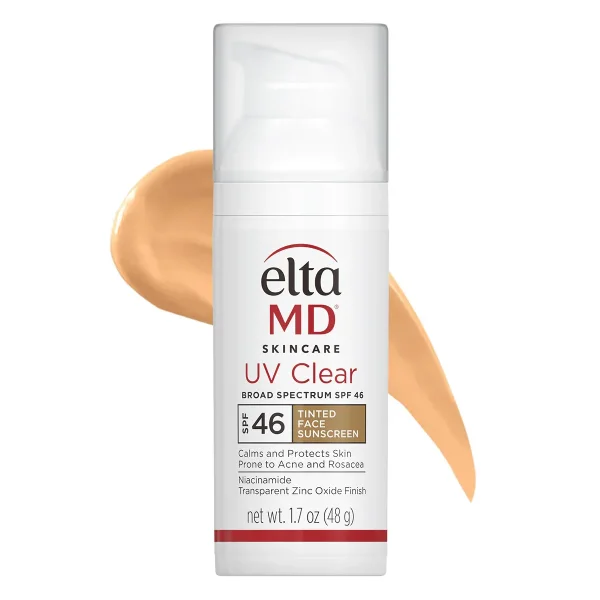
- Why We Love It: You’d be hard-pressed to find a dermatologist who doesn’t rave about this sunscreen. Its lightweight formula glides on easily with no white cast, and it helps soothe sensitive skin types prone to acne, rosacea, and hyperpigmentation. Board-certified dermatologist Onyeka Obioha-Lolagne describes it as her go-to: “This sunscreen blends in well with all skin tones, including deep skin tones, and also contains niacinamide—a potent antioxidant with anti-inflammatory properties.” Plus, it's oil-free, making it ideal for those with oily, acne-prone skin. The formula has another fan in Blair Murphy Rose, MD, a New York City–based board-certified dermatologist. “I frequently recommend UV Clear to my acne-prone or oily skin patients for excellent sun protection that won’t promote breakouts,” Dr. Rose said previously. "My patients love it! [This] is noncomedogenic and formulated with lactic acid and niacinamide to prevent acne and reduce inflammation.”
- Key Ingredients: Zinc oxide, niacinamide, hyaluronic acid
- SPF Level: SPF 46
- Texture: Lightweight and silky
- Chemical or Mineral: Chemical (9% zinc oxide, 7.5% octinoxate)
- Oil-free: Yes
- Finish: Clear and natural finish
- Size: 1.7 oz.
- Fragrance: No
Best Mineral Sunscreen: SkinCeuticals Physical Fusion UV Defense
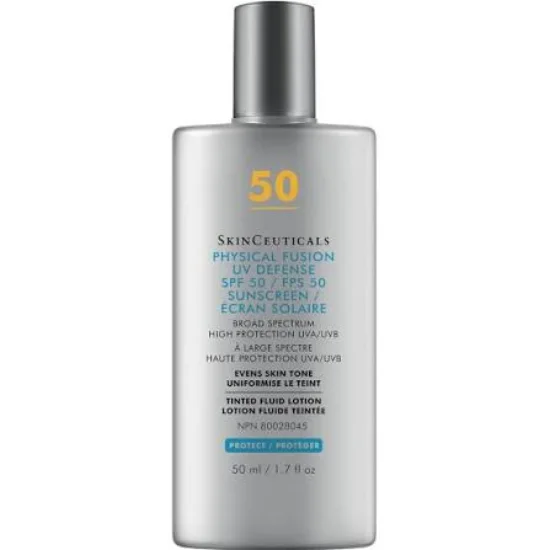
- Why We Love It: Have a winter escape planned? If you're heading to the beach or pool, you'll need something water-resistant like this one from SkinCeuticals, which is effective for up to 40 minutes. It glides on easily with no white cast, leaving behind a gorgeous natural tint so you can skip the base makeup. Dr. Obioha-Lolagne is also a fan: "This mineral sunscreen is oil-free and fragrance-free. It contains iron oxide, providing a tint to the formula and protecting against visible light, which may contribute to unwanted hyperpigmentation," she says. Just heed this advice: “Water-resistant” is not “waterproof.” Basically, the term means that if you get splashed with water, the sunscreen won’t come off instantly. But if you’re paddling around in a pool for longer than 40 minutes, it will. As always with sunscreen, reapplication of water-resistant formulas is key—and physical sun protection never hurts in a beach or poolside setting
- Key Ingredients: Titanium dioxide, zinc oxide
- SPF Level: SPF 50
- Texture: Lightweight mineral fluid
- Chemical or Mineral: Mineral (titanium dioxide 6%, zinc oxide 5%)
- Oil-free: No
- Finish: Sheer, tinted finish
- Size: 1.7 oz.
- Fragrance: No
Best With BEMT: La Roche-Posay Anthelios UVDefense Sunscreen SPF 50 With BEMT
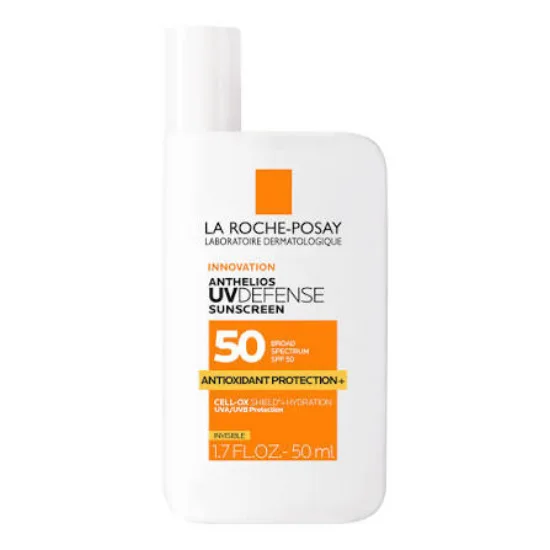
- Why We Love It: This French pharmacy staple boasts La Roche-Posay’s signature Cell-Ox Shield Technology, which pairs a UV filter with an antioxidant complex. As for that UV filter, “This formula incorporates bemotrizinol (BEMT), the newest broad-spectrum filter that may help deliver effective protection in a lightweight, cosmetically elegant texture,” Dr. Garshick says. She’s also on board with the sensorial experience. Infused with glycerin and vitamin E, “it offers a lightweight, milky feel that feels hydrating and absorbs easily, making it a great option for all skin types—including those with sensitive skin,” she says. One caveat: Before applying any new product or ingredient on sensitive skin, Dr. Garshick recommends patch testing it first.
- Editor's Experience: "I trust any La Roche-Posay sunscreen, and this one didn't disappoint. My favorite part is its texture; it's an incredibly lightweight, milky lotion that absorbs quickly into my skin and leaves it feeling really soft. It's also super hydrating, which is always a nice added bonus, and it just feels so much better on my skin than a lot of the US sunscreens I've been wearing lately. I'll definitely be adding this to my daily skin-care routine, and when people ask me for recs, I’ll be mentioning this.” —Audrey Noble, contributor
- Key Ingredients: Bemotrizinol (BEMT), avobenzone, glycerin, vitamin E, litchi extract
- SPF Level: 50
- Texture: Lightweight, milky serum
- Chemical or Mineral: Chemical (BEMT, avobenzone 3%, octocrylene 6%, homosalate 11%, octisalate 5%)
- Oil-free: No
- Finish: Natural, invisible finish
- Size: 1.7 fl. oz.
- Fragrance: Yes
Best for Outdoors: Dune Mineral Melt Sunscreen
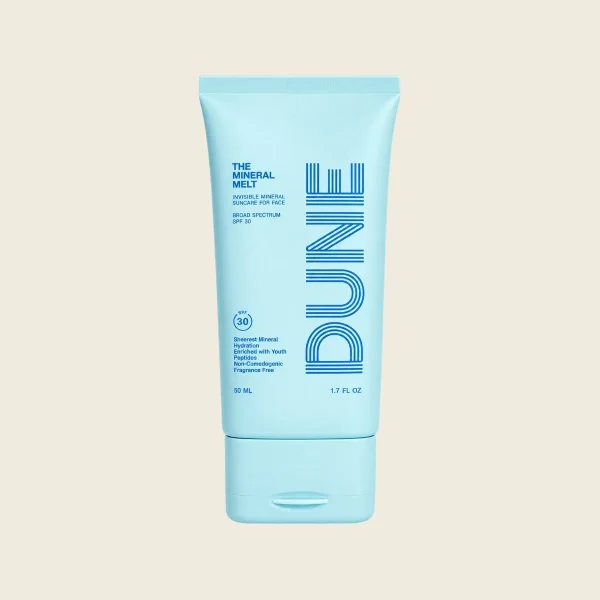
- Why We Love It: Just what the doctor ordered, this modern facial sunscreen features a microdispersion delivery system that provides a melting effect for ease of application and better absorption. According to board-certified dermatologist Dr. Ava Shamban, its combination of zinc oxide and titanium dioxide is safe for sensitive skin types. "The formulation is very skin-centric and helps to strengthen the skin barrier. Vitamin E is a great antioxidant to support protection, while peptides enhance skin structure and elasticity. Brightening agents like carrot root and extract are an added bonus," she says. Dr. Garshick calls the zinc-based sunscreen “a good option” for sensitive skin as it’s fragrance-free, and says that its infusion of peptides and vitamin E makes it ideal for daily use. Still, “since there are some botanical extracts, it is important for someone with sensitive skin to patch-test before use to ensure no sensitivity,” she notes.
- Key Ingredients: Vitamin E, carrot root extract, carrot seed extract, sunflower extract, rock rose extract
- SPF Level: SPF 30
- Texture: Ultra-smooth and thin
- Chemical or Mineral: Mineral (4.8% zinc oxide, 2.34% titanium dioxide)
- Oil-free: No
- Finish: Sheer finish
- Size: 1.7 fl. oz.
- Fragrance: No
Best K-Beauty: Haruharu Wonder Black Rice Pure Mineral Relief Daily Sunscreen
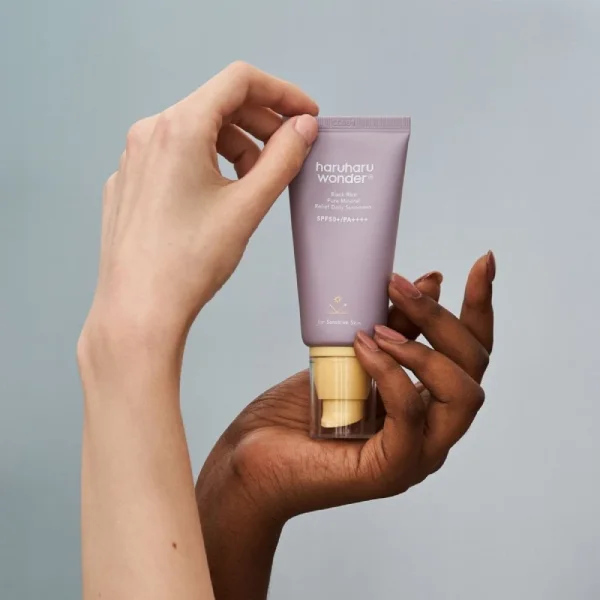
- Why We Love It: Korean sunscreens are praised for their velvety textures, and this one from Haruharu Wonder is one of our favorite mineral options. It blends seamlessly, so there’s no worry about missing a spot or ending up with streaks of white cast on your face. Shambam says it is “solid” for sensitive skin types, as it is free from octinoxate and oxybenzone. It combines pure zinc oxide with key moisturizing and antioxidant factors to further protect, correct, and nourish the skin. “Heart leaf and rice bran oil are less common but are equally effective in soothing and supporting skin protection,” she adds. According to Dr. Garshick: "This mineral-based broad-spectrum sunscreen also helps hydrate the skin while leaving a satin finish behind. It contains ceramides, hyaluronic acid, and niacinamide to hydrate the skin, making it a good option for those with sensitive skin."
- Key Ingredients: Ceramide NP, Houttuynia cordata extract, niacinamide, daisy flower extract, black rice bran oil, hyaluronic acid, moringa seed oil
- SPF Level: SPF 50
- Texture: Nongreasy, lightweight
- Chemical or Mineral: Mineral (non-nano zinc oxide)
- Oil-free: No
- Finish: Satin finish
- Size: 1.69 oz
- Fragrance: No
Best for Hydration: Round Lab Birch Juice Moisturizing UVLock Spectrum 45 Sunscreen
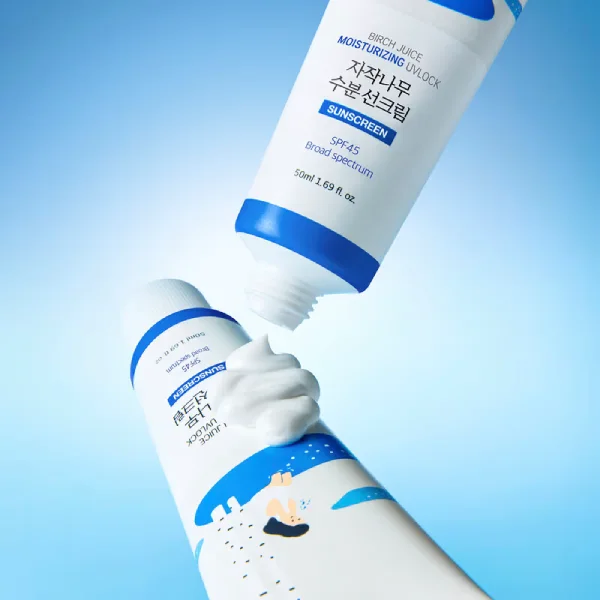
- Why We Love It: A top-rated sunscreen in Korea, Round Lab’s hydrating formula is also a hit with Vogue editors and dermatologists. “Although this contains chemical filters, this option is fragrance-free and hydrating, making it a reasonable choice for someone with sensitive skin,” Dr. Garshick says. “It incorporates niacinamide to brighten the skin and also calm inflammation, as well as hydrating ingredients like glycerin and hyaluronic acid.” True to its name, the formula also contains birch juice, which is packed with amino acids, minerals, enzymes, and antioxidants to soothe inflammation.
- Editor's Experience: "On a shallow note, I love how cute this packaging is: It looks like the cover of a storybook and brightens up my sunscreen shelf. As for the actual formula, it's so silky and quick to absorb—it feels more like a lightweight lotion than a traditional sunscreen, and it layers seamlessly under my foundation." —Jenny Berg, contributor
- Key Ingredients: Birch juice, niacinamide, glycerin, hyaluronic acid, allantoin
- SPF Level: SPF 45
- Texture: Lightweight, moisturizing cream
- Chemical or Mineral: Chemical
- Oil-free: Yes
- Finish: Dewy, nongreasy
- Size: 1.69 fl. oz.
- Fragrance: No
Best for Sensitive Skin: Avène Mineral Sunscreen Multi-Defense Fluid
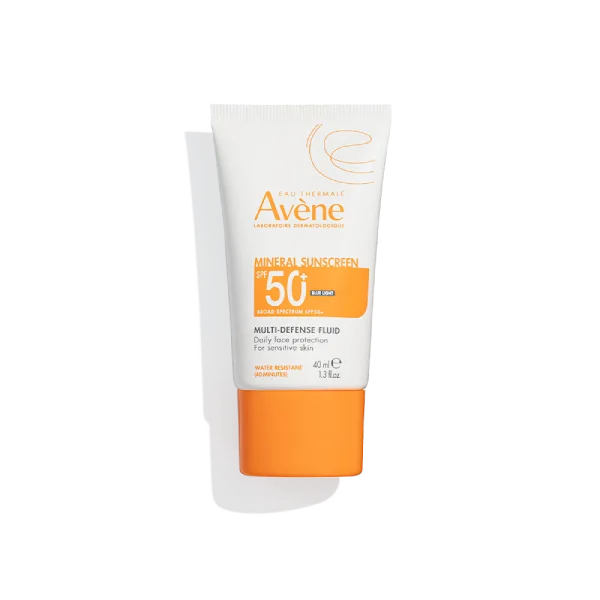
- Why We Love It: “A great option for someone looking for a lightweight, mineral sunscreen, this offers broad-spectrum SPF 50 coverage,” Dr. Garshick says. “The addition of tocopherol provides added antioxidant protection, as well as niacinamide, bisabolol, and allantoin, which help even out the skin tone while also soothing and calming the skin, making it great for those with sensitive skin.” One of Vogue's top nontoxic sunscreens, the formula also has "a lightweight, fast-absorbing formula that blends into the skin, leaving no white cast, greasiness, or sticky residue," Valerie Aparovich, a certified cosmetologist, aesthetician, and biochemist at OnSkin, previously said.
- Key Ingredients: Zinc oxide, tocopherol, niacinamide
- SPF Level: SPF 50
- Texture: Lightweight fluid
- Chemical or Mineral: Mineral (zinc oxide)
- Oil-free: Yes
- Finish: Sheer
- Size: 1.3 fl. oz.
- Fragrance: No
Everything You Need to Know
What type of sunscreen is best for sensitive skin?
The experts are in agreement that if you have sensitive skin, you should stick with mineral sunscreen. “Mineral sunscreen contains no chemicals that frequently cause irritation and allergic reactions in the skin,” explains Dr. Greenfield. Minerals sit on top of the skin and provide broad-spectrum sunscreen coverage against all wavelengths of UVA and UVB light while avoiding common skin reactions and rashes.
More specifically, according to Dr. Obioha-Lolagne, you’ll want to look for mineral sunscreen with zinc oxide and/or titanium dioxide in the formula, “the reason being that those with sensitive skin are more likely to have allergic reactions to the active ingredients in chemical sunscreens than to those in mineral sunscreens.”
What to Look For in a Sunscreen for Sensitive Skin
Chemical Vs Mineral
For sensitive skin, Dr. King generally recommends mineral sunscreens as well. These often include humectants and noncomedogenic emollients in their base formulas, which help keep the skin moisturized and prevent pore clogging.
SPF level
According to Dr. Greenfield, SPF should be 30+ (minimum) for the face, and mineral sunscreens provide broad-spectrum protection.
Key Ingredients
Protection doesn’t mean you have to compromise on hydration. “Look for moisturizing ingredients such as ceramides, squalene, and hyaluronic acid to enhance skin hydration and avoid leaving the skin chalky with a white cast,” says Dr. Obioha-Lolagne.
If breakouts are your main concern, King notes, two factors can cause sunscreen-related breakouts: occlusion of the pores by comedogenic materials, or a sensitivity reaction to chemical UV-blocking ingredients. Breakouts can result from any ingredient in the product, not just the active sunscreen components. Other emollients, fragrances, preservatives, or additional ingredients can also cause breakouts. Look for “noncomedogenic” on the label. Zinc oxide and titanium dioxide are both noncomedogenic.
King also warns to be wary of expiration dates. If the sunscreen has expired or the ingredients have been exposed to direct sunlight and high temperatures, the heat and sun can break down the chemicals, rendering them ineffective and potentially irritating to the skin.
Texture
Dr. Greenfield advises that the texture should be light and breathable to avoid clogging pores or causing breakouts, yet thick enough to stay on the skin and not rub off easily. Lotions, creams, and gels are preferred over sprays, which can result in skipped areas.
Should I wear sunscreen f I have sensitive skin?
Absolutely! Dr. Greenfield emphasizes, "It's perfectly fine to have a little sun exposure on your body, but UV radiation will only cause accelerated aging, discoloration, and texture changes on your face. I recommend facial sunscreen every single day, rain or shine."
Is SPF 50 too much for sensitive skin?
According to Dr. Shambam, the amount of SPF is not the primary factor for sensitive skin; Rather, it’s the type of chemicals, actives, or ingredients that often cause reactivity. Products with higher percentages of chemical actives can be more aggressive and lead to irritation. Dr. Shambam explains that while using a sunscreen with SPF 50 is perfectly fine, the difference in protection between SPF 30 and SPF 50 is minimal, and even less so between SPF 30 and SPF 70 or higher. A quality broad-spectrum sunscreen with SPF 30 blocks 95%–97% of UV rays. She adds, “For the most sensitive or reactive skin types, it's important to read the labels, be aware of key ingredients, and look for products specifically labeled for sensitive skin.”
What sunscreen should you use if you’re allergic to the sun?
“Zinc oxide and titanium-dioxide-based sunscreens are usually the best and most effective options to prevent allergic reactions when in the sun,” Dr. Shambam says. However, she does advise patients who are allergic to the sun to do their best to avoid exposure when possible. When that’s not feasible, UPF clothing, hats, and umbrellas are always recommended.
Did you like our blog?
Comments (0)
All comments are reviewed and approved by an admin before appearing publicly.
No comments yet - be the first to share your thoughts.