
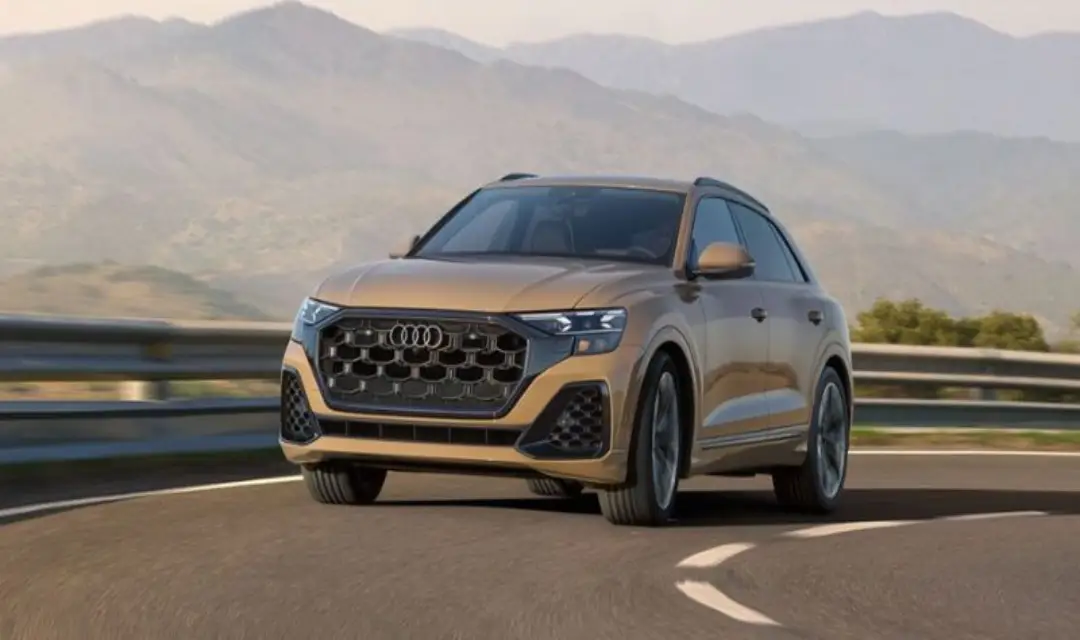
Belgium Car Market in 2026 is facing a broad market contraction, down 5.2% YTD September to 369,875 units. EVs momentum continues despite the slowdown, reporting 49.3% growth led by Tesla (+37.8%). New EV-focused brands like BYD and MG are emerging and disrupting traditional hierarchies.
Medium term market trend
Belgium’s automotive market opened the 2021-2025 series at 454,281 units in 2021 and began with a setback. Sales fell 7.1% to 422,012 units in 2022, the lowest level of the series, with cars down 5.0% and LCVs down 17.6%. 2023 reversed that decline sharply. Sales jumped 28.2% to 540,831 units, adding 118,819 units in a single year and reaching the peak of the period, 19.1% above the 2021 starting point. Cars rose 30.5% to 467,461 units and LCVs rose 15.1% to 73,370 units, so the rebound was broad-based. The jump looks like a catch-up from a depressed 2022 more than steady underlying expansion, and the following years bear that out.
The market then entered a gradual correction. Sales fell 5.1% to 513,385 units in 2024, a loss of 27,446 units, and 4.0% to 492,630 units in 2025, a further loss of 20,755 units. In two years the market gave back 48,201 units, or 8.9% of its peak volume, which amounts to 40.6% of the 2023 gain. The correction has been orderly rather than abrupt. The 2025 total remains 8.4% above 2021 and 16.7% above the 2022 low, and the pace of decline eased slightly from one year to the next. Momentum is still pointing down, but the market has settled well above its starting level.
The correction has been driven by cars. Car sales fell 5.0% in 2024 and 5.8% in 2025, finishing at 418,246 units, 10.5% below 2023 but still 11.0% above 2021. LCVs followed a different path. After a 5.5% decline in 2024 to 69,298 units, they rose 7.3% to 74,384 units in 2025, which is 1.4% above 2023 and 3.8% below 2021. In 2025 cars lost 25,841 units while LCVs added 5,086 units. The LCV share of the market has recovered from 13.5% in 2024 to 15.1% in 2025, level with 2022, so commercial vehicles are proving steadier than passenger cars.
Electrification followed a very different course from the market as a whole. EV/PHEV sales rose from 18,616 units in 2021 to 23,400 units in 2022 (+25.7%) and then accelerated to 39,321 units in 2023 (+68.0%), lifting penetration from 4.1% to 7.3%. Growth continued in 2024, with sales up 35.1% to 53,114 units and the share passing the 10% mark at 10.3%. In 2025 volumes were almost flat at 53,432 units (+0.6%), yet penetration still edged up to 10.8% because the rest of the market shrank. Battery-electric models are the core of the segment. BEV sales rose from 17,793 units to 52,690 units, nearly three times the 2021 level, and now make up 98.6% of EV/PHEV volume, up from 95.6%. PHEV sales fell from 823 units to 742 units over the period, 9.8% below 2021. The segment’s contribution to the market is substantial. Between 2021 and 2025 the market added 38,349 units, of which EV/PHEV supplied 34,816 units, or 90.8%. Since the 2023 peak the pattern has been stronger: EV/PHEV added 14,111 units while all other vehicles lost 62,312 units, a 12.4% decline. Electrification has therefore been protecting the market's volume, and conventional powertrains have carried the entire correction. The flat 2025 result for EV/PHEV is nevertheless the first sign that the segment’s rapid expansion has paused.
2026 outlook
YTD September 2026 sales reached 369,875 units, down 5.2% year on year. The nine-month total equals 75.1% of the full-year 2025 result of 492,630 units, and matching that figure requires 122,755 units in the final quarter, in line with the 41,097 units a month averaged over the first nine months. Momentum has weakened further. After declines of 5.1% in 2024 and 4.0% in 2025, the decline has deepened by 1.2 percentage points, making 2026 the third consecutive year of contraction. The market is neither stabilizing nor reversing at this stage, and the downward drift is slowly gathering pace. Even so, the pace remains moderate compared with the scale of the 28.2% surge of 2023, which keeps the market far above its 2022 low.
The weakness is broad-based. Cars fell 4.9% to 315,023 units and LCVs fell 7.2% to 54,852 units, so commercial vehicles have lost the relative resilience they showed in 2025, and cars account for 85.2% of YTD volume. The competitive field is divided. Of the 20 ranked brands, 13 are contracting and only 7 are growing, and all seven of the largest brands are declining, so the market’s volume core is under pressure. Growth is concentrated in the lower half of the ranking, where several brands are expanding quickly against a falling market, and market share is moving away from the leading names towards challengers. With demand softening and the competitive field reshuffling, the final quarter will decide whether 2026 closes near the 2025 level or extends the correction. For brands in the top ranks, defending volume is now the central commercial task.
Brand performance
- BMW -7.9%
- Mercedes -10.3%
- Volkswagen -6.6%
- Renault -7.0%
- Peugeot -6.8%
- Audi -20.8%
- Dacia -24.6%
- Skoda +14.6%
- Ford -11.0%
- Toyota -18.2%
- Citroën -10.0%
- Kia -0.6%
- Volvo -26.5%
- Opel +7.2%
- Tesla +37.8%
- Hyundai -11.4%
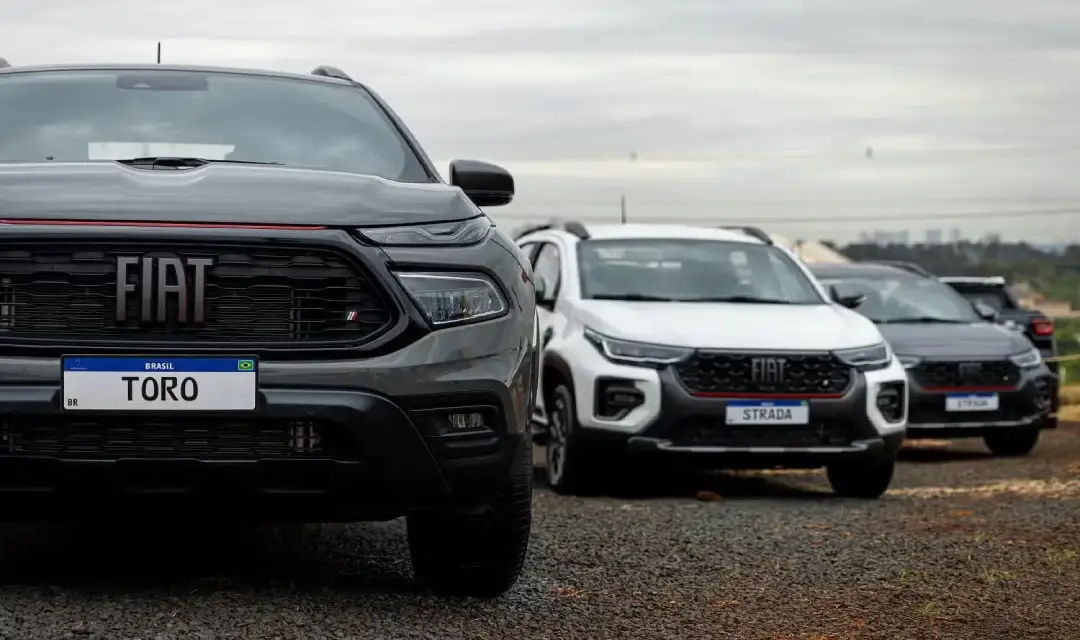
- Fiat +15.9%
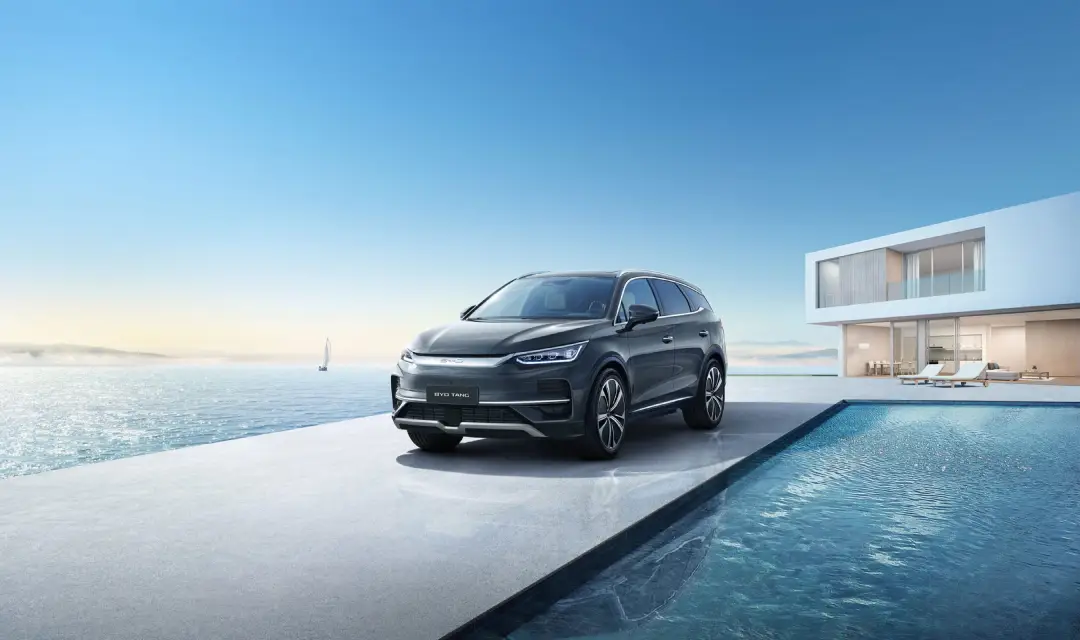
- BYD +115.8%
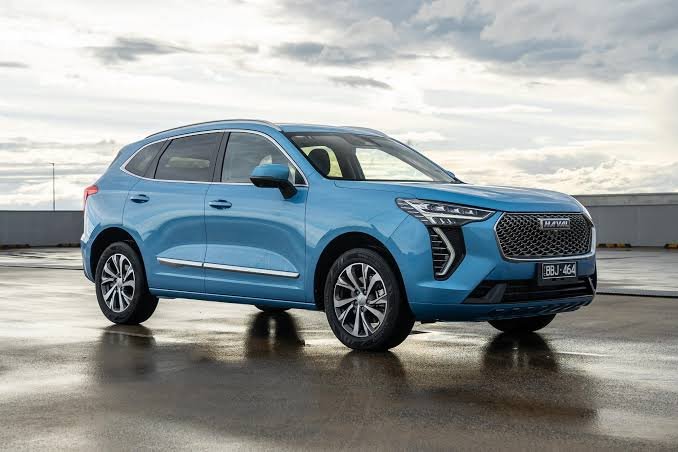
- MG +105.8%
- Mini +9.8%
The ranking splits into a small group of fast-growing brands and a large group losing volume in a market that is down 5.2%. BYD (+115.8%) and MG (+105.8%) more than doubled their volumes and are the clear standouts, followed by Tesla (+37.8%). Fiat (+15.9%), Skoda (+14.6%), Mini (+9.8%) and Opel (+7.2%) complete the seven brands in growth. The spread between the best result, BYD, and the worst, Volvo (-26.5%), is 142.3 percentage points, which shows how unevenly the market is moving. Apart from Skoda in eighth place, all the growth sits in the lower half of the ranking, so challengers are building volume while the leading positions erode.
The top of the table is under pressure. BMW (-7.9%), Mercedes (-10.3%), Volkswagen (-6.6%), Renault (-7.0%) and Peugeot (-6.8%) rank one to five, and every one of them is falling faster than the market. Mercedes has the steepest decline of the five, at roughly twice the market rate. The mainstream leaders are losing less than the premium names, but none is defending its relative position. Kia (-0.6%) is the only declining brand outperforming the market and is effectively flat, which makes it the most resilient of the established names.
The deepest declines are in a middle group of brands. Volvo (-26.5%), Dacia (-24.6%), Audi (-20.8%) and Toyota (-18.2%) are all down by more than a fifth or close to it, losing volume at three to five times the market rate. Hyundai (-11.4%), Ford (-11.0%) and Citroen (-10.0%) also decline at about twice the market rate. Premium positioning offers no protection. BMW, Mercedes, Audi and Volvo all contract, and Mini is the only premium name in growth, at +9.8%. The contrast within neighboring positions is notable, with Skoda growing 14.6% while Volkswagen and Audi decline.
The competitive implication is a structural shift in the market’s center of gravity. BYD, MG and Tesla are gaining volume from established brands, and the four lowest-ranked brands are all growing, so the pressure on the incumbent leaders comes from below. In a shrinking market, every point of growth at the lower end of the ranking comes at the expense of the names at the top.
EV Market Trend and Outlook
EV/PHEV sales are growing at 49.3% and now account for 17.4% of total industry sales, in a market that is contracting by 5.2%. Volumes of 64,254 units YTD are already 20.2% above the full-year 2025 total of 53,432 units and 21.0% above the 2024 total. Penetration has climbed 6.6 percentage points from 10.8% in 2025, the largest single-year step in the series. Electrified vehicles are now close to one in five sales, and they are growing in a market that is shrinking, which means conventional volumes are falling by considerably more than the headline decline.
The growth is a clear re-acceleration. After near-stagnation in 2025 (+0.6%), the segment is expanding at 49.3%, a rate between the 35.1% of 2024 and the 68.0% of 2023. The 2025 break has therefore proved temporary, and the structural climb has resumed. The segment is almost entirely battery-electric. BEV sales grew 50.4% to 63,794 units and represent 99.3% of EV/PHEV volume, while PHEV sales fell 23.7% to 460 units, 0.7% of the segment. The market’s electrification is therefore a BEV story, and PHEV has become marginal.
The structural importance is considerable. The conventional part of the market, still 82.6% of volume, is shrinking while electrified sales grow strongly, so the sales mix is changing every quarter. The share of EV/PHEV has risen from 4.1% in 2021 to 17.4%, more than four times in the span of the series. For the wider industry, competitiveness increasingly depends on a credible electrified range. Brands without one are competing for a pool that is contracting, while those with one are capturing the market’s only expanding segment.
EV Brand Performance
- Tesla +37.8%
- Volkswagen -4.3%
- Skoda +122.4%
- Mercedes +25.2%
- BYD +115.8%
- BMW +1514.3%
- Volvo +20.7%
- Leap Motor New
- Jaecoo New
- Polestar -25.0%
The ranking is led by Tesla (+37.8%), which grew 11.5 points slower than the 49.3% segment rate and is therefore ceding some share within the segment while keeping the top position. Its EV/PHEV growth is identical to its overall brand growth of 37.8%, so its total performance and its electrified performance move together. BYD (+115.8%) shows the same identical pattern and expanded at more than twice the segment pace. Skoda (+122.4%) is the fastest-growing established name in the top five, 73.1 points above the segment rate, and it contrasts with its overall growth of 14.6%, so electrified models are the main engine of its expansion.
The strongest result in the ranking belongs to BMW (+1514.3%), whose volumes are more than 16 times their prior-period level. The result contrasts sharply with its overall performance of -7.9%, which means electrified sales are rising rapidly within a range that is shrinking. Mercedes (+25.2%) and Volvo (+20.7%) follow the same pattern. Both grew in the segment while their overall brand volumes fell 10.3% and 26.5% respectively. For these premium names, electrified models are partly offsetting weakness in the rest of the range, although both are growing at less than half the segment rate.
Volkswagen (-4.3%) in second place and Polestar (-25.0%) in tenth are the only brands losing volume in the segment. The Volkswagen result is the more significant, because a decline in second position in a segment growing by nearly 50% means a clear loss of relative standing. Leap Motor and Jaecoo appear as New, which means there is no comparable prior-period EV/PHEV volume and no growth rate can be assigned. Both enter the ranking directly, adding two further challengers to the segment.
The competitive structure is shifting from established leaders to fast-moving challengers. Six of the seven largest brands are growing, three of them faster than the segment, and two new entrants have already reached the top ten. Positions are being redistributed quickly, and the brands growing below the segment rate are the ones at risk of losing ground over time.
Analysis and Outlook
Belgium’s market has moved through three phases: a 2022 low of 422,012 units, a 2023 peak of 540,831 units and a correction since then that has reduced annual sales to 492,630 units in 2025. The 2026 result of 369,875 units after nine months, down 5.2%, confirms that the correction is continuing and has deepened slightly from the 4.0% decline of 2025. The market remains well above its starting point of 2021, but it has now declined three years in a row, and matching the 2025 total requires 122,755 units in the final quarter.
The most important feature of this correction is how it is distributed. Electrification has supplied 90.8% of the market’s net volume gain between 2021 and 2025, and penetration has risen from 4.1% to 10.8% and then to 17.4% in 2026, with EV/PHEV growing at 49.3% against a contracting market. Conventional powertrains have absorbed the entire decline, and the segment is almost completely battery-electric. Market contraction and electrification are therefore the same story seen from two sides.
Brand competition reflects the same divide. BYD, MG and Tesla are rapidly expanding, and Skoda is the only top-ten brand in growth, while BMW, Mercedes, Volkswagen, Renault, Peugeot, Audi, Dacia, Toyota, Volvo and others lose volume. The EV/PHEV ranking shows premium brands such as BMW, Mercedes and Volvo growing electrified sales while their total volumes fall, with Volkswagen the notable exception losing ground in the segment itself.
Three strategic conclusions follow. First, in a market that is shrinking, volume must be won from competitors, and the fastest gains are going to challengers building electrified positions from below. Second, the established leaders face a structural problem, since falling faster than the market across the top five ranks means their share is eroding even before the electrified shift is fully priced in. Third, with EV/PHEV at 17.4% and almost entirely BEV, the central commercial question for the final quarter and beyond is who captures the segment as it moves towards a larger part of the market, because that is where the only growth in Belgium’s automotive market is coming from.
Did you like our blog?
Comments (0)
All comments are reviewed and approved by an admin before appearing publicly.
No comments yet - be the first to share your thoughts.